I often hear "supplier verification," "pre-shipment inspection," and "factory audit" used as if they meant the same thing. They don't, and in my experience the costly mistake isn't skipping the audit. It's ordering one at the wrong moment, before you even know the supplier is real.
My position: a factory audit is not the first step. It's the step you take once a supplier has survived the cheaper checks and you're about to trust them with serious volume.
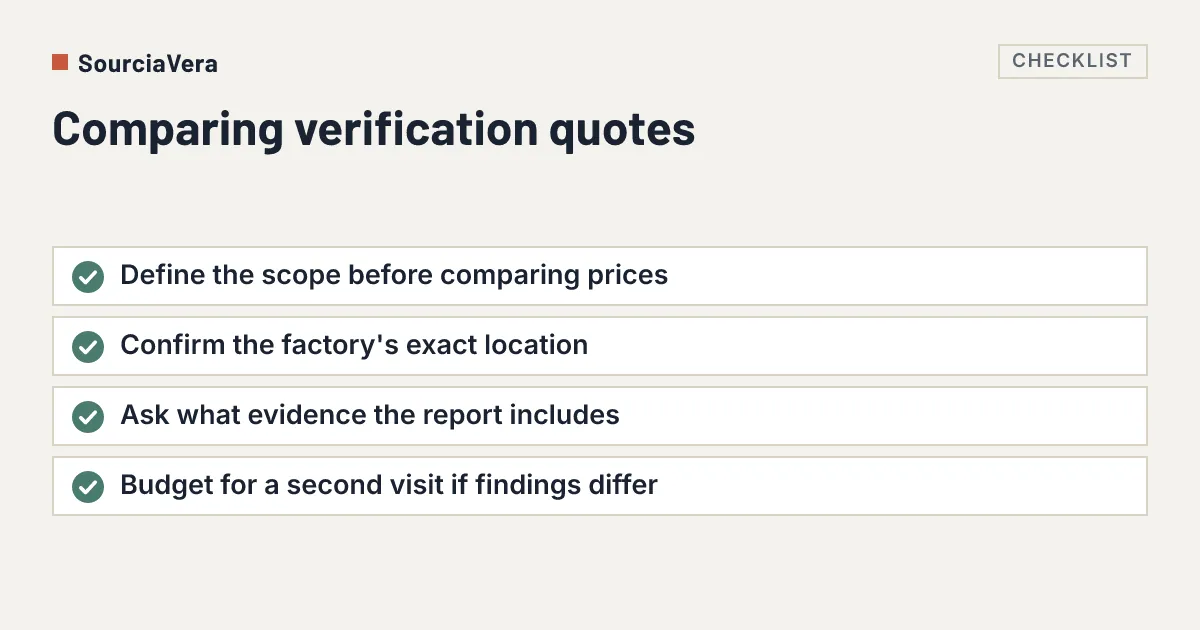
The short answer: a factory audit is a one-day, on-site evaluation of a supplier's production capacity, quality system, and operational strength, and it costs $499 per man-day (one inspector working one day at the factory; glossary). A Mexican importer usually needs one before orders above roughly $30,000, before a long-term relationship, or for products with safety requirements. For a first mid-size order, a factory verification plus a pre-shipment inspection is normally the better starting point. If you want someone on site while your order is being made, our production supervision in China covers visits from the first sample to container loading.
Why Is the Audit Not the First Step?
Three reasons:
- The costly mistake is the wrong moment. Ordering an audit before you even know the supplier is real spends the most expensive check on the wrong question.
- Cheaper checks filter first. Verification and a pre-shipment inspection remove middlemen and look-alikes at a lower cost.
- The audit fits specific cases. Orders above roughly $30,000, a long-term relationship, or products with safety requirements.
Verification vs. Inspection vs. Audit: What's the Difference?
| Service | What It Checks | When It's Done | Typical Price |
|---|---|---|---|
| Factory Verification | Does the company exist? Is it a manufacturer or a middleman? Is the price real? | Before the first order, before any payment | $449 per visit |
| Pre-Shipment Inspection | Does the product match the sample and the specifications? | Before the goods leave the factory | $399 / man-day |
| Factory Audit | Production capacity, quality systems, compliance, operational strength | Before large orders or long-term relationships | $499 / man-day |
When One Quote Is Far Cheaper: A Real Case
The problem: a buyer in Guatemala wanted two expandable container homes as a first, test order. He already had one quote from a Chinese manufacturer and wanted three or four more options to compare.
What we checked: we quoted six factories on the same specification, so every price described the same house. One came in significantly cheaper than his original quote, even fully upgraded. A gap that large can mean efficiency, thinner steel, or a trading company reselling someone else's production, so we did not take the PDF at its word.
The outcome: we asked how the steel was galvanized. The first answer was cold-galvanized; pressed further, the load-bearing chassis turned out to be hot-dip and the thinner frames cold-galvanized, a real process limit rather than a shortcut, but something the buyer needed to know before paying. His team then picked the eight points that mattered most from its own 16-point audit scope, he asked the factory to prepare documents, panel samples and a comparable unit in advance, and we walked the production hall, sending photos and video as we went and calling him so he could watch live (full case).
The takeaway: that's what an audit is for: confirming that the supplier you're leaning toward can really do what it says. A price far below the others is exactly where to look first.
What Exactly Is a Factory Audit?
A factory audit is a systematic, documented evaluation of a supplier's operational capability. It isn't just about confirming the factory exists or that the product looks right. It's about whether the supplier can sustain quality and lead times over time. A well-run audit covers three areas:
1. Production capacity
- Machinery on hand and its maintenance condition
- Real monthly production capacity vs. what's claimed
- Number of workers and shift structure
- Subcontracting: does it make everything in-house, or subcontract critical parts?
2. Quality management system
- Does it have documented quality-control procedures?
- Is there a QC department independent of production?
- How does it handle defective products?
- Current certifications (ISO, CE, RoHS, etc.) and whether they're actually valid
3. Operational strength and compliance
- Basic financial standing (indicators of closure risk)
- Compliance with labor regulations
- Storage conditions for raw materials and finished product
- Export history and verifiable references
$49
Written report in 48 hours: company registration, manufacturer vs. trader, and payment-account match.
Request the $49 checkWhen Does a Mexican Importer Actually Need an Audit?
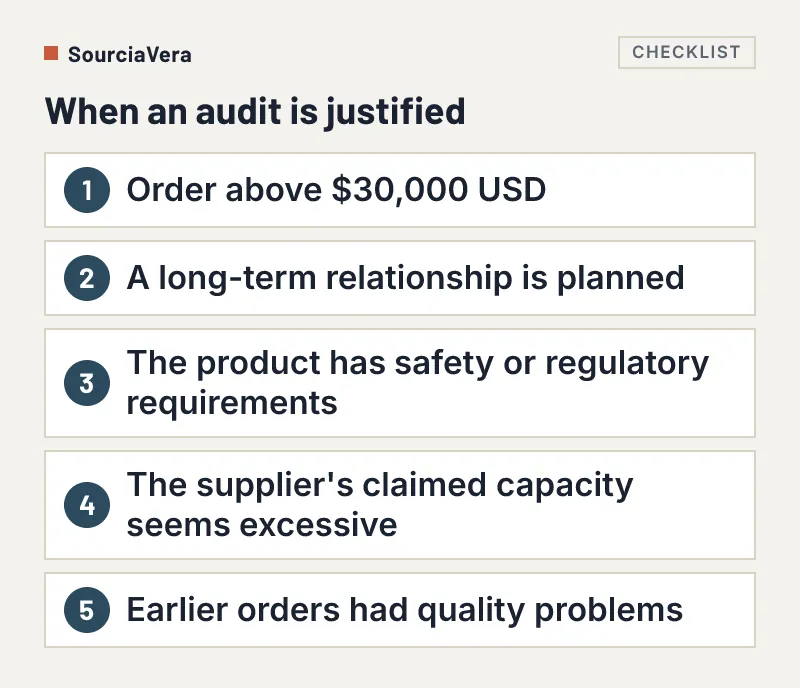
Not every order needs one. A basic verification is enough for small orders with new suppliers. I'd say an audit is justified when:
- The order exceeds $30,000 USD. At that volume, the audit ($499/day) costs 1.7% or less of the order's value. Cheap insurance.
- You're planning a long-term relationship. If you'll place recurring orders with the same supplier, you need to know it has the operational strength to keep going.
- The product has safety or regulatory requirements. Electronics, children's products, medical equipment, construction items: anything where a failure has consequences beyond money.
- The supplier claims capabilities that seem excessive. If they say they produce 50,000 units a month but their workshop would fit in your garage, something doesn't add up. The audit checks it.
- You've already had quality problems on previous orders. An audit can show where the system is failing, not just that it's failing.
What Happens on Audit Day?
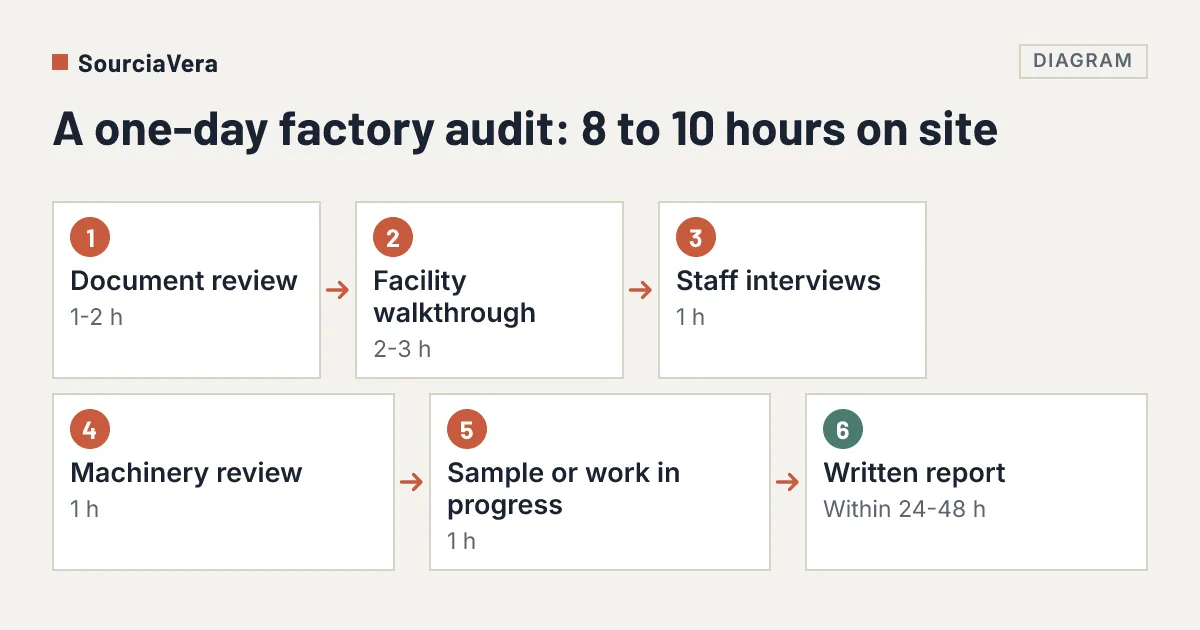
A standard one-day audit is 8 to 10 hours of on-site work. The typical sequence:
- Document review (1–2 h): business license, certifications, contracts with previous clients, quality-control records
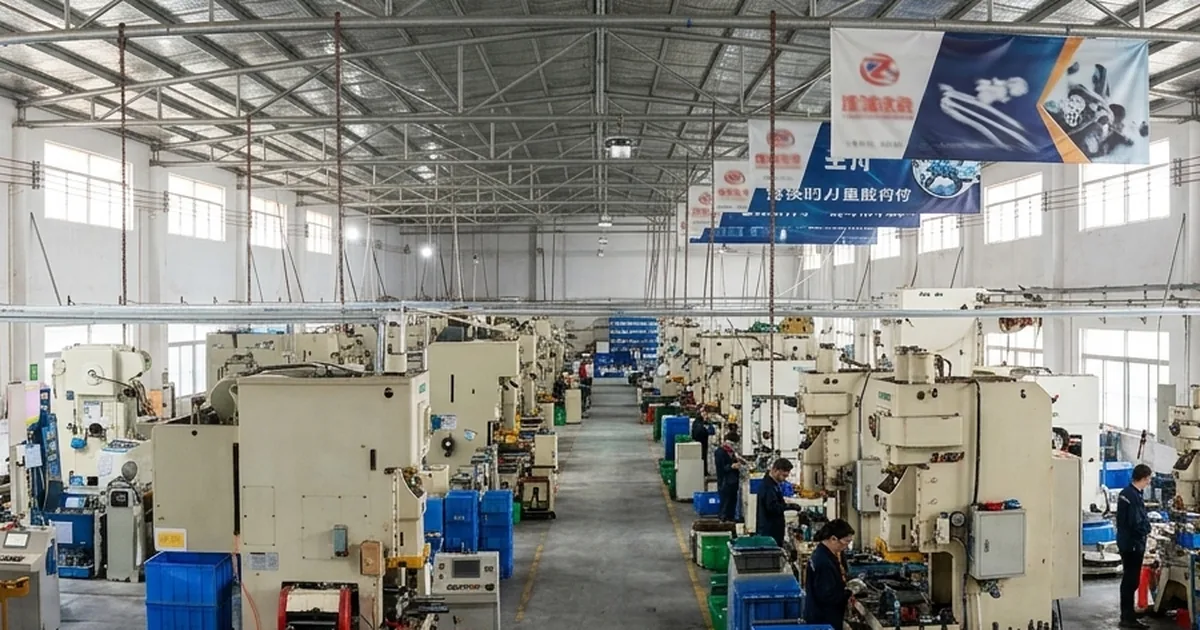
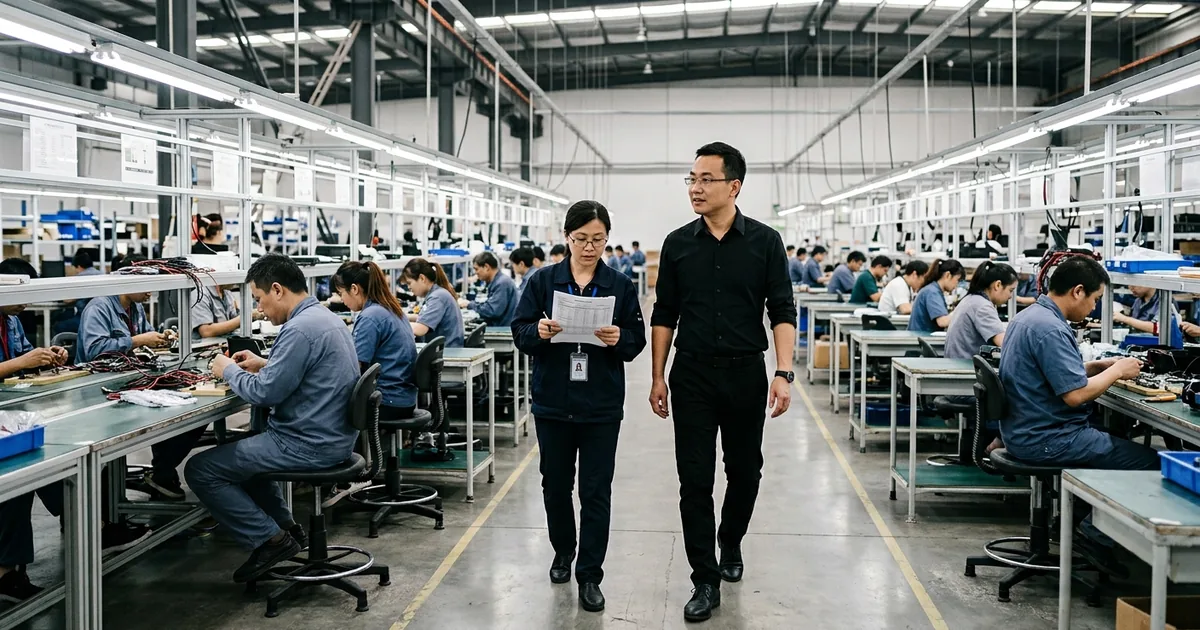
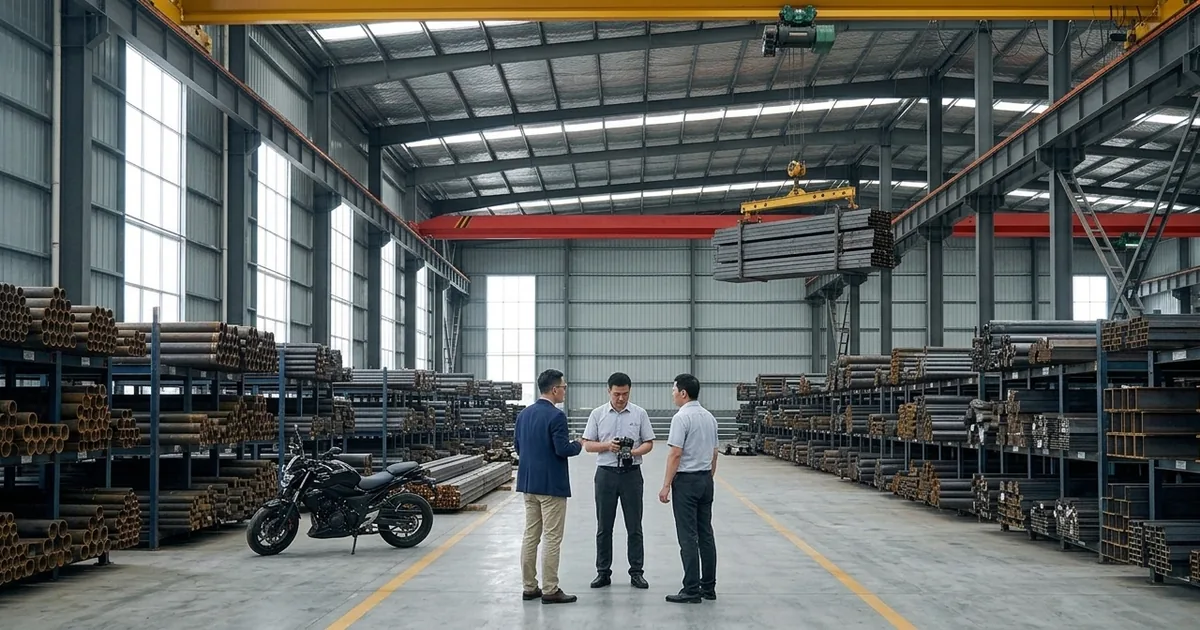
- Facility walkthrough (2–3 h): full production line, raw-material warehouse, finished-goods warehouse, QC area
- Staff interviews (1 h): production manager, quality manager, randomly selected line workers
- Machinery review (1 h): condition, capacity, year of manufacture, documented maintenance
- Sample or work-in-progress evaluation (1 h): if there's active production for your order, a direct review
- Report and conclusions (written up in 24–48 h): a written report with findings, a score per category, and a final recommendation
How Much Does a Factory Audit Cost, and How Long Does It Take?
A factory audit with SourciaVera costs $499 USD per man-day. Most audits for mid-size orders take one day; complex orders or large factories may need a day and a half. The full report is delivered within 48 hours of the visit.
For comparison, in our experience an order lost or rejected for unacceptable quality typically costs a mid-size Mexican importer somewhere between $8,000 and $25,000 USD. The audit is between 2% and 6% of that potential loss.
A factory check is only as useful as the person doing it is independent: read our impartiality statement, and look at a sample report to see what you would receive.
Summary: Narrow the Field, Then Go Deep
Our team visits factories in person, and the founder still joins many of the visits. The buyers who get the most out of an audit arrive at it last, after the cheap checks have filtered out the middlemen and look-alikes. If I could change one habit, it would be the reflex to audit the favorite first. Narrow the field, then go deep.
To sum up: run the cheaper checks first and save the audit for the supplier you are about to trust with serious volume. If you audit the favorite first, or skip the checks altogether on a large order, a rejected order can cost far more than the audit would have, and it delays the next one. Tell us your order size and product and we will say honestly which of verification, inspection or audit fits.
I provide supplier verification services, so you should treat my recommendation accordingly.
 Supplier Verification
 Due Diligence
 Supplier Verification
 Factory Visits