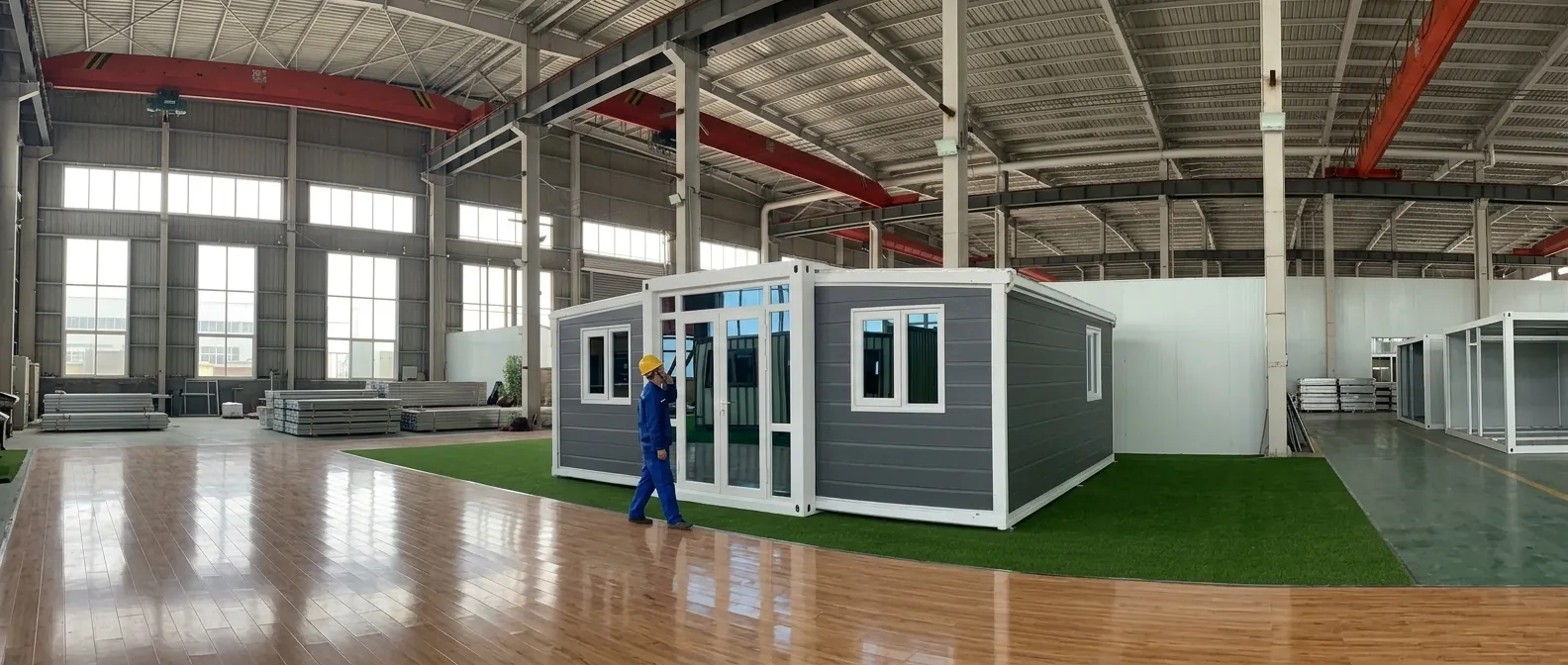
China is the world's largest exporter of prefabricated buildings (HS 9406), with $29.7 billion shipped globally in 2023 and $32.25 billion in 2024 — approximately 19% of the global market. In Mexico alone, Chinese-sourced prefabricated structures totalled $50 million in 2023, making China the single largest source country for that import category. The demand context in Central America is significant: El Salvador, Guatemala, and Honduras face a combined qualitative housing deficit exceeding 3.9 million units, affecting more than 22 million people — Guatemala's deficit alone is estimated at 1.96–2.2 million units. (Sources: World Bank WITS / UN Comtrade; Mexican Ministry of Economy, Data México; Habitat for Humanity, 2022.)
A buyer came to us needing two units of expandable container homes shipped internationally. They'd already shortlisted six Alibaba suppliers — we'll call them Factory A through F — all with similar-looking listings and comparable prices.
Why We Don’t Evaluate Just One Supplier
A single factory audit only tells you about that one factory. To actually recommend something, we compared all six side by side: insulation material (EPS vs. PU foam), pitched-roof capability, production capacity, export documentation history, and actual factory ownership.
What the Side-by-Side Comparison Exposed
Two of the six were subcontracting the exact same production line under different storefront names — same steel frame supplier, different paint job, presented as competing options with nothing actually separating them. One quoted 25%+ below the others but couldn't produce a business license matching the manufacturing scope claimed — a classic underpricing pattern used to secure a deposit fast. Two more were legitimate manufacturers, but didn't actually have pitched-roof capability in-house — they would have subcontracted that part without saying so.
How We Told the Real Factories From the Look-Alikes
None of this shows up in an Alibaba listing. It shows up when you check the same four things on every candidate and compare the answers side by side — here's what that actually looked like across the six:
- Production floor. The finalist owned a dedicated fabrication floor with a steel-frame welding line on-site. Two of the six rented a small showroom instead; when we asked to see the welding line itself, both stalled, because it belonged to someone else.
- Business license scope. The finalist's registered manufacturing scope matched expandable container homes exactly. The candidate quoting 25%+ below everyone else turned out to be registered as trading/wholesale, with no manufacturing scope covering container structures at all.
- Pricing pattern. Five of the six priced within a normal band of each other. The sixth undercut everyone by 25%+ — the underpricing pattern that usually means "we need your deposit fast," not "we're more efficient."
- Live video request. The finalist filmed the specific line, a dated whiteboard sign, and that day's serial numbers on request. Two others sent a pre-recorded tour instead — and turned out to be the exact same factory floor, filmed from two different login accounts.
That last pattern — the same floor behind two different storefronts — would have been invisible if we'd only checked one supplier instead of comparing all six side by side.
The On-Site Audit That Sealed the Decision
For the finalist, we paid for and conducted an on-site factory audit — confirming the steel frame welding line, the EPS injection process, and the export packaging line all matched what had been claimed. We measured the panel wall thickness against the spec sheet, confirmed the insulation was EPS foam (not the thinner, cheaper substitute sometimes swapped in after the sample stage), and checked that the export packaging line had actually shipped units before — not just assembled a sample for the photos.
What Getting This Wrong Would Have Cost
This buyer was ordering two units. At normal FOB pricing for expandable container homes — roughly $2,500–$9,500 per unit depending on size and finish — a two-unit order already sits in the $5,000–$19,000 range before freight, import duty, and site prep are added. Production runs 25–35 days, and ocean freight to most Latin American ports adds another 30–45 days. That means a buyer is financially committed for two to three months before a structural problem — wrong steel gauge, swapped insulation, a roof mechanism that was never actually in-house — becomes visible at all.
If the deposit had gone to one of the two subcontracted look-alikes instead of the verified factory, the client would have had no independent factory to hold accountable when something went wrong — because the storefront that took the payment and the factory that built the product would have been two different, disconnected parties. Who explains that to a client who already wired a deposit, already told their own customer or family a delivery date, and now has neither a refund path nor a functioning house?
The Outcome
We delivered the client three FOB pricing tiers based on different material specifications, along with a bilingual audit checklist, so they could move forward knowing exactly which factory was producing their units — not just which one responded fastest on Alibaba.
The Lesson
Price and photos alone can't distinguish six look-alike listings. Only a real side-by-side comparison across verified specifics — followed by an on-site visit for the finalist — reveals which supplier actually matches what you need.
Before You Wire a Deposit: 5 Things to Verify Yourself
- Pull the business license (营业执照) and confirm the registered scope actually covers manufacturing, not just trading.
- Ask for a live video call, not a pre-recorded tour — request the welding line, a dated whiteboard sign, and today's serial numbers on camera.
- Check the factory address against satellite view. A 5,000+ m² production floor cannot be hidden inside a small office park.
- Ask directly which features are made in-house — roof mechanism, folding hinges, insulation — and get the answer in writing, not just implied by the listing photos.
- Never pay 100% upfront. Use a deposit-plus-balance structure (for example 30% deposit, 70% before shipment) or Alibaba Trade Assurance, so you keep leverage if the unit doesn't match spec.
Comparing Multiple Alibaba Factories Before Committing?
SourciaVera evaluates multiple candidate factories side by side, conducts on-site audits for the finalist, and delivers bilingual reports so you know exactly which factory matches your requirements — before any deposit is paid.
Request a Factory Comparison