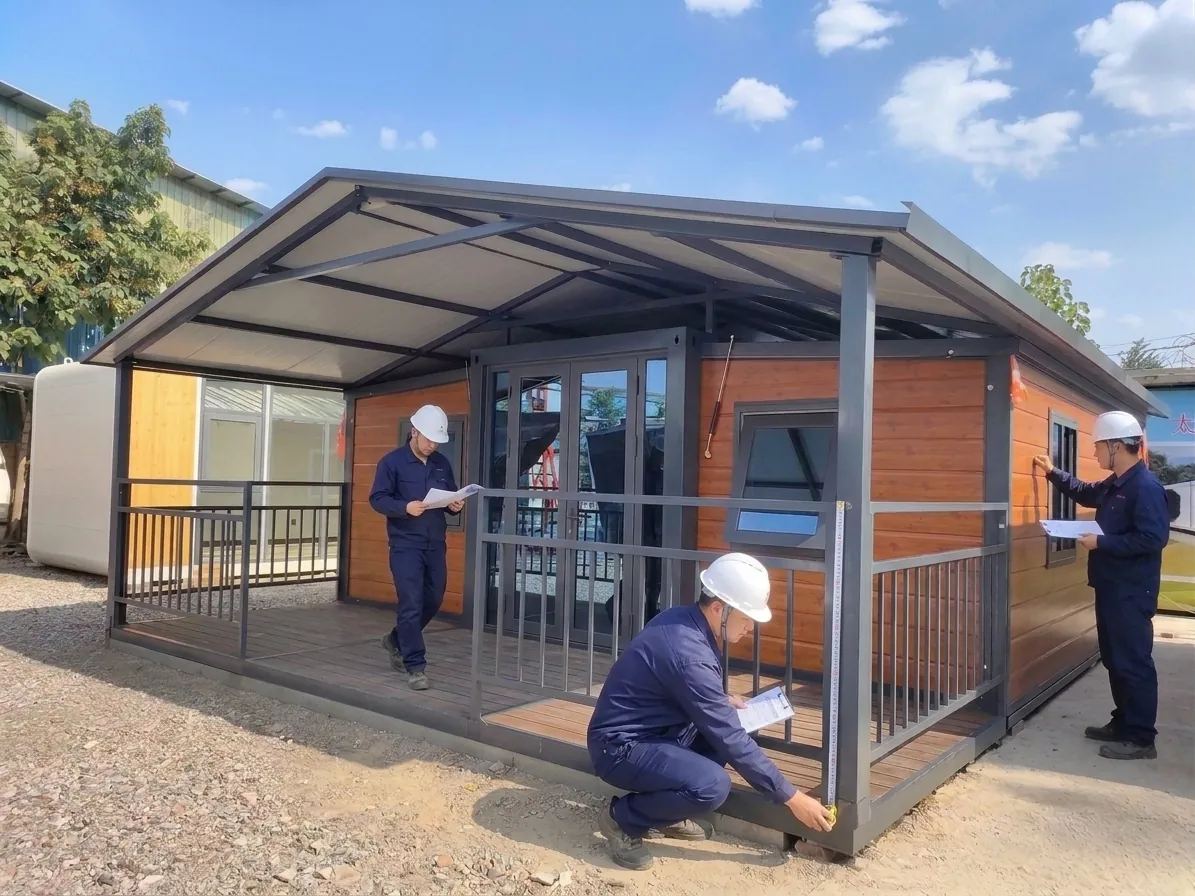
What you should review before approving a product specification
A coating rated for a mild coastal climate can fail within a year in a humid tropical port a few hundred miles away — and most QC checklists never ask which climate the product is actually headed for. Start with the exact installation zone, not just the destination country, since climate varies enormously within most countries you'd ship to. Then push past "rust-resistant coating" as an answer and get the coating thickness in microns and the galvanization method, with photo evidence of the process itself, not just the finished part.
The coating technical datasheet — not just the word "galvanized" on the quote.
China sourcing services · Talk to SourciaVera
Quick answer
- The final destination climate must define the material specification — not just the product design.
- In high-rainfall zones, insufficient galvanization dramatically shortens product lifespan.
- Ask for coating thickness in microns — not just "galvanized" on the quote.
- The exact location within a country can matter more than the country itself.
- The climate calendar also tells you when to buy: rainy-season products are best ordered during the preceding dry season (March–April), before regional demand peaks.
Case study: A-frame roofing for Guatemala
Guatemala has a tropical climate with a well-defined dry season (November–April) and rainy season (May–October). Within the year, behavior changes month to month: November–December are dry and cool; January–February is the driest and most temperate stretch; March–April is the hottest and driest of the year; May is transitional, with first rains arriving toward month's end; June brings steady rain, typically as short afternoon downpours; July–August includes a 2–3 week dry break known as the Canícula; and September–October concentrates the year's most intense rainfall with higher hurricane exposure from the Caribbean.
Geographically, the strip running from San Marcos to Santa Rosa along the mountain slope — known as the Boca Costa — receives the highest precipitation in the country. Petén and Alta Verapaz also receive abundant rainfall throughout the year. In contrast, the Zacapa region is the driest zone.
For an A-frame roof destined for these high-humidity zones, galvanization level is not a minor detail — it determines whether the structure lasts years or begins corroding before the first rainy season ends. The same roof design may require different specifications depending on whether the project is in the Boca Costa or a drier zone in the east of the country.
Case study: buying timing by season — windshield wipers
The same climate calendar that defines a roofing spec also tells you the best time to buy certain products in volume. A clear example is windshield wipers: demand spikes right before and during the rainy season (May–October), especially ahead of the September–October peak. A buyer who places the order in March–April — when the factory still has available capacity and before regional demand climbs — typically gets better pricing and more comfortable production lead times than one who orders in June, when demand has already risen.
This applies to the same principle as the roof: knowing the destination's climate calendar is not just a spec question — it's also a question of when to buy.
Seasons table and what to review
| Period | Phase | Buying implication |
|---|---|---|
| Nov–Dec | Cool dry | Good time to close orders with lower demand pressure |
| Jan–Feb | Optimal dry | Stable season, no climate urgency |
| Mar–Apr | Hot dry | Ideal window to order rainy-season products ahead of time |
| May | Transition | First rains — last window before demand peak |
| Jun | Steady rain | Rainy-product demand already rising |
| Jul–Aug | Canícula (dry break) | Brief respite — not a sign the rainy season is over |
| Sep–Oct | Intense rain | Peak demand and peak climate risk — time to have already bought, not to buy now |
Decision table by zone
| Destination zone | Rainfall level | What to require in the spec |
|---|---|---|
| Boca Costa (San Marcos to Santa Rosa) | Highest in country | Reinforced galvanization, additional sealing at joints |
| Petén / Alta Verapaz / Northern Transversal Strip | High year-round, peak June–October | Reinforced standard galvanization, drainage review |
| Zacapa and dry eastern zones | Lowest in country | Standard galvanization usually sufficient |
The set of material requirements (coating, thickness, sealing) defined against the real conditions at the installation point — not a generic product standard.
Checklist before approving the order
- Identify the exact installation zone — not just the destination country.
- Request coating thickness in microns and the galvanization method (hot-dip vs. electrogalvanizing).
- Ask for photographic evidence of the coating process, not just the finished product.
- Confirm whether the supplier has prior experience exporting to similar climates.
Does your product go to a high-humidity or high-rainfall zone?
We adjust the inspection checklist to the real destination zone of the project — with photographic evidence of the coating before shipment.
How SourciaVera can help
We adjust the inspection checklist to the real destination zone of the project — not just the country. For products like roofing and metal structures, we verify coating thickness and method before shipment, with documented photographic evidence.
Frequently asked questions
Does "galvanized" always mean the same thing?
No. The method (hot-dip or electrogalvanizing) and coating thickness vary significantly between suppliers — and both affect real corrosion resistance. Hot-dip galvanizing is generally more durable for prolonged outdoor exposure.
Is it worth paying more for a reinforced coating?
In high-rainfall zones, yes. The cost of replacing a corroded structure prematurely — labor, transport, new material — typically far exceeds the initial price difference for an upgraded coating.
Does this apply only to roofing?
No. The same principle of adjusting the specification to the destination climate applies to any metal product exposed to weather: structures, brackets, hardware, window frames.
Can the climate calendar also help decide when to buy?
Yes. Products with demand tied to rainy season should be ordered during the preceding dry season, when factory capacity is still available and before regional demand climbs.
Next step
Send SourciaVera your product, the exact destination zone, and the end use to tailor the quality checklist via the contact page.
The SourciaVera team
SourciaVera checks every specification against the real conditions at the final destination — so a climate problem isn't discovered after the shipment lands.