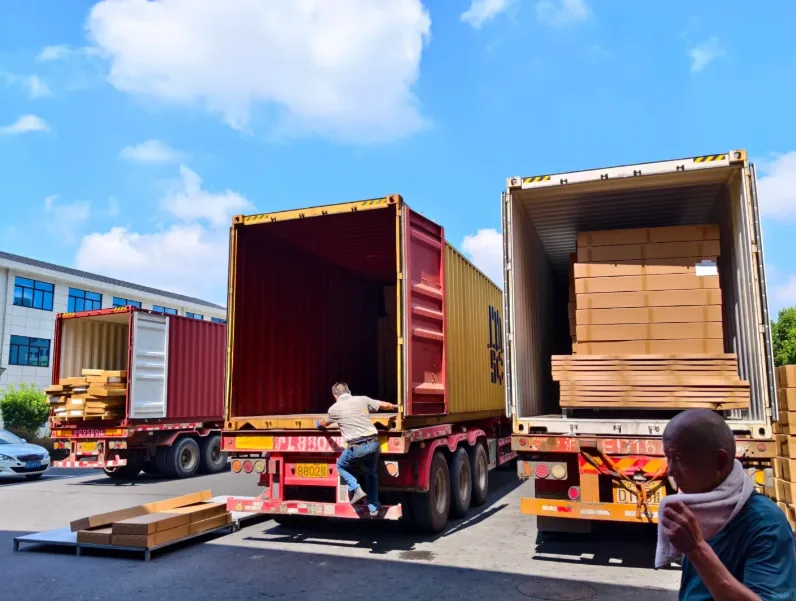
What you should decide before booking freight
Most buyers let the supplier default to whichever freight mode is easiest for the supplier to arrange, which isn't the same as cheapest or fastest for you. Get your own numbers first: actual CBM and weight — not the supplier's estimate — your real delivery deadline, and whether this shipment is combining with other suppliers' cargo. Compare FCL, LCL, and air against those numbers on transit time, cost per cubic meter, and consolidation risk. Decide in advance what delay you can absorb, before you're negotiating that answer under pressure with a container already at origin.
The actual CBM, gross weight, and hard delivery deadline — not the "ideal" date the supplier quotes.
China sourcing services · Talk to SourciaVera
Quick answer
- FCL makes sense from 15 CBM up, or when the per-volume cost of LCL stops dropping.
- LCL makes sense between 1 and 15 CBM, or when the order combines multiple suppliers.
- Air makes sense under 150–200 kg with a real urgency, or for samples and first lots.
- Total lead time is not just ocean transit — add consolidation, customs, and last-mile delivery.
Decision table
| Mode | Typical volume | Estimated port-to-port time | When it makes sense |
|---|---|---|---|
| FCL (full container load) | 15+ CBM | 25–40 days depending on destination | Large single-supplier orders |
| LCL (less than container load) | 1–15 CBM | 30–45 days (includes consolidation and deconsolidation) | Small orders or multi-supplier shipments |
| Air freight | Under 150–200 kg | 5–10 days | Urgent orders, samples, first lots |
Transit times above are industry reference ranges for routes from mainland China. Actual time varies by origin port, final destination, sailing frequency, and customs conditions. Check with your freight forwarder for current estimates on your specific route.
The real sum of production, origin consolidation, transit, destination customs, and last-mile delivery — not just the time the ship or plane is in the air.
Checklist before booking
- Confirm the actual CBM and weight of the order — not the supplier's estimate.
- Clarify whether the shipment combines more than one supplier (this almost always points to LCL).
- Ask how many days consolidation takes before the container departs.
- Build in extra time if your destination requires additional customs documentation.
Need to compare freight options for your order?
We coordinate consolidation, compare FCL, LCL, and air against your exact volume, and track every shipment milestone so you don't depend on scattered updates from different agents.
How SourciaVera can help
We coordinate consolidation when multiple suppliers are involved, compare actual cost between FCL, LCL, and air for your exact volume, and track every shipment milestone — so you're not piecing together updates from three different agents.
Frequently asked questions
Is LCL always slower than FCL?
Generally yes, because it adds consolidation and deconsolidation time at both ends — though the gap is often days, not weeks. The real variable is usually how often consolidated sailings leave for your destination port.
When does it make sense to pay more for air freight?
When the cost of a delay — missed selling season, customer penalty, stockout — exceeds the price difference versus ocean. For most products, that threshold is crossed quickly on urgent purchases under 150 kg.
Can I mix modes in a single order?
Yes. It's common to send part of an order by air to protect a launch date and the rest by sea to reduce total cost. This requires coordinating production and consolidation timelines for both parts from the origin.
Next step
Send SourciaVera your estimated volume, number of suppliers involved, and hard delivery deadline via the contact page.
The SourciaVera team
SourciaVera compares every freight option against your actual volume and deadline — so the decision isn't based on what the supplier prefers to sell.