Guangzhou is the world's largest auto parts hub — and also its most counterfeited. Wattage inflation, chipset swaps, and fake certifications are standard practice. We go to the factory so you don't have to guess what you're actually buying.
Consult Us Now →A Latin American buyer needed OEM wheels for the BYD Seagull — with a specific ET 54.1 offset. What looked like a simple order revealed a chain of technical decisions that are almost impossible to validate from abroad without someone on the ground.
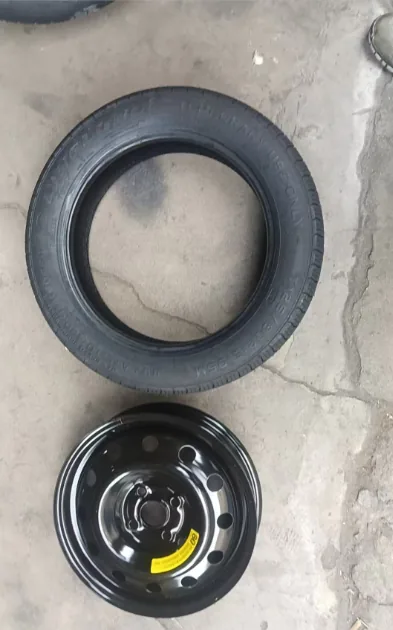
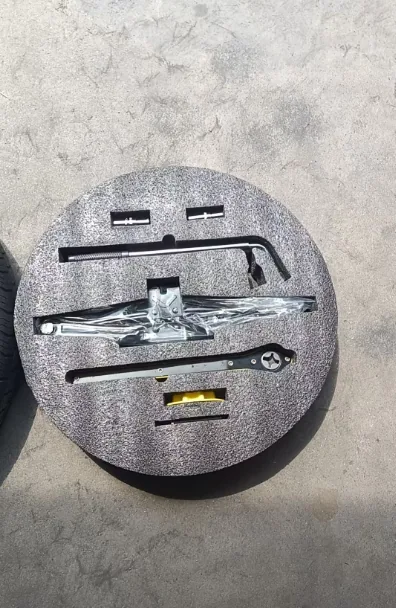
Verified sample: BYD Seagull wheel + tire (ET 54.1) — and a hub cap kit, delivered complete before deposit.
If the wheel arrives with a different offset, the installer is forced to use a spacer. That's not cosmetic: it affects suspension geometry, cornering behavior, and can cause uneven tire wear at highway speed.
We contacted four wheel manufacturers. Most confirmed the offset "by word," with no way to verify it before shipment. Only one factory in Sichuan agreed to document the real specification before the client committed to the order.
We coordinated with the factory to get a video of the wheel installed on the vehicle without a spacer, plus a spec sheet with real manufacturing data — not a generic catalog page.
We ordered wheel + tire + lug wrench + hydraulic jack + storage bag. The client confirmed in person that it matched the exact specification before committing to any larger order.
The result: From one sample to recurring orders. This is the type of verification we offer across every auto parts category — not just finding a manufacturer, but confirming with real evidence that the part matches your customer's exact vehicle specification.
The BYD Seagull is now common enough on Latin American roads that OEM-compatible wheel demand has followed it — but "OEM-compatible" only means something if the factory actually holds to the real specification. Here's what we check before we tell a client a supplier is legitimate.
| Bolt pattern (PCD) | 4 × 100 mm |
| Center bore diameter | 54.1 mm |
| Thread pitch | M12 × 1.5 |
| Factory size — standard | 5.5J × 15", ET40 |
| Factory size — alternative | 6J × 16", ET40 |
| Acceptable offset (ET) range | ET38 – ET42 |
| Lug nut seat type | Conical, 60° |
| Wheel bolt torque | 110 Nm |
Data verified against independent fitment references, 2026. Wheels with a bore larger than 54.1 mm require a centering ring — a detail aftermarket suppliers frequently skip.
A real OEM-line wheel goes through low-pressure casting or forging, CNC machining of the bolt circle and hub bore, static and dynamic balancing, then a multi-stage coating (primer, base, clear) before final inspection. Factories that skip CNC finishing on the bore tolerance are the ones that ship a wheel that "almost" centers — and almost is what causes vibration at highway speed.
Standard OEM-compatible wheels use A356 or A357 aluminum alloy, heat-treated (T6) after casting to reach the strength needed for a passenger vehicle. We ask every factory for the mill certificate on the aluminum ingot batch — not the finished-wheel spec sheet, which tells you nothing about what alloy actually went into the mold.
Cast wheels (gravity or low-pressure) are the standard for OEM-compatible Seagull fitments and the right choice for most buyers on cost. Forged wheels cost 2–4× more but weigh less and resist cracking under impact — worth it for a premium aftermarket line, overkill for a standard replacement-parts catalog.
Beyond the visual check, a real inspection includes an air leak test (wheels for tubeless tires must hold pressure), a radial/lateral runout check (excess runout causes steering vibration), and a salt-spray test on the coating — the single most relevant test for Latin America's coastal humidity and intense UV exposure, both of which accelerate clear-coat failure and corrosion on a wheel that looked fine in the factory photos.
Most Guangzhou-area wheel factories quote an MOQ of 100–200 units per size/finish for a private-label or custom-offset run; some accept 50 units at a price premium. Custom finishes (gunmetal, machined-face, bronze) typically add 5–10 days to lead time. Any factory quoting a Seagull-fitment custom wheel at under 50 units with no premium is usually reselling stock they already have in a warehouse — not manufacturing to your spec.
Wheels ship as general cargo (not hazardous), palletized or crated, typically 4 wheels per box for 15–16" sizes. HS code 8708.70 (road wheels and parts) applies for most OEM-compatible fitments — confirm classification with your customs broker before booking, since duty treatment varies by destination country. Sea freight (FCL/LCL) is standard; air freight is only worth it for urgent low-volume orders given the weight-to-value ratio of wheels.
We work with buyers sourcing automotive accessories, OEM-compatible parts, and private-label products from Guangzhou. Our team verifies which factories actually manufacture and which ones repackage.
We also verify and source automotive accessories and custom interior products — including private-label packaging support for DTC and retail brands.
Share an Alibaba link, company name, or contact details. We visit within 48–72 hours and deliver a full video report — factory floor, production lines, real certifications, and unedited walkthroughs.
What you get:
Unedited video walkthrough of the factory floor · Business license verification · Physical certification checks (DOT, ECE, ISO) · Real production capacity · Written report with findings · Delivered in 48 hours
No visit fee if we can't confirm it's a real manufacturer.