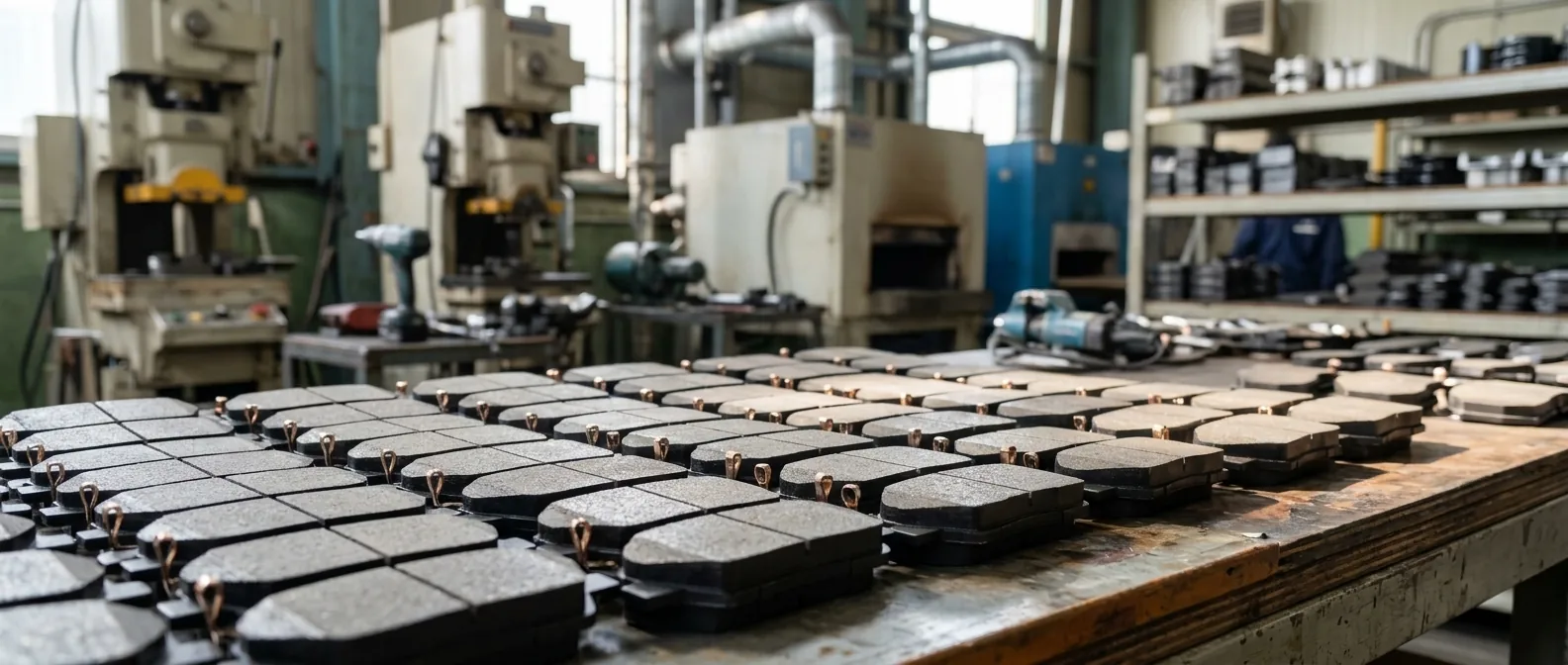
Auto parts fail buyers in specific, repeatable ways — wrong fitment, understated wattage, coatings that don't survive shipping. These 6 checks catch the failures we see most often in Guangzhou's auto parts supply chain, before the container leaves port.
1. Dimensional and Fitment Check Against OEM Spec
"Fits [car model]" is a marketing claim, not a spec. Bolt pattern, offset, and center bore need to match numbers, not a listing description.
We've seen this pattern often enough that it has a shape: a buyer orders a set of 18-inch wheel rims listed as a direct fit for a popular crossover, the factory ships based on its own reference mold rather than the OEM spec sheet, and the wheels arrive with the bolt pattern correct but the offset off by 6mm. Six millimeters doesn't sound like much until the wheel is mounted and the inner lip is rubbing against the strut on full lock, or the outer face sits proud enough to foul the fender liner. The same complaint shows up under different part numbers in owner forums — wheels that mount fine but don't actually fit, valve stem holes drilled in the wrong position, a rim that's within tolerance for a generic 5-lug pattern but wrong for the specific hub. For a container of 400 wheels, that's not a defect you catch by eyeballing one sample under showroom lighting — it's a caliper measurement against the actual OEM number, on units pulled from the pallet about to ship, not the one the factory keeps for visitors. Get the offset wrong at scale and the outcome isn't a bad review, it's a full container going back on a return shipment with freight paid twice.
Request exact measurements against the OEM spec sheet, not just a fitment claim.
We measure a bulk-production sample with a caliper against a verified OEM reference — not the supplier's own spec sheet.
2. Material and Alloy Grade Certification
Load-bearing parts live or die by the actual alloy grade used, not the grade quoted in the listing.
Ask for the alloy grade or material certificate for any load-bearing part.
We request the mill test certificate and confirm it matches the batch actually being shipped, not a reference sample.
3. Coating and Finish Durability
A finish that looks fine on day one can fail in months if it hasn't been tested for the conditions it'll actually face.
Powder-coated brake calipers are a common enough add-on that the failure mode is well documented: they look showroom-fresh out of the box, survive a season, and then start bubbling and rusting at the edges where the coating didn't fully cure or wasn't thick enough over the casting's rough spots. The manufacturer's spec sheet says the coating passed salt spray testing; the test report attached to the file says 96 hours. When an independent lab actually runs a sample pulled from the production batch rather than a hand-picked showpiece, red rust shows up on the mounting ears at 48 hours — less than half the claimed rating. That's a coating that will look fine through the photos in the listing and start failing within a year of the buyer's own customers driving through winter road salt. The gap between "salt spray tested" and "salt spray tested to what result, on what sample" is exactly where this fails, and it isn't visible on a data sheet unless someone requests the actual test certificate and checks it against the batch shipping, not a reference unit kept in a drawer.
Ask if salt spray testing has been done, and for how many hours.
We can commission an independent salt spray test report if none exists yet.
4. LED Lumen Output and IP Rating
Chipset datasheets show theoretical maximums. Actual output after assembly and housing is a different number.
LED headlight and taillight assemblies are the category where the gap between claimed and tested output is largest and most consistent. A listing claims 12,000 lumens per side; that number comes from the chipset manufacturer's datasheet under lab bench conditions, not from the finished, housed unit. Put a lux meter on the actual assembly and the same complaint comes up again and again in owner forums — a bulb rated at "10,000 lumens" measuring closer to 2,200-2,400 lumens once housing losses, driver limitations, and real 12V draw are accounted for, roughly a fifth of the claimed number. For a headlight assembly that's supposed to meet a minimum road-legal output, that's not a marketing exaggeration a buyer can shrug off; it's a product that may fail a vehicle inspection in the destination market, or a real visibility shortfall that becomes a liability question if it's involved in a nighttime collision. The IP rating claim usually travels with the same inflation — "IP67" on the listing with no test report behind it, which matters the first time a customer's car goes through a car wash. Testing the finished unit against the claimed number, not the chipset's rated maximum, is the only way to know before 2,000 units are already on the water.
Ask for the tested lumen output and IP rating of the finished product, not the chipset's rated maximum.
We test sample units with a lux meter against the claimed spec before you commit to the order.
5. Packaging Drop-Test
Products that pass inspection perfectly can still arrive broken if the packaging was never tested for the actual shipping route.
Ask what packaging materials are used and whether they've been drop-tested for your route.
We inspect actual packaging materials and can request a drop-test video before mass production starts.
6. Pre-Shipment AQL Sampling
The single check that catches most defects before they become your problem — but only if someone actually runs it before the container is sealed.
Suspension bushings and control arm assemblies are small enough, and cheap enough per unit, that buyers are tempted to skip formal sampling and trust the factory's own QC sign-off. On a lot of 3,000 polyurethane control arm bushings, AQL 2.5 at general inspection level II calls for a sample of 200 units, with an accept number of 10 and a reject number of 11 major defects. Run that sample and it's common to find bushings molded off-center, or with a durometer noticeably softer than spec — the kind of defect that doesn't show up in a five-second visual check but shows up within a few thousand miles as premature wear, clunking, or a control arm that won't hold alignment. In one inspection we ran, the count came back at 14 major defects against a reject threshold of 11 — a fail, by a margin wide enough that there was no argument about it. That's a shipment held before the container is sealed instead of a customer complaint that surfaces six months later as a warranty claim nobody budgeted for. The whole point of AQL sampling is that it catches this before it's your problem instead of after.
Agree on an AQL level (commonly 2.5 for general merchandise) in writing before production starts.
We conduct the AQL inspection ourselves before the container is sealed — the one check that actually prevents a bad shipment rather than just documenting it afterward.
Why Auto Parts Need This More Than Most Categories
Wheels, lighting, and structural components carry safety and liability implications that a t-shirt or a phone case doesn't. A fitment error or an unrated coating isn't just a bad review — it's a return shipment, a compliance problem at customs, or worse. These 6 checks aren't extra caution; for this category, they're the minimum.
Sourcing Auto Parts From Guangzhou?
SourciaVera runs these 6 checks on-site — including caliper measurements against OEM spec and lux meter testing for LED parts — before your order ships.
Request a Quality Inspection