OEM means you supply the design and the factory builds to your spec; ODM means the factory already owns a design and tooling, and you put your brand on it. For most buyers launching their first private-label auto parts line out of Latin America, ODM gets you to market faster and cheaper — OEM is what you move to once you have volume and a design worth protecting.
- ODM typically runs 100–300 units per design and uses the factory's existing tooling — the fastest way to launch a first SKU.
- OEM typically requires 500–5,000+ units per design because you're paying for dedicated tooling built to your spec.
- Auto parts brands are built on documentation — fitment data, certificates, batch records — not on the logo.
- The riskiest moment isn't production, it's an "ODM factory" overclaiming design and tooling ownership — exactly what a factory audit checks before you commit tooling budget.
- Start with one category and 2–3 SKUs. Brands that launch a full catalog on day one are the ones we see stall out at month six.
OEM vs ODM vs Private Label: What's Actually Different
The three terms get used interchangeably in sourcing forums, and that's where buyers get burned — because the financial commitment behind each one is completely different.
| Model | Who owns the design | Typical MOQ per design | Best for |
|---|---|---|---|
| Private Label | Factory (existing product) | 100–500 units | Fastest launch, lowest risk, least differentiation |
| ODM | Factory (built for you, sometimes lightly customized) | 100–300 units | First brand launch — customization without tooling investment |
| OEM | You | 500–5,000+ units | Protecting a specific design once you have proven demand |
Private label means the factory already makes the part — you're buying an existing SKU and putting your logo and packaging on it. Nothing about the part itself changes.
ODM goes one step further: the factory owns the base design and tooling, but you can request modifications (color, minor dimensions, branding elements) within what their tooling allows. You're not paying for new tooling, so the MOQ stays low.
OEM means you bring the spec — your drawings, your tolerances, your materials — and the factory builds dedicated tooling to produce it. This is where real differentiation happens, and it's also where the MOQ jumps, because someone has to pay for that tooling.
Most Latin American buyers we talk to say "OEM" when they mean ODM. The distinction isn't academic — it's the difference between a $2,000 tooling deposit and a $15,000 one.
Which Model Fits Your First Auto Parts Brand?
Three questions decide this, in order:
1. Do you have a design that's actually different from what's already on the market?
If the honest answer is no — you just want your brand on a brake pad, a wiper blade, an LED headlight assembly that already exists — you want ODM or private label, not OEM. Don't pay for tooling to reproduce something a factory already makes.
2. Can you commit to the MOQ without sitting on dead stock?
ODM's 100–300 units per design is a real commitment for a first-time brand, but it's recoverable if the SKU doesn't move. OEM's 500–5,000+ unit minimum is not — if you guessed wrong on demand, that inventory sits in a warehouse for a year.
3. Is this a category where the design itself is your competitive advantage?
For most auto parts categories — wiper blades, LED lighting, brake pads, filters — the advantage isn't a better design, it's reliability and fitment accuracy. That favors ODM. OEM earns its cost back in categories where you're solving a specific fitment or performance problem competitors haven't.
Not sure which category you're even looking at yet?
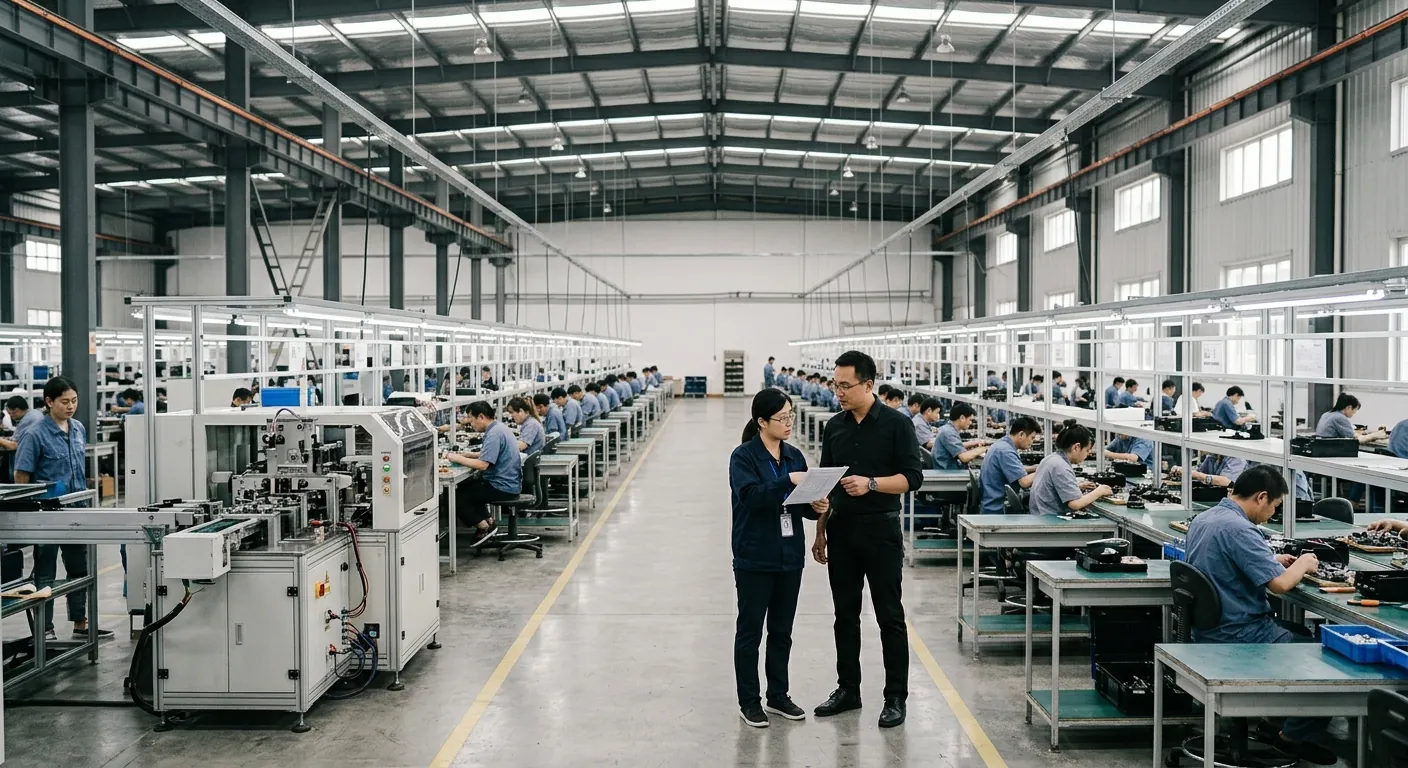
A factory audit on a candidate ODM supplier will tell you, in one visit, whether they actually have the tooling and design library they're claiming — before you spend a peso on customization.
Picking Your First Product Category: A Real Example of Why Precision Matters
We verified a set of OEM wheels for a BYD Seagull for a Latin American client earlier this year. The part looked simple on paper — an aluminum wheel, a common size. The detail that mattered was the offset: ET 54.1. Get that number wrong by even a few millimeters, and the installer compensates with a spacer, which changes the suspension geometry, affects cornering, and causes uneven tire wear. Read the full case.
That case is about verification, not brand-building, but the lesson transfers directly to picking your first ODM category: the categories that look easiest to brand are often the ones where a single overlooked spec ruins the batch. Wheels, brake components, and lighting assemblies all have fitment tolerances that vary by vehicle generation and market. Before you lock in a category for your private-label line, confirm the factory's ODM catalog actually covers the vehicle generations sold in your market — not just the generation their catalog photo shows.
Lower-risk categories to start with: wiper blades, cabin air filters, LED bulb replacements, ignition coils — parts with looser fitment tolerance and shorter development cycles. Save wheels, brake components, and anything safety-critical for after you've run one ODM cycle successfully.
The Documentation That Actually Builds Trust
A parts brand is built on trust in the part, not the logo on the box. That trust comes from paperwork most first-time brand builders skip:
- Fitment data — exact vehicle make/model/year compatibility, not "universal fit"
- Material certificates — especially for anything with a safety function (brake components, lighting)
- Batch records — traceability if a defect shows up after the batch has shipped
- Test reports — for electrical parts (LED assemblies, ignition components), a basic performance test report from the factory, not just a visual inspection
None of this is expensive to request. It's expensive to not have it when a customer in your market asks why their part doesn't fit, or when a distributor asks for compliance paperwork before carrying your line.
Where OEM/ODM Claims Fall Apart Without Verification
Here's the failure mode we see most often, and it happens before a single unit is produced: a factory on Alibaba lists itself as an "ODM manufacturer" with a design catalog, a buyer picks a design, pays a deposit toward customization, and only later discovers the factory doesn't actually own that tooling; they're subcontracting it from a smaller shop two provinces away, with no direct quality control over it.
This isn't rare. It's the same pattern behind why a factory that looks real in video calls and photos doesn't always turn out to be the actual manufacturer — the ODM claim is just a more specific version of the same problem.
A factory audit before you commit tooling or customization budget answers three questions a sales rep's word can't:
- Does this factory actually own the tooling for the design they're showing you, or are they subcontracting it?
- Do they have in-house QC for this specific product line, or only for their core category?
- Does their production capacity match what they quoted for your MOQ and timeline?
A $349 factory verification is a small line item next to a $2,000–$15,000 tooling commitment. We've seen buyers skip it on the logic that "it's just private label, what's the risk" — and then discover mid-production that the factory's "existing design" needed retooling anyway, at their expense.
What This Costs and How Long It Takes
Rough ranges based on what we see across ODM and OEM auto parts projects:
- ODM development: 2–4 weeks from sample approval to first production run; tooling modification fees (if any) typically $200–$800
- OEM development: 6–12 weeks including tooling fabrication; tooling deposits commonly $2,000–$15,000 depending on part complexity, usually 50% upfront and 50% on tooling approval
- Sourcing agent / verification fees: a factory audit ($349) or ongoing supervision during tooling and first production run is the standard way to protect a tooling investment you can't easily walk back
These numbers vary by category and factory, which is exactly why a quote needs your actual spec, not a general estimate.
Start With One Category, Not a Catalog
The brands that stall out by month six almost always made the same mistake: they launched 15 SKUs across three categories at once, split their attention and budget across all of them, and couldn't tell which SKU was actually working. The ones that are still shipping a year later started with one category and 2–3 SKUs, got the documentation and fitment right, and expanded only after the first run sold through.
Ready to move from sourcing to your own brand?
If you're evaluating an ODM or OEM factory for your first auto parts line, talk to us about a factory verification before you commit tooling budget.