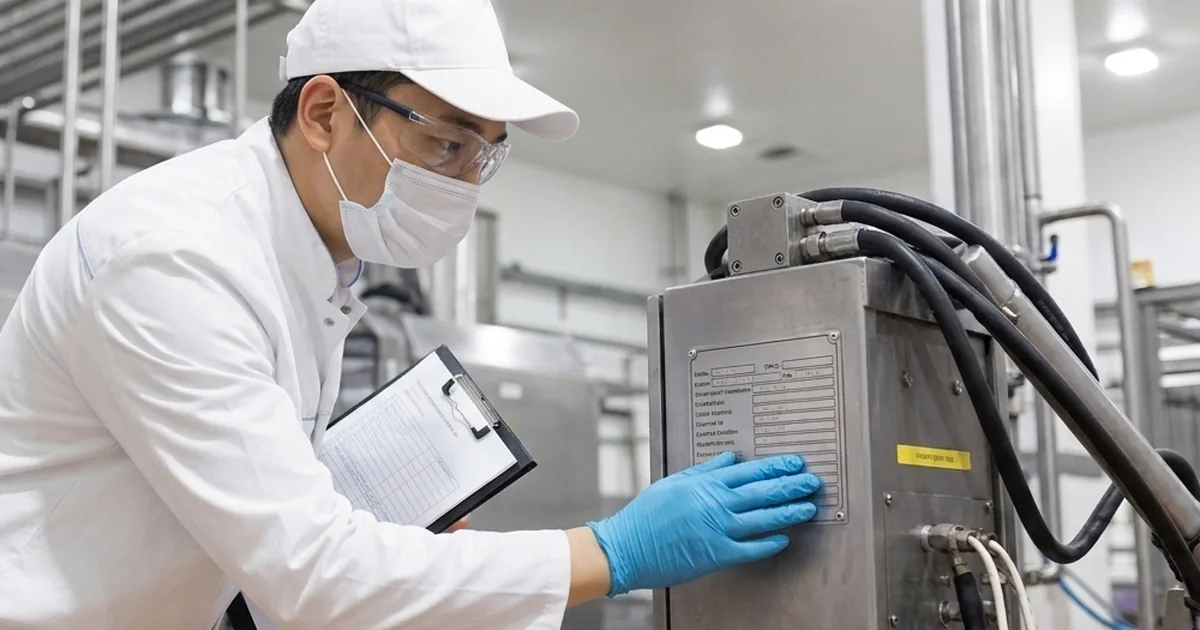
Most buyers ask me the wrong question about inspection. They ask, "How much does it cost?" The number one reason buyers skip factory inspection is cost, and the number one reason they regret skipping it is also cost: the cost of a bad shipment that has already left China. So the question I'd rather you ask is, "What does it cost me if nobody checks?"
Our team visits factories in person, and the founder still joins many of the visits. My position is simple: for almost any order worth importing, inspection is the cheapest line in your budget.
The short answer: a pre-shipment inspection in China typically costs $150–$350 per man-day with the major agencies; our rate is $399 per man-day, and one man-day covers most orders up to about 300–400 units. A factory audit runs $250–$500 per man-day (ours is $499). For any order over roughly $3,000–5,000, that cost is almost always worth paying.
Why Is Inspection the Cheapest Line in Your Budget?
Three reasons:
- Cost is both why buyers skip it and why they regret it. The cost that hurts is that of a bad shipment that has already left China.
- The problems that hurt most are the ones nobody looked for. They surface after the goods are on the water.
- Before shipment you can still say "fix it first." Afterwards you are negotiating from a weak position.
Which Inspection Do You Need: PSI, DPI, IPC or a Factory Audit?
Buyers often ask me for "an inspection" when they actually need something else. Choosing the right type is half the savings:
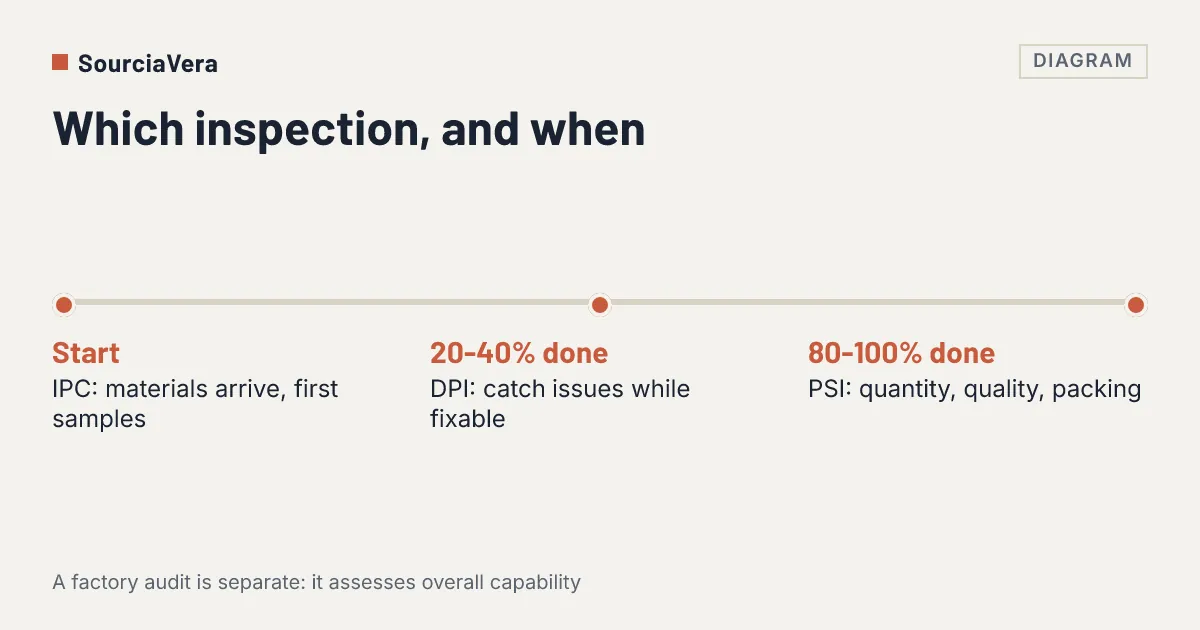
- Pre-Shipment Inspection (PSI): Done when 80–100% of goods are finished. The inspector checks quantity, quality, measurements, labels, and packing against your spec sheet. This is the most common type and the minimum I recommend for any order over $3,000.
- During Production Inspection (DPI): Done when 20–40% of production is complete. It catches issues early, when they can still be fixed without scrapping the entire batch. Best for orders where quality is critical and the factory is new to you.
- Initial Production Check (IPC): Done when raw materials arrive and first samples come off the line. Used for high-complexity or high-value orders to make sure materials meet spec before production begins.
- Factory Audit: Assesses the factory's overall capability, processes, certifications, and management system. It's not product-specific — it tells you whether a factory can reliably produce to your standards before you place any order.
What a factory check looks like in practice: in the case of the BYD Seagull spare wheel, the factory's first spec sheet had the wrong offset, confused with the center bore. Our team required a stamped re-check and the factory corrected the figure to the real offset, ET 30. The takeaway: no listing shows you that.
Full Inspection vs. Sampling Inspection: Which Do You Need?
Most factory inspections in China use statistical sampling. The inspector doesn't check every unit; they pull a defined number of pieces based on your order quantity and apply AQL (Acceptance Quality Limit) tables to decide pass or fail. For most standard orders, this is sufficient and cost-effective.
A full inspection — also called 100% inspection — means every single unit is examined individually against your specifications, instead of extrapolating from a sample. The man-day rate is the same as sampling inspection; what changes is the number of days required, which depends on how many units need to be checked and how long each unit takes.
In my experience, sampling is usually the right choice when:
- Your order is mid-to-large volume and your product has a consistent, low-defect history
- You have an established relationship with the factory
- Product failure consequences are limited to returns or replacements, not safety risks
Full inspection makes sense when:
- Every defective unit reaching your customer carries disproportionate cost — in returns, safety liability, or reputational damage
- You are placing a first order with a new factory and cannot afford quality variance
- You previously received a defective batch and need certainty before the next shipment
- Your product has safety-critical specifications (electrical components, structural parts, regulated goods)
- Your order is small enough that a statistical sample would be too small to be meaningful
Because the man-days for a full inspection scale with both order volume and how complex each unit is to check, the total varies by order. Send me your order details and I'll give you a specific quote.
How Much Does Factory Inspection in China Cost?
Third-party inspection companies — including Intertek, SGS, Bureau Veritas, and QIMA (formerly Asia Inspection) — typically charge by the man-day in China:
- Pre-shipment inspection: $399 per man-day (SourciaVera rate; major global agencies range $150–$350)
- Factory audit: $499 per man-day (SourciaVera rate; major global agencies range $250–$500)
- Most inspections take 1 man-day for orders up to approximately 300–400 units
- Rush fees, remote location surcharges, and report fees can add $50–$150
We charge $399 for a standard pre-shipment inspection in Guangdong province. Prices are slightly higher in less accessible regions, and for large orders that need multiple inspectors, costs scale proportionally.
What Does a Pre-Shipment Inspection Check?
A standard pre-shipment inspection using AQL (Acceptable Quality Level) sampling covers:
- Quantity verification — actual count vs. purchase order
- Visual defect check — critical, major, and minor defect classification
- Measurement and dimension check against your spec sheet
- Functionality test — does it turn on, does it work as stated?
- Barcode and label accuracy check
- Packaging integrity inspection
- Random carton drop test
Most inspectors deliver a written report with photographs within 24 hours. The pass/fail result tells you immediately whether to authorize shipment or request rework before the goods leave China — which is the last moment you still have real leverage.
Is Inspection Worth the Cost? Run the Math
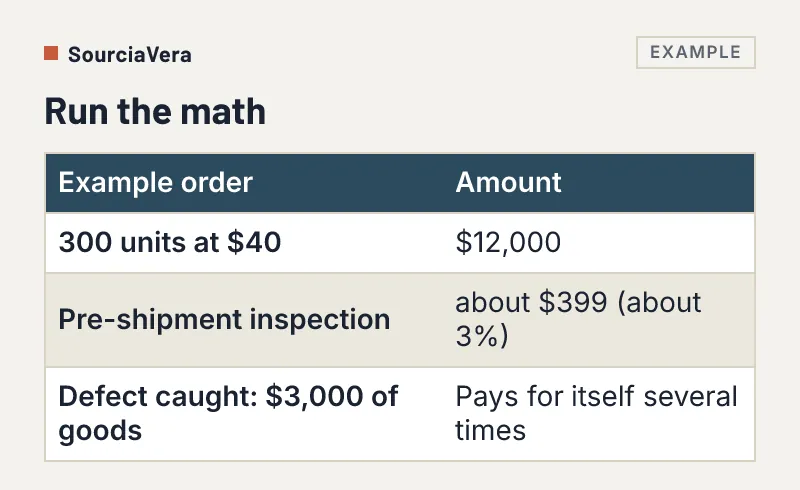
Take a typical order: 300 units at $40/unit, so $12,000 in order value. A pre-shipment inspection costs approximately $399. That's about 3% of the order value. If the inspection catches a defect that would have meant returning or scrapping $3,000 in goods, it has paid for itself several times over.
The break-even point is very low. My general rule: any order over $3,000–5,000 benefits from some form of inspection. Orders over $10,000 should have a pre-shipment inspection as a non-negotiable line in your sourcing budget.
When Should You Never Skip Inspection?
- First order with any new supplier — inspect. It is the point where you know the least about them.
- Orders over $5,000 — the math makes inspection cost-effective
- Products with safety implications — electrical goods, children's products, anything with structural requirements
- Orders going to Amazon FBA — Amazon's rejection and return penalties for non-compliant goods are brutal; a one-time $399 inspection is small next to a container of goods worth tens of thousands being refused at the warehouse or returned by your customers
- Orders with tight spec requirements — precise dimensions, certified materials, performance benchmarks
How Do You Choose an Independent Inspector?
For standardized, internationally recognized reports, the big three — SGS, Intertek, and Bureau Veritas — are your safest options. QIMA (formerly Asia Inspection) offers faster booking and competitive pricing. For Guangzhou specifically, a local sourcing agent with inspection capability can offer better coverage, video documentation, and faster turnaround than a large global firm routing everything through a central team.
Whoever you choose, confirm the inspector has no affiliation or financial relationship with the supplier. Bluntly: an inspector recommended by your factory is not independent.
How Our Team Inspects in Guangzhou
Instead of a generic third-party lab report, our team does local on-site inspection in Guangzhou, in English or Spanish, with a full video record of the check — so you see every unit reviewed, not just a statistical sampling summary. Pre-shipment inspection: $399/man-day. Factory audit: $499/man-day. Factory verification visit: $449.
Summary: A Few Hundred Dollars Buys You the Chance to Say "Fix It First"
Many buyers cut inspection first when a budget gets tight. But the problems that hurt most are the ones nobody looked for, and once the container is on the water you're negotiating from a weak position. A few hundred dollars before shipment buys the one thing you can't buy afterward: the chance to say "fix it first."
To sum up, for almost any order worth importing, inspection is the cheapest line in the budget. If you cut it, the realistic outcome is a shipment that fails once it has left China, with cash tied up and the next order delayed. Our team inspects in Guangzhou in English or Spanish with a full video record, per man-day or as part of our procurement service.
I provide supplier verification services, so you should treat my recommendation accordingly.