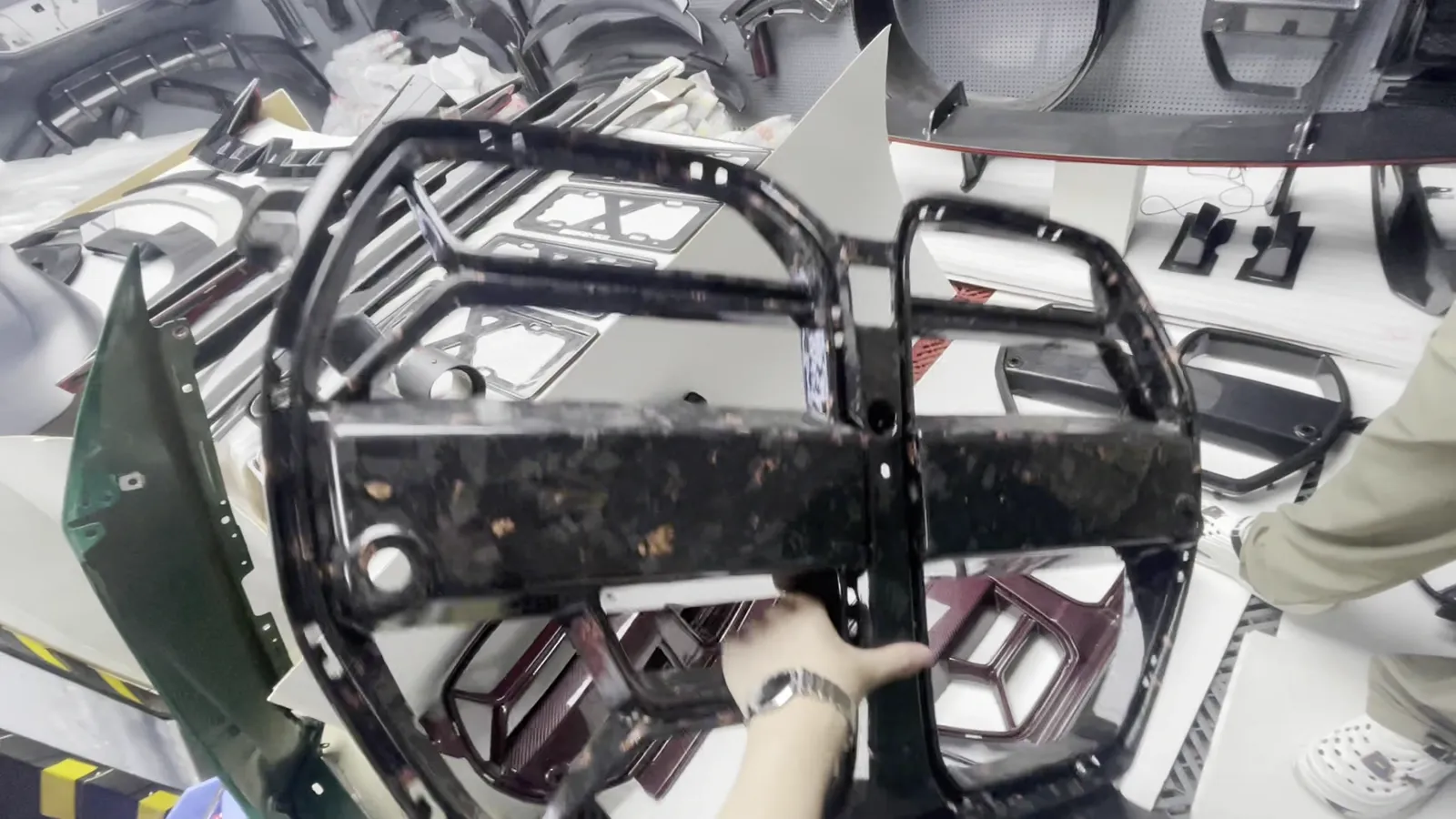
Carbon fiber is the easiest automotive material to fake in a listing photo and one of the hardest to verify without touching the part. A hood, splitter, or trim piece can look identical whether it's aerospace-grade prepreg or fiberglass with a printed weave pattern under clear coat — and the gap in what they actually do under load is enormous, even when the price gap isn't.
- Manufacturing process is the single biggest quality signal — wet layup, vacuum-bagged, and prepreg/autoclave are not interchangeable, and a factory that can't explain which one they use is a red flag by itself.
- Real carbon fiber and "carbon-look" fiberglass or ABS can look identical in a photo; weight, weave texture, and a tap test tell them apart in seconds.
- Mold ownership decides whether you can reorder on your terms or the factory can sell the same part to your competitor next month.
- "Looks like the reference photo" is not the same as verified fitment — insist on a 3D scan or CAD match to the actual vehicle generation.
- Separate the mold cost from the per-unit price in every quote; one combined number is usually hiding how much is sunk cost.
Real Carbon Fiber vs. Carbon-Look: The Distinction That Costs the Most to Get Wrong
A lot of what gets sold as "carbon fiber" in the aftermarket auto parts space is fiberglass or ABS plastic with a printed or vinyl carbon-weave finish under the clear coat. It photographs identically to the real thing and costs a fraction to produce — which is exactly the problem.
We currently run physical inspection at a carbon fiber parts factory in Guangzhou, and the honest answer is that almost nobody can tell real from fake off a photo. In hand, it takes about ten seconds: real carbon fiber is significantly lighter than fiberglass at the same size and thickness, the weave texture has a slight three-dimensional depth under the clear coat instead of sitting flat like a print, and it produces a distinct sharp, hollow sound when tapped — plastic and resin-heavy fiberglass sound duller and denser.
Ask for a physical sample before you commit to a production run, not just photos. If a supplier resists sending one, or sends a sample that doesn't match what ships later, the verification has already failed — before you've spent real money.
The Manufacturing Process Is the Biggest Quality Signal — and Most Buyers Never Ask
Three production methods dominate the custom carbon fiber parts market, and they are not interchangeable:
| Process | Fiber-to-resin ratio | Strength-to-weight | Typical use |
|---|---|---|---|
| Wet layup | Resin-heavy, inconsistent | Lowest | Cosmetic trim, low-load parts |
| Vacuum-bagged wet layup | More consistent, less resin | Middle | Visible body panels, moderate-load parts |
| Prepreg + autoclave | Precisely controlled | Highest | Structural and performance parts |
Wet layup is the cheapest and least consistent method — resin is applied by hand, so the resin-to-fiber ratio varies part to part, and you end up with something heavier and weaker than the same part made a different way. Vacuum-bagged wet layup pulls excess resin out under vacuum pressure before curing, which tightens up consistency and cuts weight without the cost of autoclave equipment. Prepreg and autoclave curing is what serious performance parts use — the fiber sheets come pre-impregnated with a precise resin content, and autoclave curing under heat and pressure produces the highest strength-to-weight ratio with the least part-to-part variation.
Ask directly which process a factory uses for your part, and don't accept a vague answer. A shop that does real prepreg work will tell you their resin system, cure temperature, and autoclave size without hesitating — because that's the equipment and expertise they're charging for. A shop that goes quiet or changes the subject is very likely running wet layup and charging prepreg prices.
Weave and Fiber Orientation Matter More Than They Look Like They Should
2x2 twill weave — the diagonal pattern most people picture when they hear "carbon fiber" — is standard for visible, cosmetic parts because of how it looks under clear coat. Plain weave is flatter and less common on cosmetic parts, but shows up more in structural layups where the weave pattern isn't the point.
For anything load-bearing — a hood, a structural body panel, anything that flexes under wind load at speed — fiber orientation matters more than weave pattern. Fibers carry load along their length, not across it, so a factory building a real structural part should be able to tell you how fiber orientation is laid out relative to where the part actually takes load, not just how it's laid out to look good in a photo. If a supplier can only talk about the weave pattern and has nothing to say about orientation, they're building a cosmetic part regardless of what resin system they're using.
Resin Quality and UV Coating Decide Whether the Part Survives Outdoors
Epoxy resin quality is invisible on delivery and obvious after a year outdoors. A cheap clear coat over any resin system starts to yellow and micro-crack under UV exposure within twelve to eighteen months — this shows up first on hoods, splitters, and mirror caps, anything with direct, sustained sun exposure.
Ask specifically about UV-resistant clear coat, not just "clear coat." It's a small cost difference at the factory and the difference between a part that still looks new in year two and one that needs to be pulled and redone.
Mold Ownership Decides Your Leverage on Every Future Order
For a custom part, clarify one thing before you pay a mold deposit: who owns the mold when this is done — you or the factory?
If the factory owns it, they can produce and sell the same part to anyone else who asks, including a competitor sourcing from the same factory a month later. If you own it, reorders happen on your terms and at your negotiated price, and the factory can't quietly sell your design elsewhere.
Also ask whether the factory makes molds in-house or outsources tooling. Outsourced molds mean a longer lead time on your first run and a second company in the chain that can cause delays or quality issues neither side fully controls. A factory that makes its own molds can usually turn around design changes faster and has no incentive to hide who actually built the tooling.
Not sure if a supplier's process claims hold up?
A factory audit confirms what process they actually run, whether they own the mold they're quoting, and whether their in-house QC matches what the sales rep told you — before you commit a production deposit.
Fitment Verification Is Where Most Custom Shops Cut Corners
For automotive parts, "it matches the reference photos" and "it fits your specific vehicle" are two different claims, and the gap between them is where most custom carbon fiber orders go wrong.
A hood or splitter cut to match photos of one generation of a popular model often doesn't clear a later facelift of the same model — mounting points and panel gaps shift by a few centimeters between generations in ways that don't show up in a reference photo. Insist on either a 3D scan of the actual vehicle or CAD data matched to your specific generation and trim before a mold is cut. A shop that pushes back on this, or says a reference photo is enough, is telling you they haven't verified fitment on your exact car — they're producing to a general shape and hoping it's close enough.
Certifications Matter for Structural Parts, Optional for Cosmetic Ones
If the part has any safety function — a hood that's part of the crash structure, a splitter or wing that affects aerodynamics at speed — ask about testing or certification. Most small carbon fiber shops have none, and that's fine for a cosmetic trim piece with no structural role. It's a real red flag for anything where a failure at speed is the downside.
Separate the Mold Cost from the Per-Unit Price Before You Commit
A quote that bundles mold cost and per-unit production into one number is hiding how much of what you're paying is a one-time sunk cost versus a recurring cost you'll pay on every reorder. Ask for the two numbers separately, and ask for per-unit pricing at more than one volume — 1 piece, 10 pieces, 50 pieces — to see where the economics actually work for your target scale. A factory that can only quote one volume tier hasn't priced this seriously yet.
Sourcing custom carbon fiber parts and want a second set of eyes on the factory?
A factory verification confirms manufacturing process, mold ownership, and QC before you commit tooling budget — for carbon fiber or any other custom auto part.