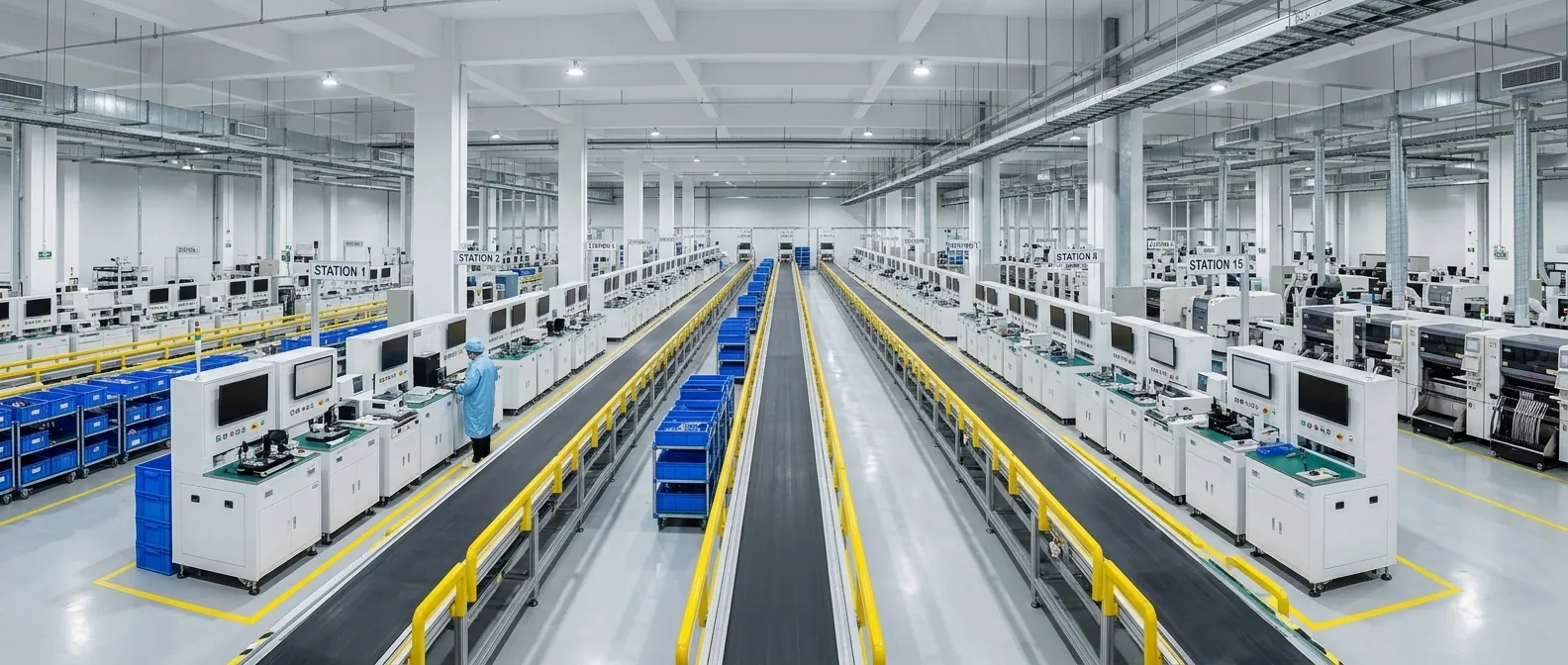
"Should startups manufacture hardware products in China?" comes up often enough, on Quora and everywhere else founders ask it, that it's worth answering directly. But the question itself usually points the wrong way. Most hardware startups don't need to build their own manufacturing in China at all — they need to find out whether a supplier ecosystem for something close to their product already exists, and whether the factory they're about to trust actually has the capability they're assuming it does.
Quick answer: before you commit to custom manufacturing, search for whether your product category already has a mature supply chain in China — most consumer hardware does, down to components you assumed you'd have to design from scratch. If it exists, your job is supplier selection and verification, not factory-building. If it genuinely doesn't exist because your product is a real mechanical or electrical novelty, that changes the entire cost and timeline conversation, and you should go in knowing that up front.
The Real Question Isn't "Can China Manufacture This"
China's manufacturing base covers enough ground that "can they build it" is rarely the honest bottleneck. The more useful question is whether a factory somewhere in Shenzhen, Dongguan, or Yiwu is already tooled up to produce something 80% identical to your idea — a PCBA design, an injection-molded enclosure, a battery pack configuration — because someone else already paid to develop it. Founders who skip this step end up quoting custom tooling and NRE costs for a product category where three factories already have the mold on a shelf and would happily private-label it with your logo instead.
What "Already Exists" Actually Looks Like
This is easiest to see in categories with mature, commoditized supply chains: charging cables and power banks, Bluetooth speaker modules, LED lighting drivers, injection-molded enclosures in standard sizes, PCBA reference designs for common sensor combinations. We've had founders come to us dead certain they needed a custom production line for a pet GPS tracker, convinced nobody else made anything close — a few searches later, there were four factories in Shenzhen already running GPS tracker PCBA lines at volume, wanting nothing from the founder but firmware, a case design, and a logo. The manufacturing risk in that scenario was never "can this be built." It's which of those four factories is actually good, and whether the one with the sharpest Alibaba photos is the same one that'll still answer messages after the third production run — usually it isn't.
When You Genuinely Need Custom Manufacturing
Some products really are novel enough that no existing supply chain covers them — a new mechanical actuation method, a material combination nobody's tooled for, a form factor that doesn't fit any standard mold. If that's your situation, the calculation changes: expect to pay for tooling and NRE (non-recurring engineering) costs, expect a longer timeline before your first sellable unit, and expect to need a much deeper relationship with whichever factory you choose, since you're asking them to build capability specifically for you rather than adapt something they already run. We see this maybe once for every ten founders who come to us convinced they're in it. The other nine have a pet tracker, a smart water bottle, or a fitness band — categories where the supply chain has existed long enough that half of Shenzhen could quote it from memory.
The Failure Mode Nobody Warns You About
The startups that struggle in China sourcing rarely fail because they couldn't find a factory. They fail because they found a factory — fast, with good sample photos and a fast WhatsApp reply — and never confirmed it was the right one before betting a production run on it. A sample built by a factory's best technician on their best day, in a small batch, tells you very little about what a 5,000-unit run looks like three months later under a different production schedule, especially once you're not their only, or newest, customer anymore.
This is the same gap we cover in more detail in our 10 things to check before paying a supplier deposit — company legitimacy, factory-versus-trading-company status, and production capacity all apply just as much to a hardware startup's first PCBA run as they do to a container of auto parts.
A Practical Sequence for Founders
Search first, tool second. Before requesting a single quote, spend time on 1688 and Alibaba searching for your product in pieces — the enclosure, the PCBA, the battery, the connector — rather than the whole assembled idea, since that's usually how the supply chain is actually organized. Shortlist three to five candidate factories per component, not one. Ask each one directly whether they already produce something similar for another brand, and treat hesitation on that question the same way you'd treat hesitation on a business license request. Run a small pilot order before a full production commitment, and verify the factory in person — or through someone who can — before that pilot order, not after it ships with a problem baked in.
The Advantage of Asking the Existence Question First
The founders we've seen skip this step aren't lazy — they're moving fast, which is usually the right instinct everywhere except here. The ones who search first tend to end up sourcing from Shenzhen or Dongguan instead of paying for a mold in a random third-tier city because that's where the first quote came from. Same product, sometimes even the same price, but one supplier has made this exact part 40,000 times and the other is learning your tolerances as they go, on your production run.
Not Sure Which Factory Actually Has the Capability?
SourciaVera verifies production capacity, quality control, and export experience on-site in Guangzhou — before you commit a production run to a supplier you've only seen in photos.
Request a Factory Verification