The short answer: importing China auto parts into Mexico follows the same process as any import, with two extra layers of risk on top: the technical spec has to match the vehicle exactly (a wrong offset or measurement doesn't show up until installation), and several automotive parts need to meet a specific Mexican NOM before customs releases them. Verify the supplier before you pay, confirm which certification applies to your part, and calculate the full landed cost — not just the factory price — before you commit.
From Guangzhou, we help auto parts distributors in Mexico and across Latin America import directly from Chinese suppliers, and the pattern that repeats most is the same one: the buyer finds a good price, but nobody checked whether the part actually meets the Mexican standard, or whether the supplier can prove in writing that they manufacture what they claim. This guide covers the full process.
Why Do Auto Parts Carry Extra Risk?
Importing auto parts follows the same process as any import, with two extra layers of risk:
- The technical spec has to match the vehicle exactly. A wrong offset or measurement does not show up until installation, and a supplier can confirm it "by word" without having verified anything.
- Some parts need a specific Mexican NOM. Customs does not release them without it.
- A good price hides the gaps. The pattern we see most is a buyer who found a good price, but nobody checked the standard or asked the supplier to prove in writing that it manufactures what it claims.
Which Auto Parts Move Most from China to Mexico?
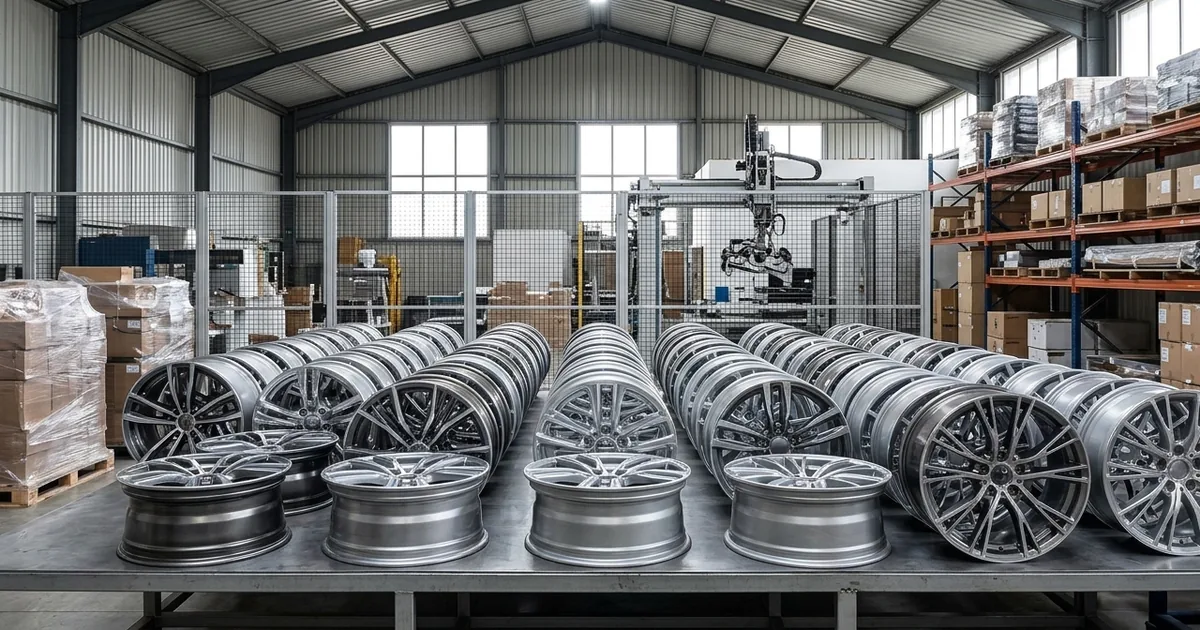
The categories we see moving most from Guangzhou into Mexico are wheels and wheel-related components, LED lighting, carbon fiber tuning parts, and OEM/ODM private label for aftermarket catalogs. Mexico imports a significant volume of Chinese auto parts overall — for the full picture with INEGI figures, we've covered that in what Mexico imports from China and what's actually made in Guangzhou.
How Do You Verify an Auto Parts Supplier Before Paying?
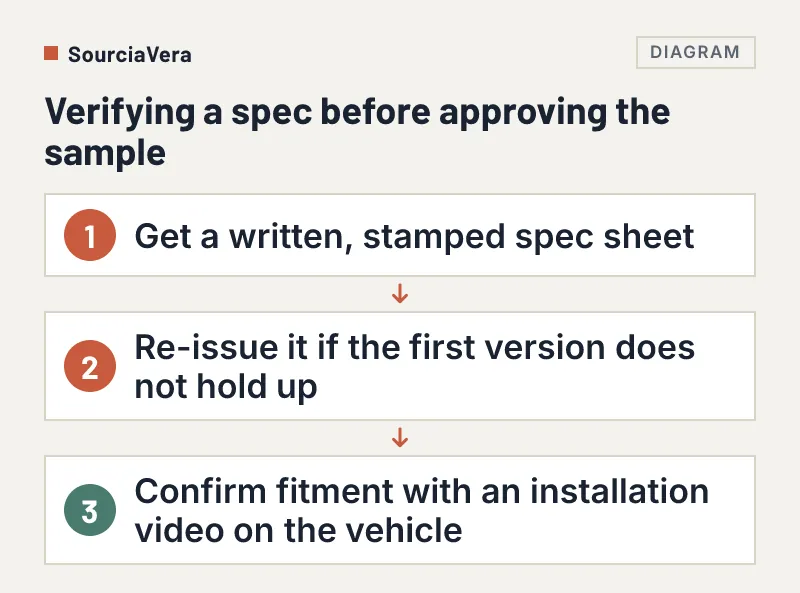
Auto parts carry a risk other categories don't carry as much: the technical spec (offset, center bore, bolt pattern, tolerances) has to match the destination vehicle exactly, and a supplier can confirm it "by word" without having verified anything. The rule we follow ourselves: never accept a spec without a written, stamped spec sheet, re-checked if the first version doesn't hold up. The full list of 10 checks before a deposit moves is in 10 Things to Check Before Paying a Chinese Supplier Deposit, and how to find the supplier in the first place is in How to Find Reliable Chinese Suppliers.
On an order for a client in Latin America, the supplier's first spec sheet for a spare wheel kit mixed up the offset (ET 30) with the center bore (54.1 mm) — two different measurements that, confused, would have meant a wheel that doesn't sit right without a spacer. We required a re-issued, stamped spec sheet before approving the sample, and confirmed the real fitment with an installation video on the vehicle. The full case, including how we caught the mix-up, is in this EV wheel verification case.
What Certifications Apply in Mexico?
It depends on the part. For automobile and light-truck wheels (13–24″ sizes), the technical benchmark is PROY-NOM-150-SCFI-2002, which specifies minimum fatigue-test cycles. Important: it's a proposed standard (proyecto), not a fully mandatory NOM — but it's still the closest official technical reference that exists for wheel safety in the Mexican market, and it's the document we ask a supplier to test against when the final destination is Mexico. Other auto parts categories (lighting, brakes, electrical components) may have their own applicable NOMs — confirm with your customs broker based on your product's exact tariff classification, since not every part falls under the same standard.
How Much Does It Cost to Import Auto Parts from China to Mexico?
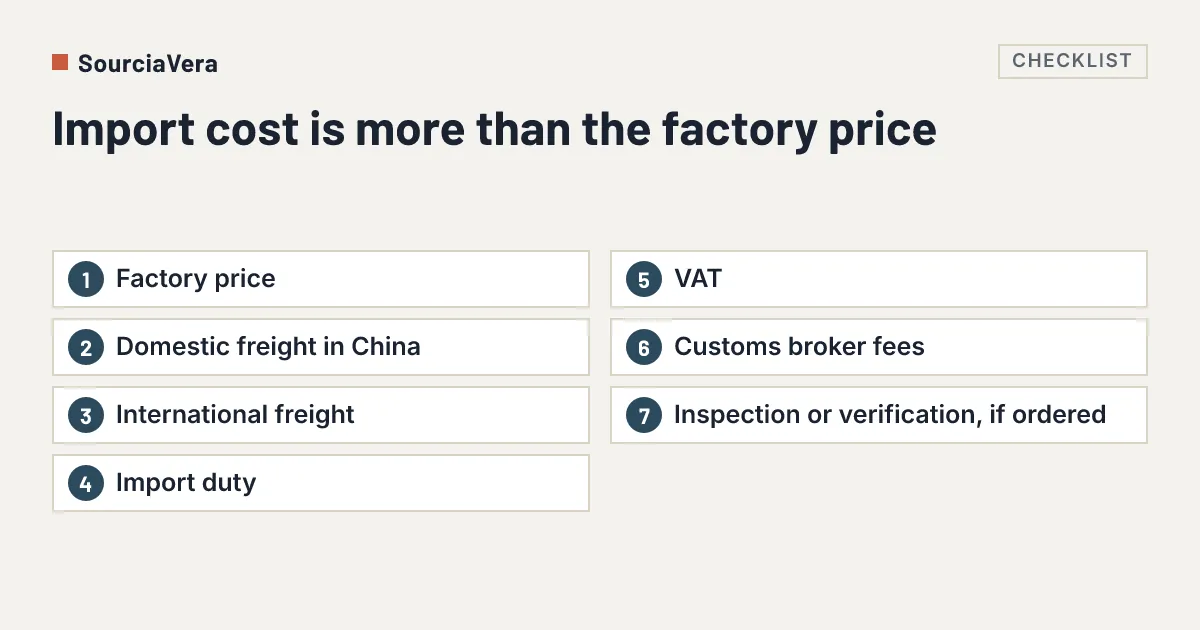
The real cost isn't the factory price. It's: factory price + domestic freight in China + international freight + import duty + VAT + customs broker fees + inspection or verification (if you order one). Leaving any of these out when quoting is the most common way a "cheap" order ends up costing more than expected. A price far below the market can also draw questions at customs: see Mexico's Customs Law reform on goods declared below their value.
On import duty: starting January 1, 2026, Mexico raised import tariffs on numerous tariff fractions from countries without a free trade agreement, including China, with reported rates ranging from 5% to 50% depending on the specific fraction — the automotive sector is among the sectors affected. We could not independently confirm, against the official Diario Oficial de la Federación text, the exact rate that applies to each auto parts fraction as of this writing. We're not quoting a single percentage here: confirm the exact tariff classification for your product and the current rate with your customs broker, or directly in the DOF, before calculating your final cost. A separate decree published on 13 October 2026 exempts one narrow group only: parts for vehicle assembly imported by authorized assemblers (who qualifies and who does not). For how a tariff code is built and who decides the fraction, see HS codes and Mexican tariff fractions.
| Category | Typical MOQ | Certification to Confirm |
|---|---|---|
| Alloy/steel wheels | 50–200 units | PROY-NOM-150-SCFI-2002 (proposed, not mandatory) |
| LED lighting | Varies by part | Confirm applicable NOM by fixture type |
| Carbon fiber (tuning) | Varies by part | No specific NOM identified; confirm with customs broker |
| ODM / private label | 100–300 units typical | Depends on the final product category |
| OEM (your own design, dedicated tooling) | 500–5,000+ units typical | Depends on the tooling; see OEM vs ODM |
Frequently Asked Questions
What documents do I need to import auto parts from China to Mexico?
At minimum: commercial invoice, packing list, bill of lading, and the import declaration (pedimento) your customs broker files. Depending on the part, you may also need an applicable NOM compliance certificate before customs releases the shipment.
How long does it take to import auto parts from China to Mexico?
Factory to Mexican port, a typical ocean shipment takes 30 to 45 days depending on the origin and destination ports. Add production time on top of that if it's not stock, plus customs clearance, which can be anywhere from a day to several weeks if there's an inspection.
Do I need a customs broker to import auto parts?
In practice, yes. In Mexico, commercial imports are normally cleared through a licensed customs broker (agente aduanal), who files the import declaration and confirms the correct tariff classification, which is exactly what determines the duty you pay. Check ANAM for the rules that apply to your case.
Summary: Verify, Certify, Then Calculate the Landed Cost
In short, verify the supplier before you pay, confirm which certification applies to your part, and calculate the full landed cost, not just the factory price. If you skip those steps, the realistic outcome is a shipment held at customs for a missing certificate, or parts that do not fit once installed, with your cash tied up and the next order delayed. A $49 remote check looks at the supplier's basics, and our team in Guangzhou can verify the technical spec and capacity on site.
I provide supplier verification services, so you should treat my recommendation accordingly.