The short answer: the first six digits of a tariff code are the same in more than 200 countries, but the duty you pay in Mexico depends on the eight-digit fraction your customs broker declares, and that choice rests on what the goods really are. A Chinese supplier's HS code is a useful lead, not the decision. Before you ship, make sure the product description is the same on every document, ask the supplier for its code and the reason for it, and have your customs broker confirm the fraction. If the broker cannot tell from the description, a consultation can be filed with the tax authority before the shipment.
This article covers how the code is built, who decides the classification and what to put in writing with the supplier. It is based on the World Customs Organization, the text of the Customs Law and a customs-broker glossary, and on general good practice, not on any first-hand experience of these classifications. It is not customs or legal advice: your broker has the final word on your goods.
Why Does the Tariff Code Matter to a Buyer?
- It sets the duty. Two goods that look alike can sit under different fractions with different rates. Our article on the October 2026 zero-tariff decree for vehicle assembly parts shows how a single fraction, 9803.00.01, changed the duty for one narrow group of importers.
- It travels on every document. The code and the description must agree across the quotation, the proforma invoice, the commercial invoice and the packing list, and a mismatch is a reason for questions at the border.
- It also decides other rules. The same tariff line can carry permits, standards or origin conditions, which a broker checks against the fraction.
How Is a Tariff Code Built?
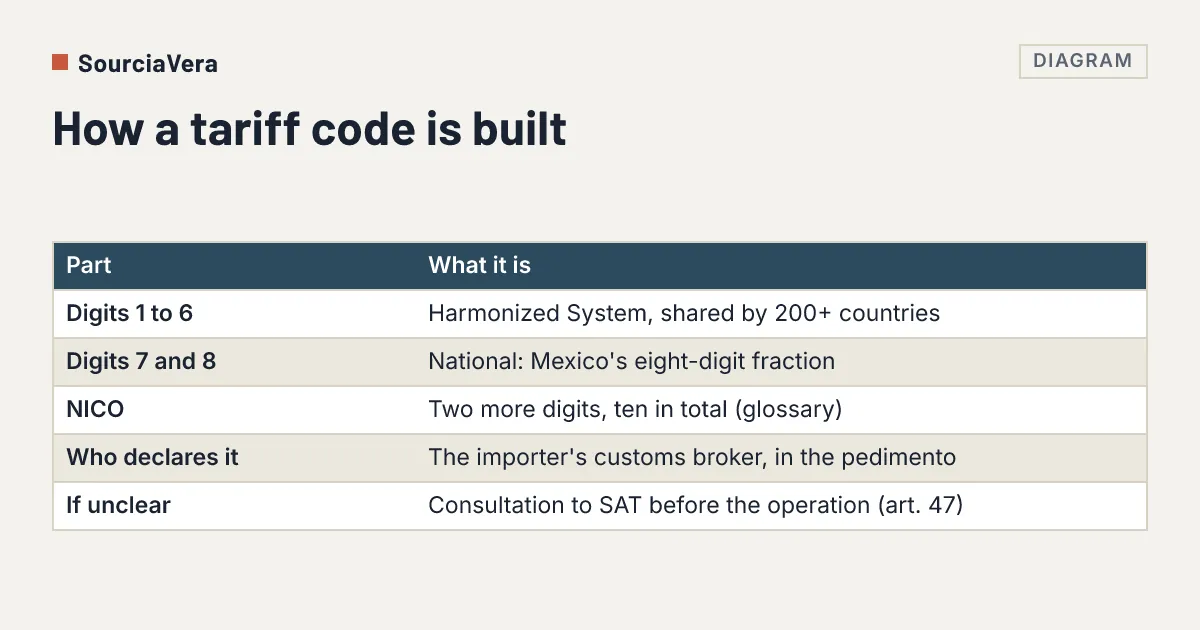
The World Customs Organization says the Harmonized System has more than 5,000 commodity groups, each identified by a six-digit code. It is used by more than 200 countries and economies, covers over 98% of international trade, and is updated every five to six years (WCO). That six-digit part is what a Chinese exporter and a Mexican importer share.
Mexico then adds two digits. A customs-broker glossary explains that digits seven and eight are for national use, which gives the eight-digit fraction of the tariff schedule (TIGIE), and that the national line adds two more digits, the NICO, to make ten (Camto glossary). We use a glossary here because we could not read the official schedule from our network, so check the structure and the current fraction in the official tool or with your broker. The same is true on the Chinese side: when China set its export rebate on new energy vehicles, the list it attached covered 67 tariff lines (see China's cut of the NEV export VAT rebate), so codes matter for exporters too.
Who Decides the Classification?
In practice the importer's customs broker declares the fraction in the import declaration (the pedimento), and the importer remains responsible for the information it gives. Under the Customs Law the importer must give the broker, under oath, the elements that allow the customs value to be determined, and keep that statement (art. 59, fraction III). The supplier's own code is not part of that decision. A supplier may use a code from earlier shipments, for another market or for a different product line, so treat it as a clue to check and not as the answer.
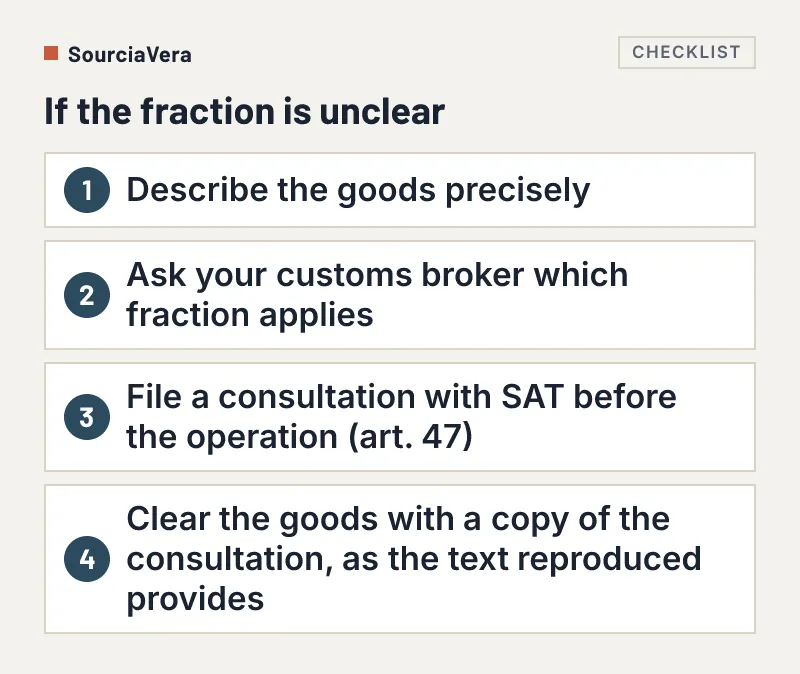
When it is not clear which fraction applies, the law has a route. Article 47 lets importers, exporters and customs agents ask the tax authority (SAT) for a classification consultation before the operation, when the goods could fall under more than one fraction or the classification is unknown. As the text is reproduced, the goods can then be cleared by attaching a copy of the consultation with its receipt and paying duties at the highest-rate fraction among the possible ones; if the final answer turns out lower, the importer can rectify the declaration or ask for a refund, and if it is higher, the difference is paid with update and surcharges, without a penalty for that omission (art. 47). The page we read says that its check against the official text is pending, so confirm the current wording with your broker.
What Should a Buyer Ask the Supplier to Write Down?
This section is general advice, not a legal rule. A tariff code follows the goods, so the more precisely the goods are described, the less there is to argue about.
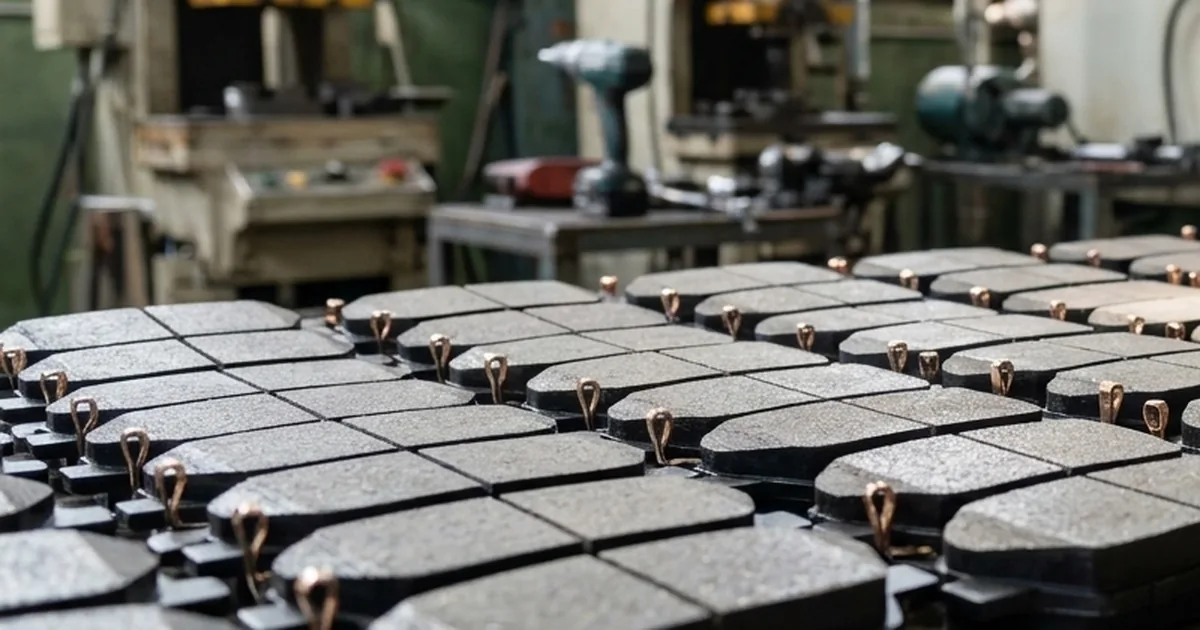
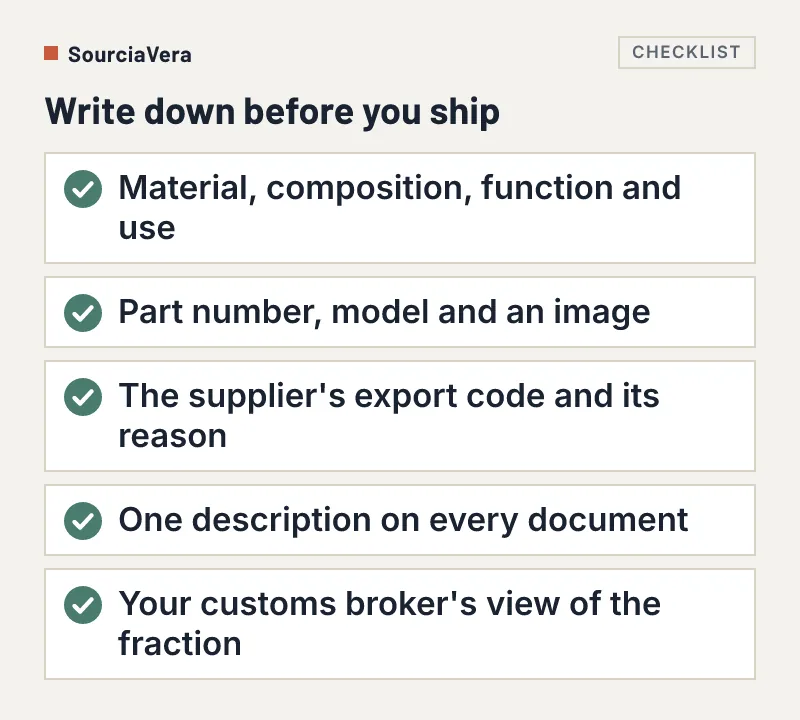
- What the product is made of and what it does. Material, composition, function and use, for example "brake pad, semi-metallic, for passenger cars", not "auto parts".
- The part number, model and an image, matching the sample or the technical sheet (see documents to request from a Chinese manufacturer).
- The code the supplier uses, and why. Ask for the Chinese export code and the reason it believes the product belongs there. If you buy sets and pieces, say which is which (see set versus piece quotes).
- One description on every document. The quotation, proforma invoice, invoice and packing list should use the same words and the same part numbers.
- A broker check before the order. Send the description and photos to your customs broker and ask which fraction they expect and what else attaches to it (permits, standards, origin).
Where Does a Third-Party Check Help?
It cannot assign a fraction: that is for your broker and, if needed, the authority. What it can do is confirm what the goods actually are, because the classification depends on it. A person at the factory can check that the product matches the description, the material and the part number on the documents, and photograph the goods and the markings, and an inspection before the balance is paid (what a pre-shipment inspection costs) can compare the shipment with the specification. The $49 Remote Check looks at whether the supplier is a real manufacturer and whether the payment account matches the company, and the 10 things to check before paying a deposit cover the rest. A description that matches the goods also helps with the value questions raised by Mexico's Customs Law reform on goods declared below their value, and how to import auto parts from China to Mexico shows where duty enters your landed cost.
What Does a Supplier's Code Not Tell You?
It does not tell you the Mexican fraction, the rate, or whether a permit or standard applies. It does not settle a classification the authority may see differently, and it does not replace a consultation when the answer is unclear. This is general information, not customs or legal advice.
What Should You Do Next?
- Write a precise description of each product: material, function, use, part number.
- Ask the supplier for its code and the reason, and keep it as a lead.
- Send the description and photos to your customs broker and ask which fraction they would declare and what attaches to it.
- Use the same description on the quotation, the PI, the invoice and the packing list.
- Ask about a consultation if the fraction is unclear, before the first shipment and not at the port.
Frequently Asked Questions
What is an HS code?
It is a six-digit code of the Harmonized System, maintained by the World Customs Organization, used by more than 200 countries and economies and covering over 98% of international trade. Each country can add its own digits.
How many digits does a Mexican tariff fraction have?
A customs-broker glossary describes eight digits, the first six from the Harmonized System and digits seven and eight for national use, plus two more digits called NICO. Confirm the current fraction with your broker.
Can I rely on the HS code my Chinese supplier gives me?
Use it as a lead. The fraction declared in Mexico is the importer's responsibility through its customs broker, and it depends on what the goods really are, so have the broker confirm it.
What can I do if I do not know which fraction applies?
Article 47 of the Customs Law lets importers, exporters and customs agents file a classification consultation with the tax authority before the operation. Ask your broker whether it fits your case.
Does a third-party inspection decide the tariff classification?
No. It can confirm that the goods match the description, material and part number on the documents, which the broker needs to classify them, but the fraction is for the broker and the authority.
Summary and Next Step
The first six digits of a tariff code are shared worldwide; the eight-digit Mexican fraction, which sets your duty, is declared by your customs broker on the basis of what the goods are. A supplier's code is a clue. The safest preparation is one precise description on every document, a broker who has seen it before the order, and a consultation when the fraction is unclear.
In short, describe the goods precisely and let the broker confirm the code before the shipment, not after. A third-party check compares the goods and documents with that description and looks at who is behind the supplier, and you can tell us about your order if you want help preparing the description for your broker.
If you would rather have someone check the basics before you accept a quote or pay a deposit, understanding who is behind each quote before investing money can reduce unnecessary risks. SourciaVera helps international buyers verify Chinese suppliers, understand manufacturing capabilities, and make safer sourcing decisions. I provide supplier verification services, so you should treat my recommendation accordingly. The $49 Remote Check looks at the basics — company registration, manufacturer vs. trader, address, and whether the payment account matches the company name — before you place an order. SourciaVera is not a customs broker, and nothing here is customs or legal advice.