The short answer: Mexico's Senate approved a reform of the Customs Law that removes the rule limiting a precautionary seizure to goods declared at more than 50% below their value, so goods declared below the value customs expects can now be held at a smaller gap. Mexican press reports say the changes take effect on January 1, 2027, and that the percentages that trigger a seizure are still to be set in rules from the customs agency. For a buyer importing from China, the practical consequence is simple: the invoice must show the price actually paid, and you should be able to show why that price is what it is. A low price that you cannot explain is now a bigger risk at the border than before.
This article covers what the reports say, what it means for a buyer's documents, and where a third-party check helps. It is based on two Mexican press reports and general good practice, not on any first-hand experience of these seizures. It is not legal or customs advice: ask your customs broker how the final rules apply to your goods.
Why Does the Reform Matter to an Importer Buying From China?
Three reasons, all about the invoice and the timing:
- The old safety margin is gone. Before the reform, the law allowed a precautionary seizure only when the presumed undervaluation was above 50%. Senator Miguel Ángel Yunes Márquez, who chairs the Senate finance committee, said that this requirement limits the authority's ability to act on operations with relevant differences that do not reach that percentage, and the reform removes it (Onexpo).
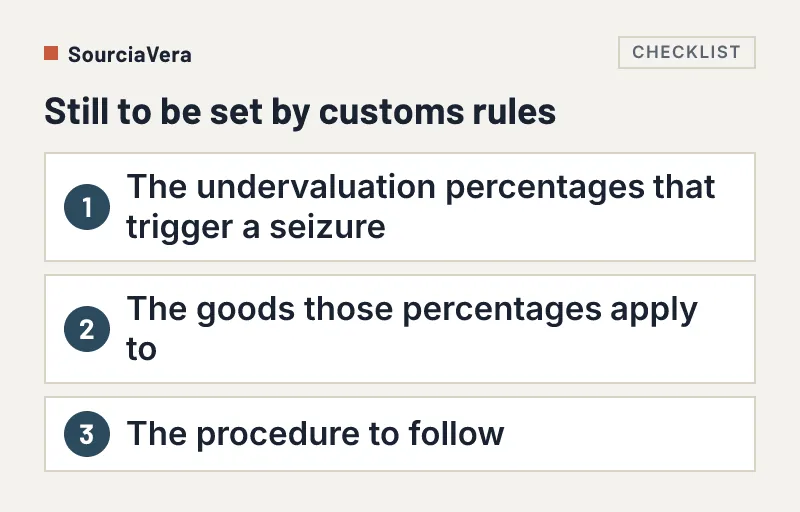
- Who decides the percentage is not yet clear. The reform leaves it to administrative rules to define which goods, which procedure and, in some cases, which percentages apply. The opposition called this discretion; the ruling party said the rules will be published before the law takes effect.
- A cheap price becomes a documentation question. A senator for the opposition warned that buying cheaper could become a reason for suspicion, and the committee chair said that a difference in value is not enough by itself to prove an infraction (La Razón). Either way, the burden of showing why the price is real falls on whoever has the paperwork.
What Did Mexico's Senate Approve?
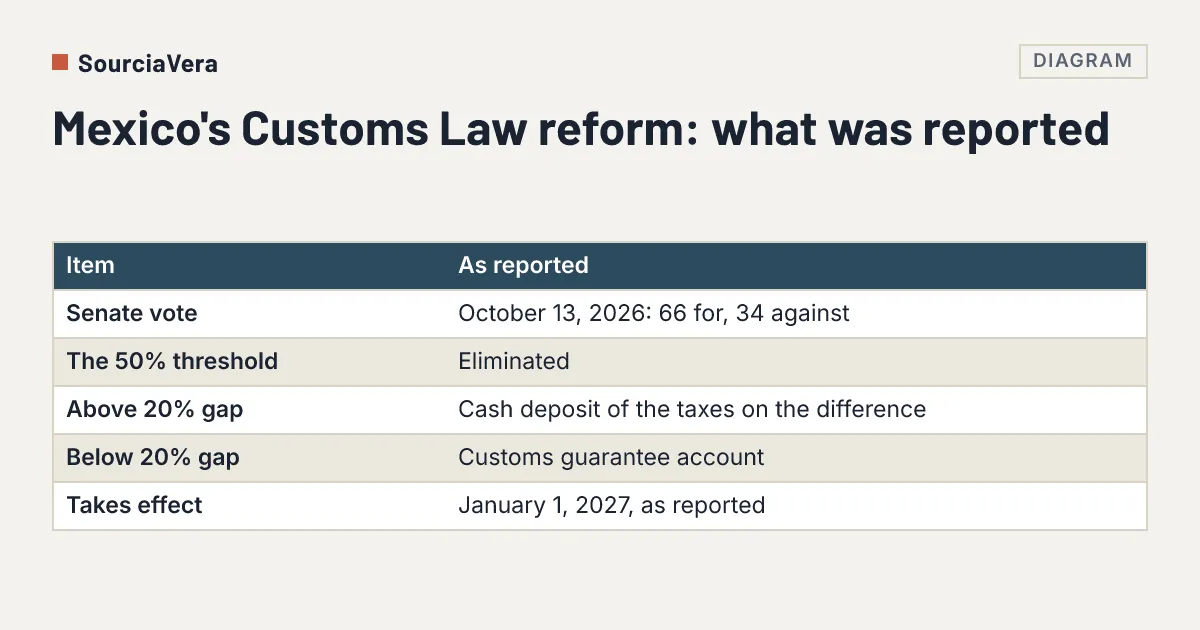
According to La Razón de México, the Senate approved on October 13, 2026 a reform of the Customs Law that widens the power to seize goods declared at a value lower than their real one and toughens penalties for infractions involving hydrocarbons. The bill passed in general with 66 votes for, 37 against and one abstention, and in particular with 66 for and 34 against (La Razón). Onexpo adds that, with approval in both chambers, the changes would take effect on January 1, 2027 and be published in the Diario Oficial de la Federación in the following days (Onexpo).
Onexpo also reports the main changes in the text. The 50% threshold is eliminated. When the presumed undervaluation is above 20%, the importer can replace the seizure only by depositing in cash the taxes that would be due on the difference between the declared value and the value the authority considers for similar goods. Below 20%, the importer can replace it with a deposit in a customs guarantee account. If the outcome is favourable to the importer, the guarantee is released or the money returned. For hydrocarbons and petroleum products, fines of 50% to 100% of the commercial value apply to infractions in documents, declarations and electronic transmission of information.
We did not open the text of the reform itself, so these figures come from the two reports. Read the published text, and the customs agency's rules once they exist, before relying on a number.
What Is Still Not Known?
Quite a lot. Onexpo notes that the National Customs Agency (ANAM) still has to issue the rules that set the undervaluation percentages that trigger a seizure, the goods they apply to and the procedure. The opposition raised this point, saying that the authority will decide by administrative rules whom to seize and at what percentage, and warned that the rules could mean delays, more storage costs and liquidity problems for small and medium companies (La Razón). Nothing in the reports says that goods from China are treated differently, or that any product is singled out.
On scale, a senator cited by La Razón said that between 2025 and August 2026 there were 2,541 operations that escaped a precautionary seizure for not reaching the 50% gap, with an estimated commercial value of 1,586 million pesos. The same report states that this figure does not equal evaded taxes and does not prove crimes.
What Should a Buyer Keep in Writing?
This section is general advice, not a rule from the reform. The aim is that, if customs questions a value, you can answer with documents.
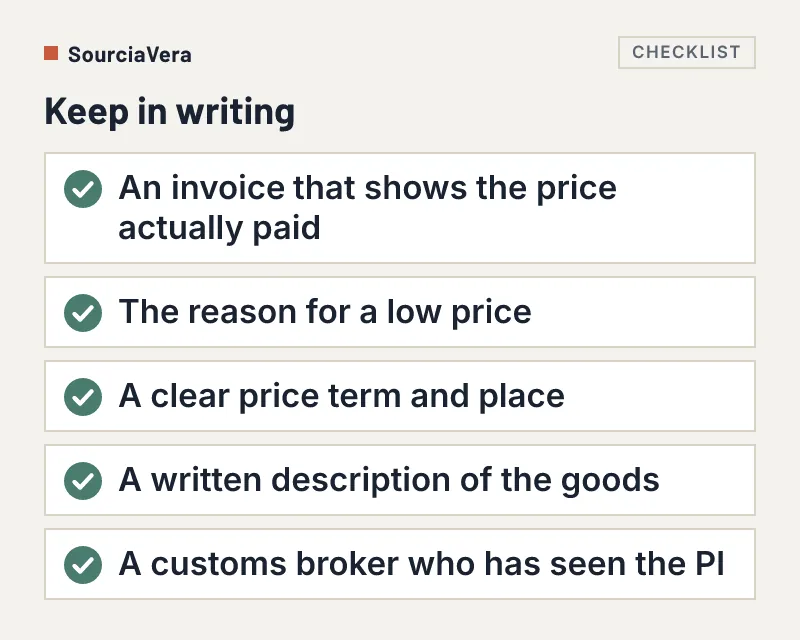
- An invoice that shows what you actually paid. The commercial invoice, the proforma invoice and the bank transfer should tell the same story. Do not accept a request to write a lower value on the invoice to reduce duties: a document that does not match the payment is a problem on its own (see how to pay a Chinese supplier).
- The reason for a low price. If the price is low for a legitimate reason, such as volume, a standard factory price compared with a retail one or a clearance lot, have that reason in writing before shipment: the quotation, the agreed discount, the cost sheet if the supplier shares it.
- A clear price term. The value customs looks at depends on what the price includes. Write the Incoterm and place on the PI (see which price term to ask a Chinese supplier to quote) so the declared value is not a guess.
- A written description of the goods. Part number, material and specification. The authority compares your goods with similar goods, and a vague description is easier to question.
- A customs broker who has seen the PI before the shipment leaves. The reform leaves the details to rules not yet published, so ask the broker what they expect to need and at what point they will confirm it.
How Can a Third-Party Check Help?
It cannot tell you how customs will value your goods. What it can do is check the things that decide whether your documents hold up: who is behind the supplier, whether the company named on the invoice is the one that receives the payment, and whether the price makes sense for what is being sold. A price far below the other quotes is a customs question and a supplier-risk question at the same time (the 9 Alibaba supplier red flags explain the second). The $49 Remote Check looks at the company registration, whether it is a manufacturer or a trader, the address and whether the payment account matches the company name. If the order is large, an inspection before the balance (what a pre-shipment inspection costs) checks that the goods are what the invoice says, and the 10 things to check before paying a deposit cover the rest. The documents to request from a Chinese manufacturer is a useful list to have at hand.
What Does the Reform Not Tell You?
It does not tell you what customs will consider a normal price for your product, what percentage will trigger a seizure, or how long goods may be held. It does not say that every low-priced shipment will be seized: the committee chair said that a difference in value alone does not prove an infraction. And it says nothing about a particular supplier. This is general information, not legal or customs advice.
What Should You Do Next?
- Ask your customs broker how the reform affects your product and when the agency's rules will be published.
- Make the PI, the commercial invoice and the payment match, with a clear price term and a description of the goods.
- Write down why the price is what it is if it is well below the market.
- Check the supplier before you pay, especially when the price is far below other quotes.
- Leave time and cash for a possible delay on shipments that arrive after January 1, 2027. Mexico's separate electronic value declaration also has new dates: see the MVE dates and what to line up with your supplier.
Frequently Asked Questions
What did Mexico's Senate change in the Customs Law?
According to La Razón and Onexpo, the Senate approved on October 13, 2026 a reform that removes the 50% threshold for a precautionary seizure of goods declared below their value. Press reports say it takes effect on January 1, 2027.
At what price gap will customs seize goods?
That is not known yet. The reports say the National Customs Agency still has to issue rules that set the percentages, the goods they apply to and the procedure, so ask your customs broker for the final rules.
Does the reform apply only to goods from China?
The reports we read do not single out any country or product. They describe goods declared at a value below the one the authority considers for similar goods.
Can I release seized goods by paying a guarantee?
According to Onexpo, above a 20% presumed undervaluation the importer can replace the seizure only with a cash deposit of the taxes due on the difference; below 20% a deposit in a customs guarantee account is possible. Check the published text with your broker.
What should the supplier's invoice show?
The price actually paid, with a clear price term, a description of the goods and the same company name and amount as the payment. Do not agree to write a lower value on the invoice to reduce duties.
Summary and Next Step
Mexico's Senate approved a Customs Law reform that removes the 50% threshold for a precautionary seizure of goods declared below their value. The reports say it takes effect on January 1, 2027, and that the agency still has to publish the rules that set the percentages. For an importer buying from China, the safest preparation is documents that agree with each other and a price that you can explain.
In short, make the invoice tell the true story, and know who you are buying from. A $49 remote check looks at who is behind the supplier and whether the payment account matches the company, and you can tell us about your order if you want help reading a quote before it goes to your customs broker.
If you would rather have someone check the basics before you accept a quote or pay a deposit, understanding who is behind each quote before investing money can reduce unnecessary risks. SourciaVera helps international buyers verify Chinese suppliers, understand manufacturing capabilities, and make safer sourcing decisions. I provide supplier verification services, so you should treat my recommendation accordingly. The $49 Remote Check looks at the basics — company registration, manufacturer vs. trader, address, and whether the payment account matches the company name — before you place an order. Send the quote or PI with your request: it is needed to check the payment account.