The short answer: Mexico has pushed back the deadline for the electronic customs value declaration, the MVE, to October 31, 2026, and the reports list a staggered start from November 1, ending with definitive imports on January 15, 2027. That is a delay, not a cancellation: from then on the importer has to transmit the value data electronically and be able to show that the invoice, the contract, the payment and the declared freight and insurance tell the same story. For a buyer importing from China the money question is simple: a price, a discount or a payment that cannot be matched across documents is what can hold cargo or lead to a value dispute. You have until the dates below to line the documents up with your supplier.
This article covers what the reports say, what has to match and what to agree with your Chinese supplier now. It is based on a government announcement as reported by the press, two law-firm notes and general good practice, not on any first-hand experience of these filings. It is not customs or legal advice: your customs broker and the official texts decide how it applies to you.
Why Does the MVE Matter to a Buyer?
- It puts the price in a system. The MVE is the electronic transmission of the data used to determine the customs value of the goods; a law-firm guide describes it as generating a 13-character folio that links to the pedimento (Simetria Legal).
- The importer carries the responsibility. The Customs Law already requires the importer to give its broker, under oath, the elements that allow the value to be determined (art. 59, fraction III), and a service guide says the responsibility for the data and its transmission lies with the importer, not the broker (Facturando).
- Mismatches become visible. The same law-firm guide lists what must agree: the invoice, the pedimento, the contract terms, the bank transfers and their dates, and any added costs. The value questions raised by Mexico's Customs Law reform on goods declared below their value come back through the same documents.
What Are the New Dates?
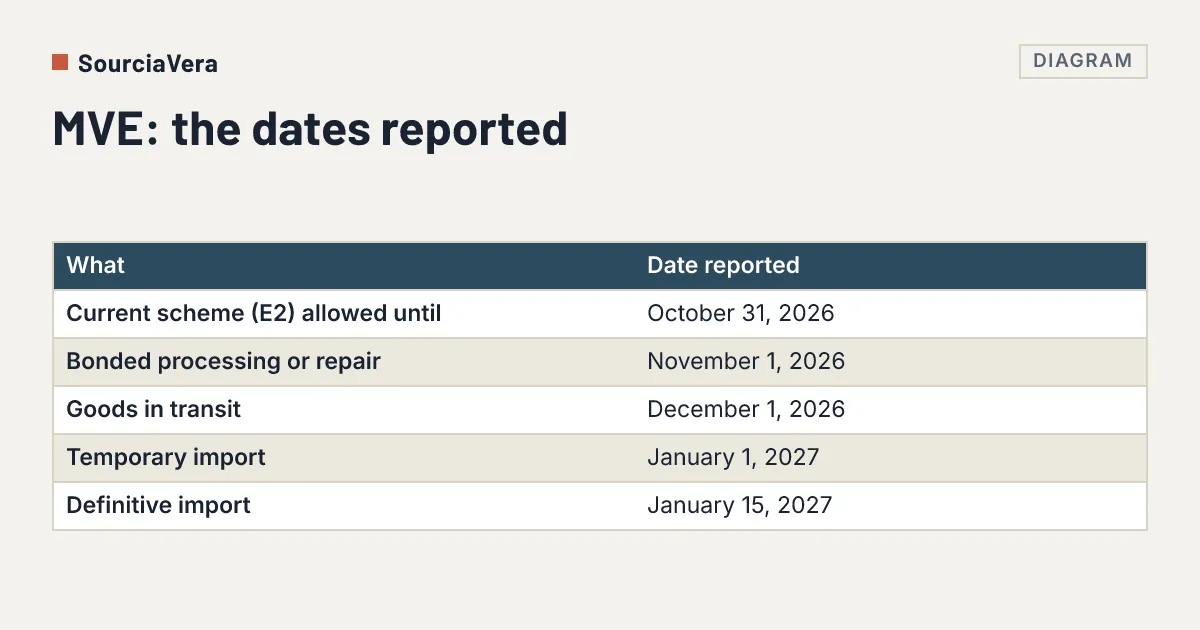
According to UnoTV, which quotes the SAT's post of October 2, 2026, the SAT, the National Customs Agency (ANAM) and the Digital Transformation Agency (ATDT) extended to October 31, 2026 the deadline to present the MVE, to give foreign trade users time to adjust. From November 1, 2026 the MVE is to be transmitted gradually through the Foreign Trade Single Window (VUTCE), depending on the customs regime (UnoTV). A law firm's summary of the Third Resolution of Modifications to the 2026 General Foreign Trade Rules gives the same calendar:
- November 1, 2026: processing, transformation or repair in a bonded facility.
- November 15, 2026: strategic bonded facility.
- December 1, 2026: goods in transit.
- December 15, 2026: bonded warehouse.
- January 1, 2027: temporary import.
- January 15, 2027: definitive import (GBI Trade & Law).
Until October 31, the summary says, importers can keep using the current scheme, including the traditional E2 value format, or transmit the MVE electronically. Some facilities stay: transport documents, the certificate of origin and the guarantee document need not be transmitted with the MVE if they are attached to the pedimento, and a format with general contract information can replace the transmission of each contract (UnoTV). That contract format, called E15, is described as optional until December 31, 2026 (GBI Trade & Law).
We did not open the announcement or the resolution in the Diario Oficial, so these dates come from the press and from one law firm. A typical commercial import is a definitive import, for which the reports give January 15, 2027, but ask your broker what applies to your shipments between now and then.
What Has to Match Between Supplier, Invoice and Payment?
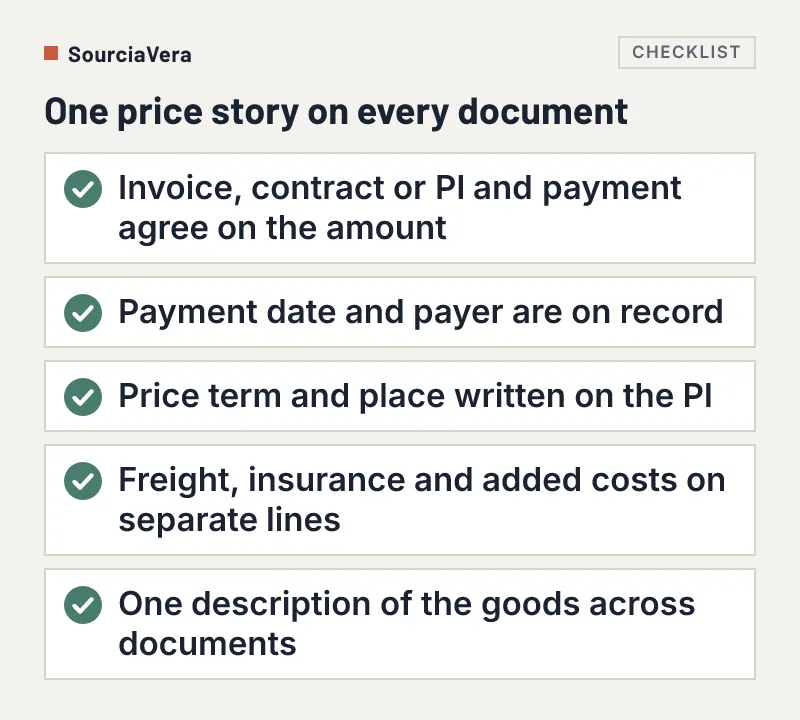
This section is general advice based on the items the guides list. Think of one price story that every document tells in the same way.
- Invoice, contract and payment. The amount on the commercial invoice, the price in the contract or proforma invoice and the money that leaves your account should agree, including the date of payment. If a discount or a rebate was agreed, put it in writing before the shipment, not after.
- The price term. What the price includes, freight and insurance in particular, changes the value to declare (see which price term to ask a Chinese supplier to quote). Write the Incoterm and the place on the PI.
- Added costs. Freight, insurance, commissions, royalties or packing that are not in the price still have to be accounted for in the value. Ask the supplier to show them on separate lines.
- The contract data. The E15 format asks for contract details such as the date, the parties, the object, the amount, payment terms and currency. A written contract or PI that states them clearly makes this easier.
- The same description and code. Use one description of the goods across documents (see HS codes and Mexican tariff fractions).
- The payer and the payee. The account that is paid should be in the name of the company on the invoice (see how to pay a Chinese supplier).
Where Does a Third-Party Check Help?
It cannot file the MVE or tell you how the authority will read a value. It can check that the story the documents tell is true before the shipment: who is behind the supplier, whether the company on the invoice is the one that receives the payment, whether the price is in line with other quotes and whether the goods are what the invoice says. The $49 Remote Check looks at the company registration, whether it is a manufacturer or a trader, the address and the payment account name. An inspection before the balance is paid (what a pre-shipment inspection costs) compares the shipment with the specification and the quantities on the invoice, and the 10 things to check before paying a deposit cover the rest. A price far below the other quotes is a customs question and a supplier-risk question at once (see 9 Alibaba supplier red flags).
What Does the Reported Change Not Tell You?
It does not tell you how the authority will review a given value, or what penalties apply to a given mismatch. One law-firm guide warns of fines of up to 150% for undervaluation and of precautionary seizure, but we have not checked those figures against the law, so ask your broker. The dates may also change again, as they have before. This is general information, not customs or legal advice.
What Should You Do Next?
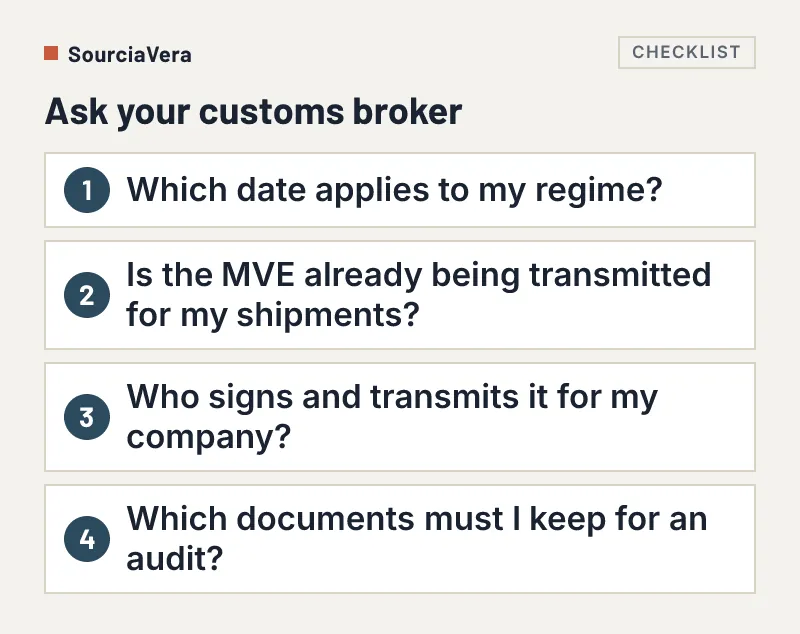
- Ask your customs broker which date applies to your regime and whether the MVE is already being transmitted for your shipments.
- Check that the importer can sign and transmit, and that the broker is authorised to consult it.
- Line up invoice, contract and payment with your supplier for every open order, including freight, insurance and discounts.
- Put the price term and the added costs in writing on the PI.
- Check the supplier before you pay, and keep the payment record with the invoice.
Frequently Asked Questions
What is the MVE in Mexican customs?
The Manifestación de Valor Electrónica is the electronic transmission, through the foreign trade single window, of the data used to determine the customs value of imported goods. A law-firm guide says it generates a 13-character folio linked to the pedimento.
What is the new MVE deadline?
According to UnoTV, quoting the SAT, the deadline to present the MVE was extended to October 31, 2026. From November 1 the electronic MVE is to start gradually by customs regime, with definitive imports on January 15, 2027, per a law-firm summary.
Does the importer or the customs broker file the MVE?
A service guide says the responsibility for the data and its transmission lies with the importer, not the broker. Confirm with your broker who signs and transmits it in your case.
What should the supplier's invoice and my payment look like?
They should agree with the contract or proforma invoice on amount, price term and payment date, with freight, insurance and any added costs shown separately. Keep the payment record with the invoice.
Can a third-party check file or approve my MVE?
No. It can check who is behind the supplier, whether the payment account matches the company and whether the goods match the invoice, which helps the documents tell the same story.
Summary and Next Step
Mexico gave importers until October 31, 2026 under the current scheme, and the reports list a staggered start of the electronic MVE from November 1, with definitive imports on January 15, 2027. The change does not create a new risk by itself: it makes an old one visible, the price that does not match across documents. The safest preparation is one price story, in writing, backed by a payment that matches it.
In short, make the invoice, the contract and the payment agree before the goods ship. A $49 remote check looks at who is behind the supplier and whether the payment account matches the company, and you can tell us about your order if you want help reading a quote before it goes to your customs broker.
If you would rather have someone check the basics before you accept a quote or pay a deposit, understanding who is behind each quote before investing money can reduce unnecessary risks. SourciaVera helps international buyers verify Chinese suppliers, understand manufacturing capabilities, and make safer sourcing decisions. I provide supplier verification services, so you should treat my recommendation accordingly. The $49 Remote Check looks at the basics — company registration, manufacturer vs. trader, address, and whether the payment account matches the company name — before you place an order. SourciaVera is not a customs broker, and nothing here is customs or legal advice.