The short answer: container spot rates from the Far East to the U.S. are still high but have been broadly flat for a month, carriers are cancelling sailings to defend them, and analysts expect downward pressure to build after China's Golden Week. Air freight is moving the other way: China-to-U.S. air rates rose for a second straight week as peak season began, and South China space was reported fully booked through the end of that week. For a buyer importing from China, the money question is not only the rate you are quoted today, but whether your goods are actually ready on the date the space is booked. A missed cargo-ready date costs more than a rate move of a few percent.
This article covers what the two sources report, what is still uncertain and what to ask your Chinese supplier and your forwarder to confirm in writing. It is based on a Xeneta report and a Flexport weekly update, plus general good practice, not on any first-hand experience of these bookings. It is not a quotation: ask your forwarder for yours.
Why Does It Matter to a U.S. Buyer?
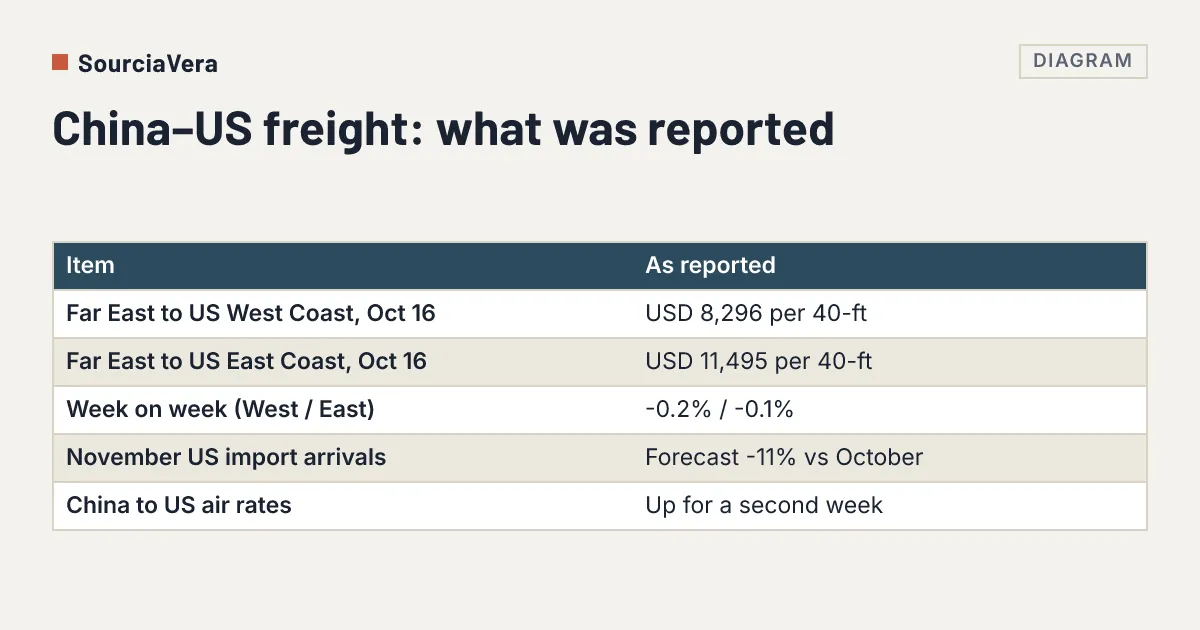
- The coast you ship to changes the bill a lot. Xeneta's market average spot rates on October 16 were USD 8,296 per 40-foot container to the U.S. West Coast and USD 11,495 to the East Coast, a gap of USD 3,199 per container (simple arithmetic on the two figures). Ask your forwarder to quote both routings door to door (Xeneta, via SAFETY4SEA).
- Carriers are protecting the rate, not following demand. Xeneta reports that in the week covered, 58,200 TEU was blanked on the Far East to U.S. West Coast trade and 35,500 TEU on the East Coast trade, and its analyst reads this as carriers trying to protect current rate levels. Space can tighten on a given sailing even when the market is soft.
- Air is getting dearer just as ocean is flat. If a late order tempts you to switch to air, you would be paying into a rising market (Flexport).
What Do the Sources Report?
Xeneta says spot rates from the Far East to the U.S. stayed broadly stable over the past month, with downward pressure expected to intensify after Golden Week, and that they remain significantly higher than before the Hormuz crisis in February 2026. Over the week to October 16 they moved by -0.2% to the West Coast and -0.1% to the East Coast. It also notes that East Coast rates are more than three times those to North Europe, a gap it considers hard to sustain, and that a faster return of container capacity to the Red Sea could release capacity into the global fleet and shape rates in 2027 (Xeneta, via SAFETY4SEA).
Flexport's October 22 update says transpacific carriers continue to deploy close to full capacity, using targeted blank sailings, and that capacity is expected to stay fully deployed through November. It forecasts November U.S. import arrivals down 11% from October, spot rates flat for the past month and softer rate conditions into November, with demand likely to rebuild ahead of Lunar New Year shipping in late December and January. On air, it reports China-to-U.S. rates rising week over week for the second consecutive week, driven by electronics and AI-related equipment, and South China space fully booked through the end of the week; rates are also rising with fuel costs (Flexport).
What Is Still Uncertain?
How far ocean rates will fall in November, whether blank sailings will keep them up, and how long air space will stay tight. Both sources describe expectations and market averages, not guarantees, and an average is not your quote. Surcharges, your port pair and your cargo's weight and size decide your price.
What Should a Buyer Ask the Supplier and the Forwarder to Confirm?
This section is general advice, not a rule from the sources. The rate can move; the date your goods are ready is the part you can control.
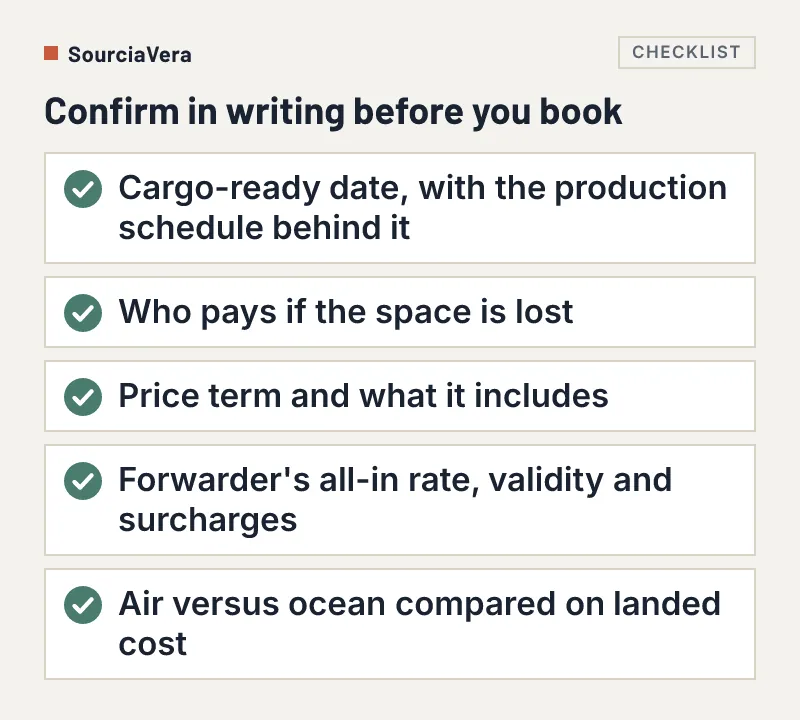
- A cargo-ready date the supplier commits to in writing, with the production schedule behind it, and an early warning if it slips.
- Who pays if the space is lost because the goods were not ready: re-booking, storage and any rate difference. Put it on the proforma invoice.
- The price term and what it includes. With an ex-works or FOB price you book and pay the freight; with a price that includes freight, ask until when it is valid and who absorbs an increase (see which price term to ask a Chinese supplier to quote).
- From the forwarder: the all-in rate with validity and surcharges, both coasts if possible, and its policy when a sailing is blanked or a booking is rolled.
- An air versus ocean decision made with numbers. Compare the landed cost, including what a delay would cost you (see FCL, LCL or air from China), before you accept an air quote.
Where Does a Third-Party Check Help?
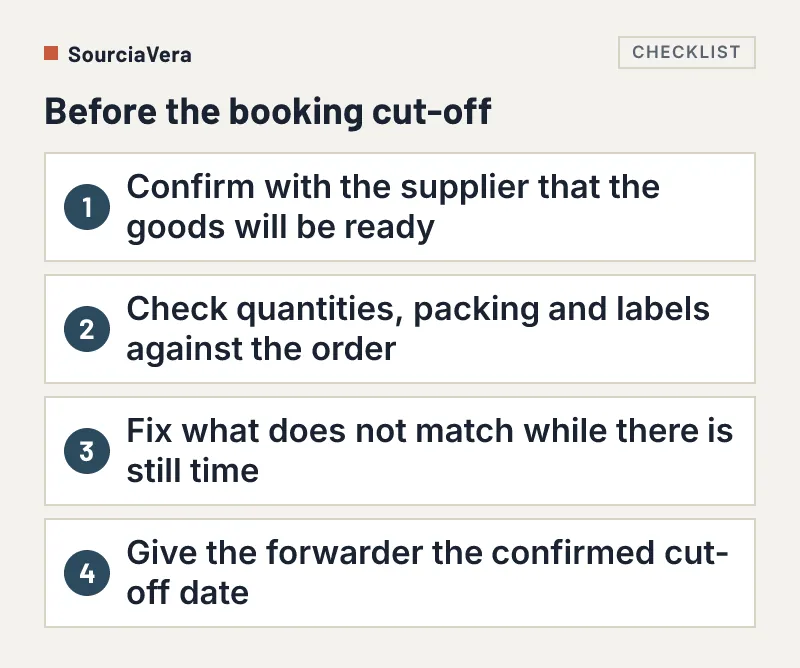
It cannot lower a freight rate or stop a carrier from blanking a sailing. It can reduce the risk you do control: that the goods are really ready, complete and as ordered on the day the space is booked. An inspection before the balance is paid (what a pre-shipment inspection costs) compares quantities, packing and labels with the order and leaves time to fix what does not match before the booking is lost. The $49 Remote Check looks, before the order, at the company registration, whether the supplier is a manufacturer or a trader, the address and the payment account name, and the 10 things to check before paying a deposit cover the rest. A supplier that cannot show how its production is going is the one most likely to cost you a sailing (see 9 Alibaba supplier red flags). For what the insurance covers on the way, see cargo insurance on a shipment from China.
What Do the Sources Not Tell You?
They do not tell you what you will pay, whether your sailing will be blanked or whether rates will be lower when your goods are ready. Xeneta's rates are market averages for two coasts, and Flexport's air notes describe the week, not a trend. Neither mentions your supplier. This is general information, not a quotation or transport advice.
What Should You Do Next?
- Ask your forwarder for an all-in quote with validity for both coasts, and for its rolling policy.
- Close the cargo-ready date with each supplier and get the production schedule behind it.
- Write on the PI who pays if the space is lost for goods that were not ready.
- Do not choose air by default: compare landed cost and the cost of a delay.
- Schedule an inspection before the booking cut-off on large orders or with new suppliers. If you ship small parcels, also see CBP's proposed rule on low-value imports.
Frequently Asked Questions
What are China-to-US container spot rates right now?
Xeneta's market average spot rates on October 16, 2026 were USD 8,296 per 40-foot container from the Far East to the U.S. West Coast and USD 11,495 to the East Coast, both essentially flat on the week. They are averages, not quotes.
Are ocean freight rates from China expected to fall?
Xeneta expects downward pressure to intensify after Golden Week, and Flexport expects softer rate conditions into November, but carriers are cancelling sailings to protect rates and neither source guarantees a fall.
Are air freight rates from China to the US going up?
Flexport reports China-to-U.S. air rates rising for the second consecutive week as peak season begins, with South China space fully booked through the end of that week and fuel costs adding pressure.
What should I ask my Chinese supplier about freight?
A cargo-ready date committed in writing with the production schedule behind it, the price term and what it includes, and who pays if the space is lost because the goods were not ready.
Can a third-party inspection lower my freight cost?
No. It can confirm before the booking cut-off that the goods are ready and match the order, which reduces the risk of losing the booked space, but it does not change the carrier's rate.
Summary and Next Step
Ocean rates from China to the U.S. are high and flat while carriers cancel sailings, analysts expect pressure downward into November, and air rates are rising as peak season starts. The freight rate is the part you cannot control. The cargo-ready date is the part you can: a date in writing, a schedule behind it and a check before the space is booked.
In short, secure your supplier's date before you chase the rate. A $49 remote check looks at who is behind the supplier and whether the payment account matches the company, and you can tell us about your order if you want help preparing the questions for your supplier and forwarder.
If you would rather have someone check the basics before you accept a quote or pay a deposit, understanding who is behind each quote before investing money can reduce unnecessary risks. SourciaVera helps international buyers verify Chinese suppliers, understand manufacturing capabilities, and make safer sourcing decisions. I provide supplier verification services, so you should treat my recommendation accordingly. The $49 Remote Check looks at the basics — company registration, manufacturer vs. trader, address, and whether the payment account matches the company name — before you place an order. SourciaVera is not a freight forwarder or a customs broker, and nothing here is transport, customs or legal advice.