Many beginners think wholesale purchasing is simple:
But in reality, successful wholesale buying requires much more preparation. The biggest mistake new retailers make is focusing only on the product price. A low purchase price does not guarantee a profitable business. You need to consider supplier selection, product verification, cost calculation, and quality control — together, not just the last line on a quote. Here are the 8 steps that actually make up the procedure.
1. Define Your Product Requirements Before Contacting Suppliers
Before searching for factories, you should clearly understand what you need. Important details include:
- Product specifications
- Materials
- Size and color options
- Packaging requirements
- Certifications (if needed)
- Target selling price
For example, saying "I want to buy water bottles" is not enough. A factory needs to know: stainless steel or plastic? What capacity? Custom logo? Individual packaging or bulk packaging? The more specific you are, the easier it is to find the right supplier — and the harder it is for a vague or underqualified factory to talk you into whatever they happen to already have in stock.
2. Find and Evaluate Potential Suppliers
There are many ways to find suppliers: industry exhibitions, B2B platforms, factory websites, professional sourcing partners. But finding suppliers is the easy part. The difficult part is determining: can this supplier actually deliver what they promise? A beautiful online page does not always represent a reliable manufacturer — four things separate the two, and none of them are visible in the listing photos:
| What You Check | Real, Independent Factory | Trading Company / Middleman |
|---|---|---|
| Production floor | Owns a dedicated production floor, typically 5,000–50,000+ m², with the relevant equipment on-site | Rents a small office or showroom; production is subcontracted elsewhere |
| Business license scope | Registered manufacturing scope matches the product category | Registered as trading/wholesale, or the scope doesn't cover the product at all |
| Export experience | Can produce shipping records or client references for your product category | Vague answers about "many clients," no verifiable export history |
| Live video request | Willing to film the actual line, a dated sign, and today's output on request | Sends a pre-recorded tour, or the video "can't be arranged this week" |
Ask for the business license, request a live video call, and search the company name plus "scam" or "complaint" before you go further.
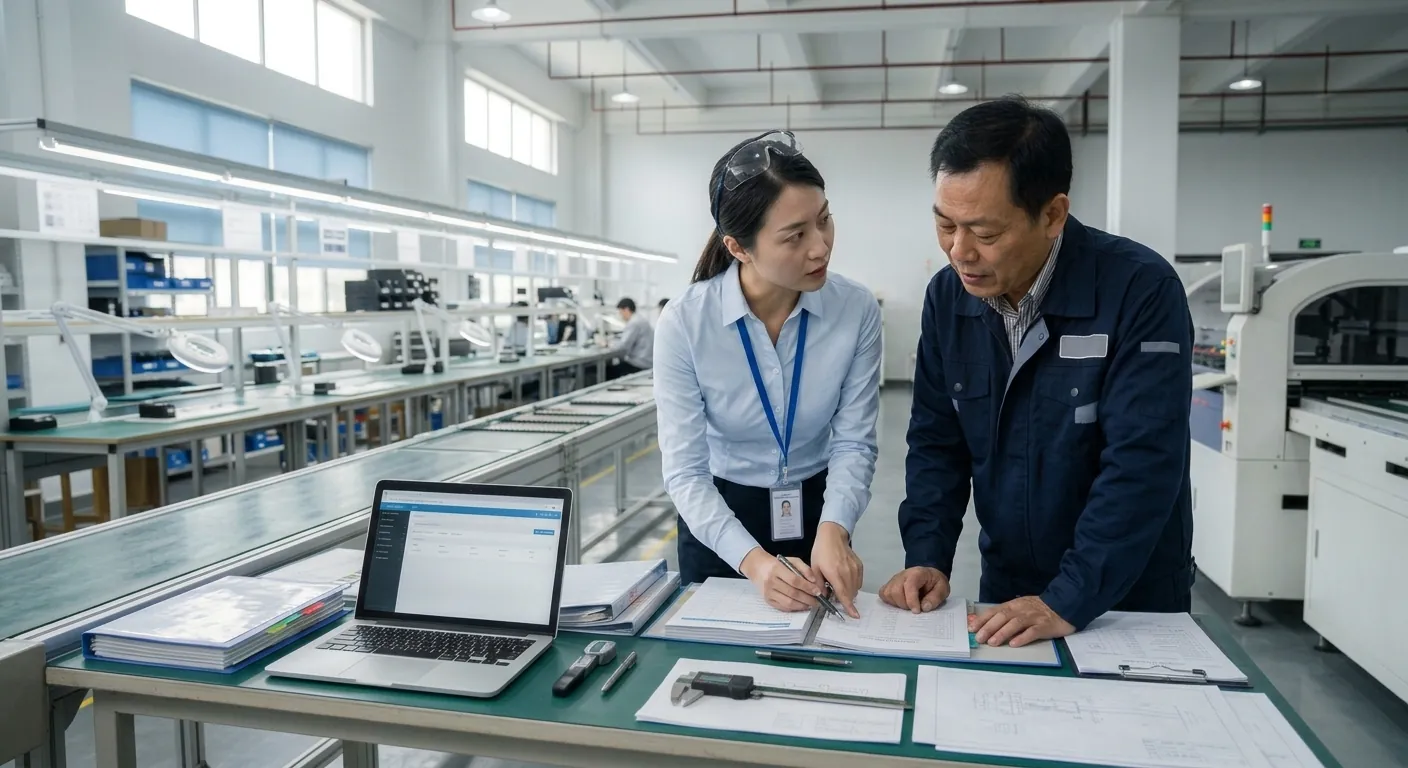
We visit the factory in person, confirm the license against China's National Enterprise Credit registry, and film our own unedited walkthrough of the production line.
3. Order Samples and Confirm Product Quality
Before placing a large wholesale order, always test samples. Check product quality, material consistency, packaging, functionality, and appearance. Many problems happen because buyers approve products based only on pictures. A sample gives you a realistic understanding of what your customers will receive — and it becomes the physical reference you compare the bulk shipment against later, which is worth nothing if you don't keep it and document it in writing.
4. Calculate Your Real Wholesale Cost
Do not only calculate the factory price. A product that looks cheap at the factory may become expensive after reaching your warehouse. Your real cost typically includes:
- Product cost
- Custom packaging
- Domestic transportation (factory to port)
- Inspection fees
- Shipping cost (ocean or air)
- Import duties
- Taxes
As a rough planning guide based on the landed-cost breakdowns we build for clients across different product categories, the fully landed cost of an imported product typically runs 1.3–1.6× the factory FOB price once packaging, freight, inspection, and duties are added — the exact multiplier depends heavily on your product category and destination country's duty rate. Always calculate your own landed cost before you quote a retail price, not after the container has shipped.
5. Negotiate Order Terms and Confirm Details
Before production starts, confirm everything in writing: price, quantity, production time, payment terms, quality standards, packaging requirements, and shipping terms. Common international trade terms include EXW, FOB, CIF, and DDP — each shifts a different point in the journey (and a different set of costs and risks) from the seller to you. Clear agreements prevent misunderstandings later — and how you structure payment is where risk control actually gets decided:
| Payment Method | Risk Level | When It's Used |
|---|---|---|
| 100% T/T upfront | High risk — avoid | No leverage if goods don't match spec; common ask from unverified sellers |
| T/T with deposit + balance | Moderate, standard practice | 30% deposit, 70% before shipment on verified factories |
| Alibaba Trade Assurance / escrow | Lower risk | Platform-mediated orders, funds held until you confirm receipt |
| Letter of Credit (L/C) | Lowest risk, highest overhead | Larger orders, typically $50K+, bank-guaranteed conditions |
6. Control Quality Before Shipment
One of the biggest mistakes new importers make is checking quality only after receiving the goods. By then, it may already be too late. Professional buyers usually arrange production monitoring, factory inspection, and pre-shipment inspection — it is much cheaper to solve problems before shipping than after the products arrive. Watch for these patterns across the whole relationship, not just at the inspection stage:
- Refuses a factory visit or live video — the single biggest red flag
- No verifiable certifications for a product category that requires them
- Pricing 20–30%+ below every other quote, with no material explanation
- Pressures you to skip inspection or pay 100% before shipment
- Reuses stock or third-party photos instead of dated originals
- Gives vague, evasive answers to specific technical questions
- Has no verifiable reference clients or export history
- Credibility rests entirely on the website, with no physical evidence behind it
None of these red flags are visible from a listing page. They only surface when someone is physically checking — which is exactly the gap between a retailer who finds a supplier and one who verifies a supplier before wiring the balance.
Where This Process Actually Breaks Down
Buying wholesale from a factory is not just about finding the cheapest supplier. The real process is:
We've watched buyers execute the first five steps carefully — solid supplier shortlist, real samples, costs worked out on paper — then skip step 6 because the shipment was already running behind schedule and inspection meant two more weeks. That's almost always the order that comes back with a packaging spec nobody signed off on, or a cheaper component swapped in halfway through the run. The step people cut under time pressure is the one actually protecting the order.
Don't Have Someone on the Ground to Verify Step 2 and Step 6?
SourciaVera handles the parts of this procedure that can't be done from a listing page — in-person factory verification, live video walkthroughs, and pre-shipment inspection in Guangzhou — so you know exactly who you're paying before the deposit leaves your account.
Request a Factory Verification