The short answer: you'll find sourcing agents through the same handful of channels everyone mentions — search engines, B2B platforms, LinkedIn, trade shows, and increasingly Chinese platforms like Xiaohongshu or Douyin where factories post directly. Finding a name is the easy part. What actually protects you is checking whether that person or company has a real, verifiable presence before you send anything, and understanding that a solo freelance agent carries a different risk profile than an established company.
I read through about a dozen public answers to "how do I find a sourcing agent in China" out of pure curiosity — not for a client, just to see what advice was already floating around. One thing stood out fast: almost every answer told people where to look. Google it. Try Alibaba. Check LinkedIn. Go to a trade show. Almost none of them told people what to do once a name shows up, which is the part that actually decides whether your deposit is still there three months later.
Someone based in China who finds factories, negotiates on your behalf, and coordinates production and shipping — for a fee that's usually a commission on the order value, sometimes a flat rate.
China sourcing services · Talk to SourciaVera
Why Does Checking the Agent Matter More Than Finding One?
Three reasons:
- Finding a name is the easy part. Any of the usual channels will give you several within a day.
- What happens after the name decides the outcome. It decides whether your deposit is still there three months later.
- Agents carry different risk. A solo freelance agent has a different risk profile than an established company, so check who backs them up, how they are paid and whether they have stood in the factory.
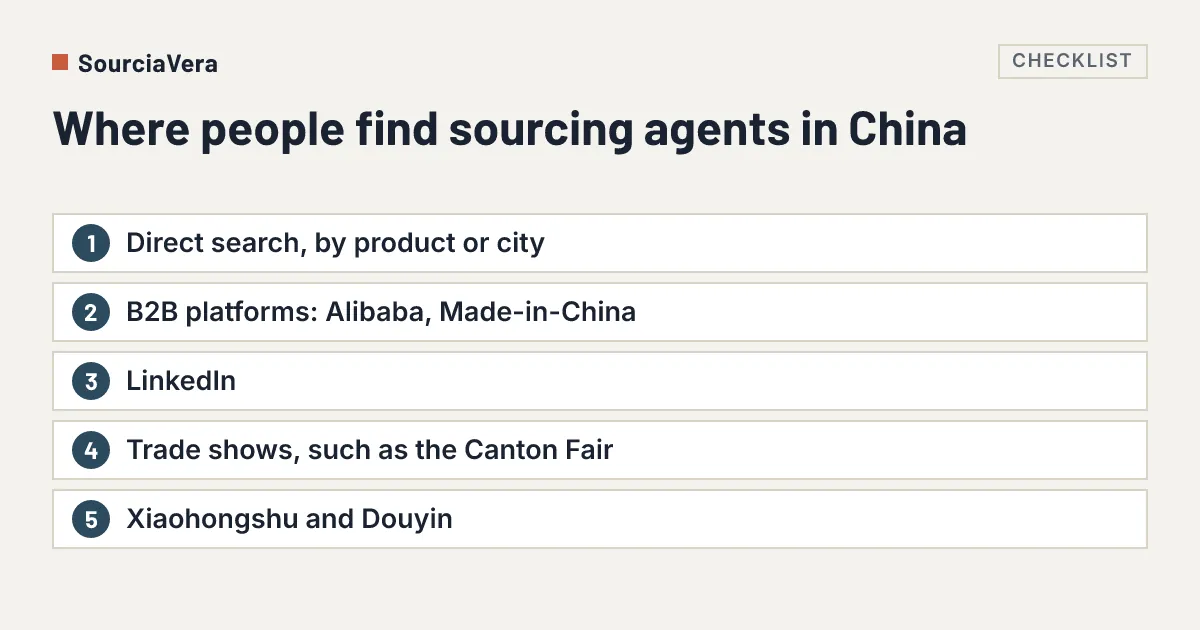
Where Do People Actually Find Sourcing Agents in China?
Strip out the repetition across those answers and the real list is short:
| Channel | What Actually Matters |
|---|---|
| Direct search | "[your product] sourcing agent China" or by city — Guangzhou, Shenzhen, Yiwu, Shanghai. The advice that mattered here wasn't the search itself, it was what to look for in the results: a real company website with a team page and a specific service description, not a single landing page with nothing behind it. |
| B2B platforms | Alibaba and Made-in-China both surface agents alongside factories. Verified-supplier badges help filter the obvious noise, but they describe the company, not how an agent will handle your order, and Alibaba says it doesn't guarantee the accuracy of that information. |
| You can actually see someone's work history here, which is more than a platform profile gives you. Worth checking whether their experience matches the category you're sourcing. | |
| Trade shows | The Canton Fair in Guangzhou is the one that came up most — it's one of China's largest trade fairs and a place where you can meet an agent in person before committing to anything. |
| Chinese social platforms | This is the one I'd add myself: browsing product categories on Xiaohongshu or Douyin (not TikTok — the domestic versions) sometimes leads straight to a factory or the agent already working with it, skipping a layer most buyers never think to skip. |
Is It Safe to Hire an Independent Sourcing Agent in China?
Here's the part I didn't expect going in. Across answers written by different people, years apart, with no reason to coordinate with each other, the same warning showed up again and again: be careful with a solo, independent agent, because if they disappear, your order and your deposit disappear with them. I can't check every author's motives, and some of these answers came from agents, but the warning also came from buyers, describing what actually happens when the only person who knows your order stops answering messages.
That doesn't mean every independent agent is a risk, or that every company is automatically safe. It means the question worth asking isn't "is this person a company or an individual" — it's "if this person vanished tomorrow, is there anyone else who could pick up my order." An independent agent with years of visible track record can be a perfectly good answer to that question. A company with a rotating cast of account managers who've never actually seen your factory might not be.
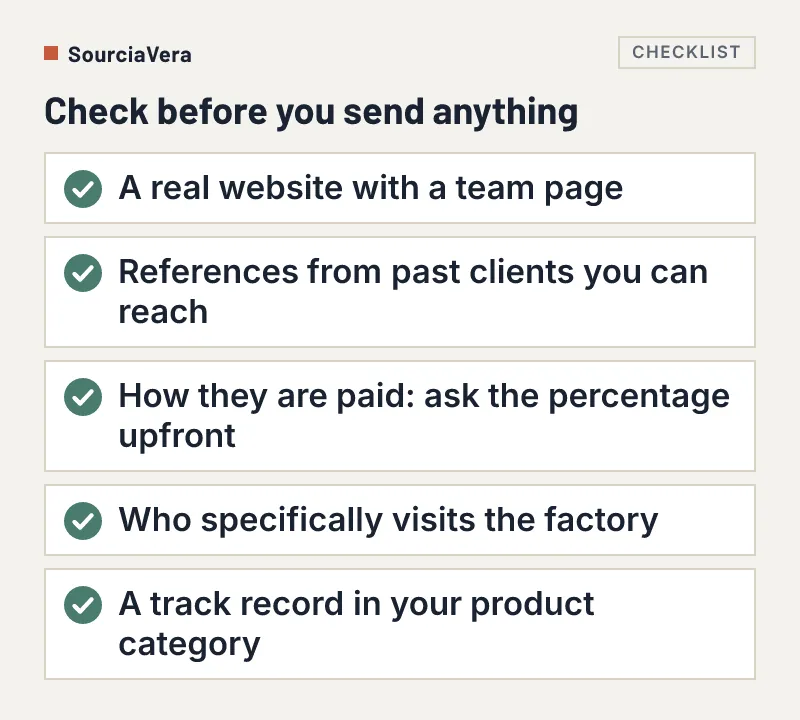
What Should You Check Before You Send Anything?
- A real website with a team page and a specific description of what they do — not a single-page contact form.
- References from past clients you can actually reach, not just testimonials pasted on their own site.
- Clarity on how they're paid. Commission on order value is normal in this industry; ask for the percentage upfront rather than finding out later.
- Confirmation of who specifically visits the factory — the name on the invoice isn't always the person who's actually seen the production floor.
- A track record in your specific product category, not just "China sourcing" in general.
What Kind of Help Do You Actually Need From an Agent?
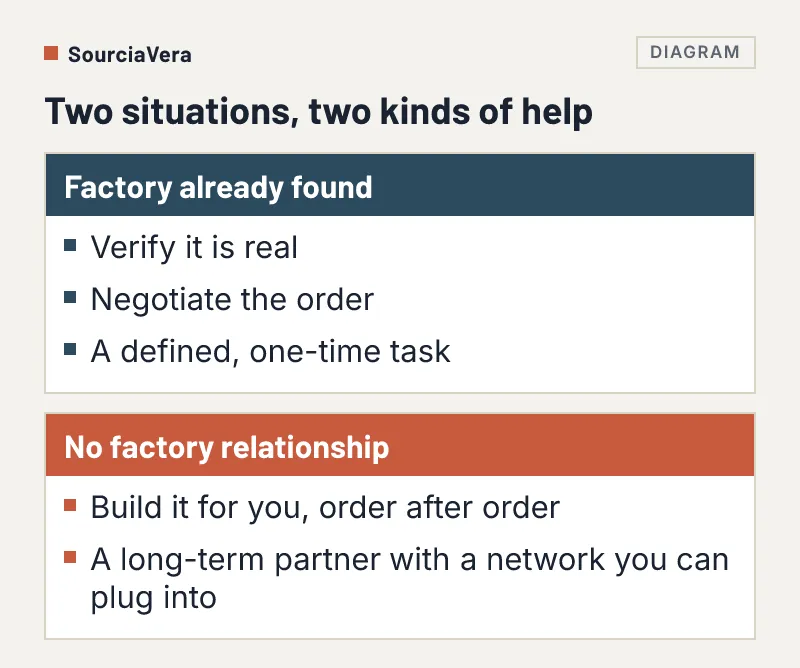
Reading through these answers, I noticed most of them assumed the buyer already knew what they wanted the agent to do. In practice I see two very different situations show up under the same question. The first: a buyer has already found a factory on Alibaba or 1688 and just wants someone to verify it's real and negotiate the order — a defined, one-time task. The second: a buyer has no factory relationship at all and wants someone to build that relationship for them on an ongoing basis, order after order. The takeaway: these call for different things from an agent — the first needs a clean verification and a fair negotiation, the second needs an actual long-term partner who already has a network you can plug into.
Frequently asked questions
How much does a sourcing agent in China typically charge?
Commission-based pricing is the norm in the answers I read, and the figures people mentioned ran from the single digits to around 10% of the order value. That is not a survey or a quote: it varies by agent and by how much of the process they handle. Flat fees show up too, especially for one-time services like a single factory visit.
Can I just use the sourcing agent Alibaba suggests?
You can, but a supplier's own referral isn't independent — their agent has an obvious interest in the deal closing on the supplier's terms, not necessarily yours.
Do I need a sourcing agent if I'm only placing one small order?
Not always. For a small trial order from a supplier you've already vetted yourself, a one-time verification or inspection can cost less than a full sourcing engagement and cover the actual risk you're carrying.
Summary: Check Before the First Deposit
Honestly, finding a name isn't the hard part — any of the channels above will hand you several within a day. The hard part is the two or three questions almost nobody in those answers actually told people to ask: who backs this person up if they go quiet, how are they getting paid, and have they actually stood in the factory they're telling you about. Ask those before the first deposit, not after the first problem.
To sum up, finding a sourcing agent is easy; the three questions you ask before the first deposit are what protect you. If you hand over a deposit without them, the realistic risk is losing it, or working with someone who has never stood in the factory. A $49 remote check looks at the supplier's basics, and for an ongoing partner in Guangzhou our procurement service is the conversation to have.
I provide supplier verification services, so you should treat my recommendation accordingly.