Disclosure: SourciaVera is exactly this kind of local partner, so we have an obvious interest in this topic. We've tried to be fair about when you need one, and when you don't.
When people talk about the cost of importing from China, they talk about price, freight and duties. The cost that hurts most rarely shows up on an invoice. It's the cost of making decisions from 14,000 kilometers away: every question you can't answer yourself, every answer you can't check, and every mistake you only discover after the money has left your account.
That's what we mean by decision cost. And in our experience, one person on the ground in China lowers it more than any discount a supplier will ever give you.
Distance doesn't just make things slower. It makes them invisible.
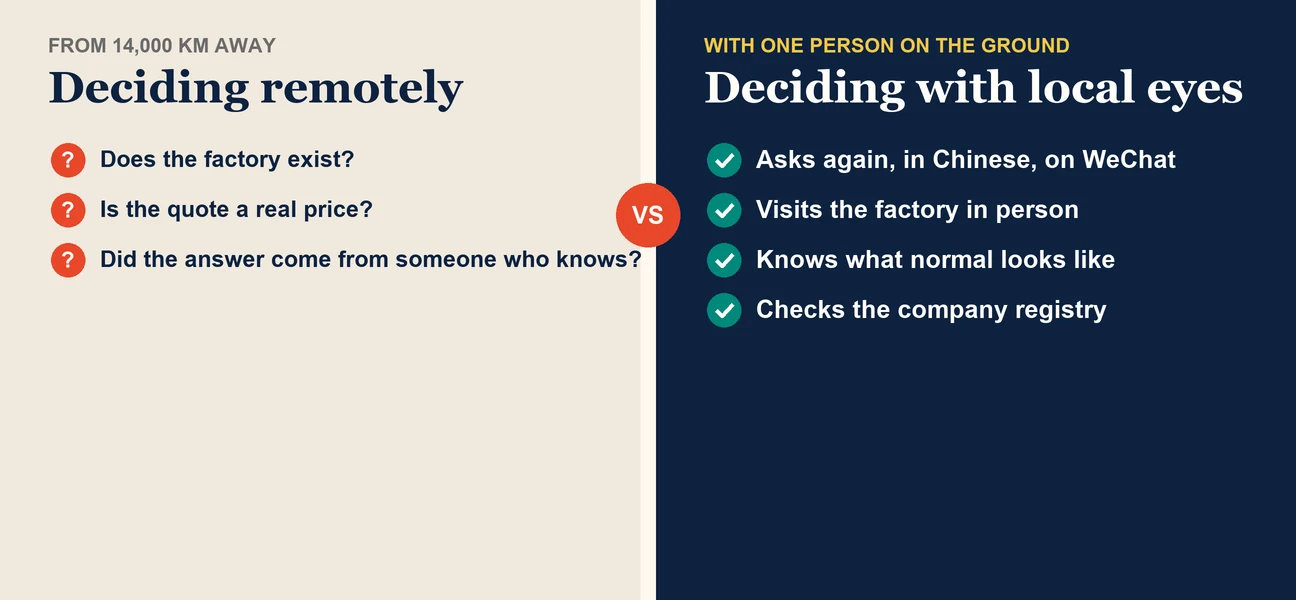
A buyer in Mexico or Guatemala looking at a Chinese supplier sees a website, a product catalog, a quote and a friendly salesperson on WhatsApp. What they can't see is everything behind it: whether the factory exists, whether the quote is a real price, whether the answer they just got came from someone who actually knows.
None of these problems are dramatic. Most suppliers aren't scammers. The trouble is that a remote buyer usually can't tell the difference between a supplier who is careless, one who is optimistic, and one who is simply telling you what you want to hear. So every decision is made with incomplete information, and the buyer pays for that uncertainty one way or another.
Here are the mistakes we see remote buyers make almost every time, with real examples from our own projects.
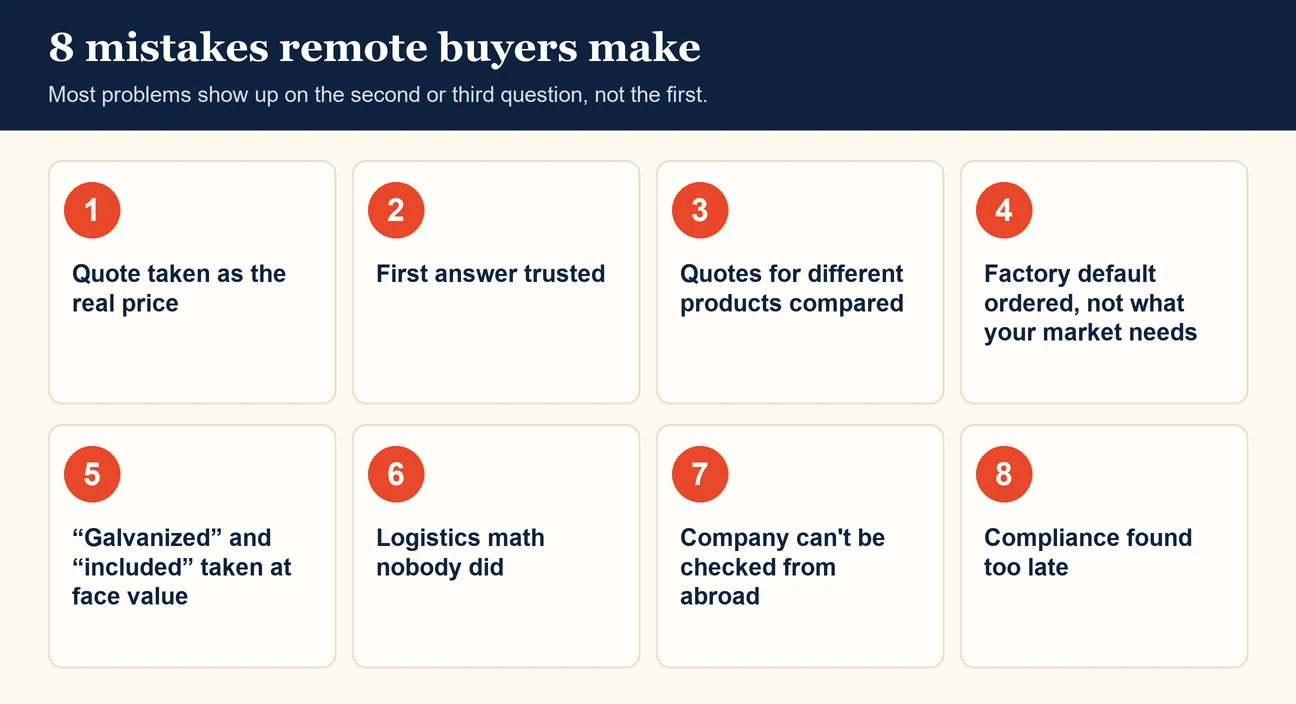
Mistake 1: Treating the quote as the real price
In a container home project for a Guatemalan buyer, the quote the client already had looked reasonable. But when we compared it with the manufacturer's public price list, the product price matched the list price exactly. No discount at all, for a first order that the buyer hoped would lead to much larger ones.
There was also a charge for getting the goods from the factory to the port that was roughly double what that step normally costs.
A buyer abroad has no way to know what's normal. Someone in China who handles these quotes every week can tell in a few minutes.
Mistake 2: Trusting the first answer
When we asked several factories about lead times on that same project, at least two gave answers that turned out to be made up. They came from an AI chatbot answering inquiries, not from anyone in production.
This is becoming common. Many Chinese suppliers now use AI tools to reply to foreign buyers quickly and in fluent English. The replies sound confident and professional. That doesn't mean they're true.
Our rule: the first answer is a starting point, not a fact. Ask again, ask in Chinese, ask someone in production, and ask for photos.
Mistake 3: Comparing quotes that describe different products
Three quotes for "the same" product are often three different products. In container homes, one factory quotes EPS foam panels, another PU, and both may simply call it an "insulated sandwich panel." The cheaper quote isn't cheaper if it's a lower specification.
Before comparing prices, someone has to rewrite every quote into the same configuration. That requires reading the technical details, often in Chinese, and asking follow-up questions until the specifications actually match.
Mistake 4: Ordering the factory's default, not what your market needs
Chinese factories build for the Chinese market by default: 220V/50Hz electrical systems, Chinese sockets, standard materials for a mild climate. Our Guatemalan client needed 120V/60Hz wiring, insulation and steel treatment suited to a hot, humid climate, and no glass entrance doors, because of security concerns in his market.
None of this is hard to request. But you have to know to request it, and the factory won't raise it for you.
Mistake 5: Not knowing what a word really covers
"Galvanized steel" can mean hot-dip galvanizing, with a thick zinc layer, or cold galvanizing, with a much thinner one. In that container home project, the main structural steel was hot-dip galvanized, but some thinner frame parts were cold-galvanized because of a real manufacturing limitation. That's an honest answer, but only if someone asks the follow-up question.
The same goes for "included." The pitched roof in that quote included a canopy and support posts, but not the terrace or the entry steps. These are small details that turn into expensive surprises after delivery.
Mistake 6: Logistics math nobody did
The client's hard rule was simple: two homes had to fit in one 40ft container. A second container would cost more than all the upgrades combined.
Two folded units fit with only about 23 centimeters to spare. Whether the roof parts would also fit could only be confirmed with photos from a previous shipment. A buyer working alone would likely have learned the answer when the freight invoice arrived.
Mistake 7: Being unable to check the company yourself
China's official company registry, the National Enterprise Credit Information Publicity System, is the most reliable place to confirm a supplier's business license, registration status and business scope. It's only in Chinese, and from outside China it often doesn't load at all. We've tested this ourselves: even our own connection routed through an overseas server couldn't open it.
So the most basic check, "does this company legally exist and is it allowed to manufacture this?", is exactly the one a remote buyer struggles to do.
Mistake 8: Discovering compliance requirements too late
Some products carry rules that buyers only learn about mid-project. On a lead-acid battery sourcing project for a Mexican buyer, the order stalled on dangerous-goods paperwork: safety data sheets, a sea transport certificate and certified dangerous-goods packaging, on top of changing certification requirements in Mexico and container weight limits.
None of this means the product couldn't be imported. It means the real cost and timeline were very different from what the buyer expected at the start.
What a local person actually changes
It isn't magic, and it isn't just "someone who speaks Chinese." What changes is this:
- Language and channels. Chinese factories work on WeChat, often late into the evening. A question that takes a foreign buyer three days of emails can often be answered the same night.
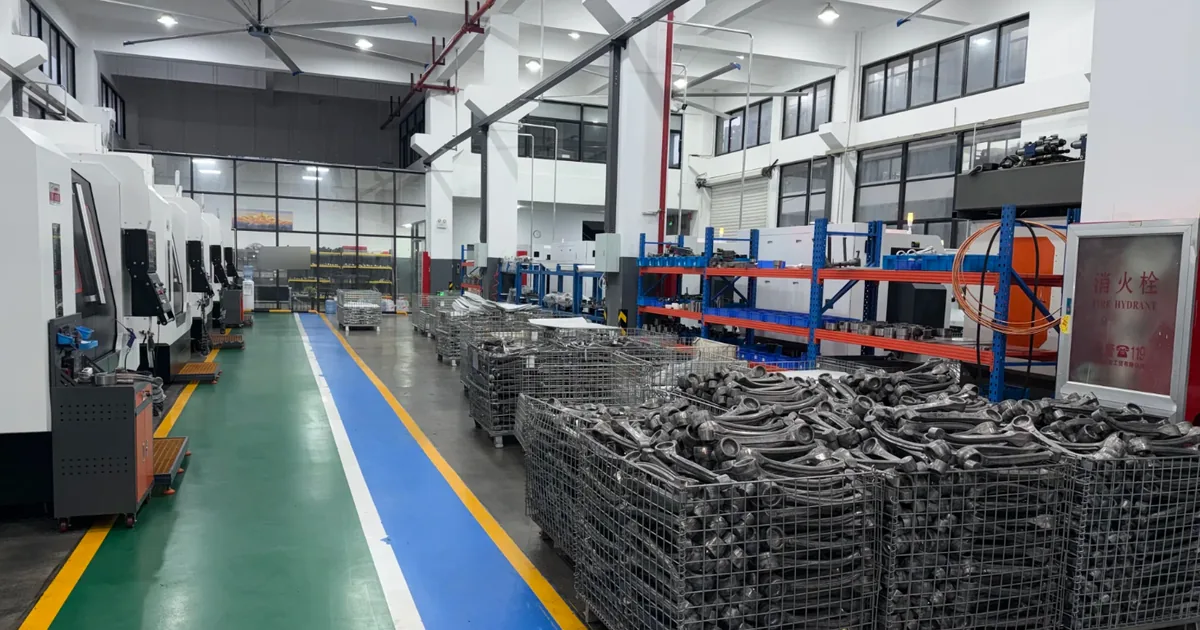
- Distance. Many factories in Guangdong are an hour's drive away. Visiting is a short trip, not a two-week project.
- A sense of normal. After seeing many quotes, factories and shipments, you recognize what's typical and what isn't, for prices, lead times, materials and paperwork.
- The ability to ask again. Most problems are found on the second or third question, not the first.
In practice, the biggest benefit isn't any single discount. It's that the buyer makes fewer decisions blind, and fewer decisions that can't be undone.
What a local person can't do, and how to choose one
A local partner can also become a new risk. The most common problem is a conflict of interest: an agent who takes a commission from the factory has a reason to recommend that factory, not the best one.
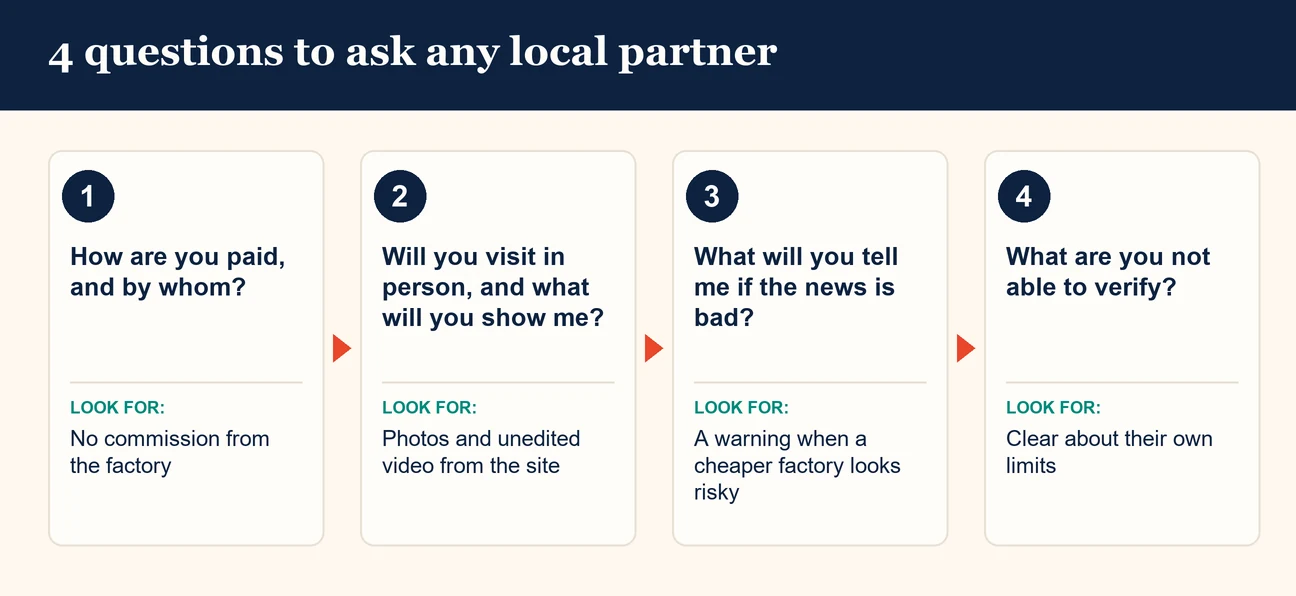
Before working with anyone, ask:
- How are you paid, and by whom? We don't accept commissions from factories, because that would put us on the factory's side of the table.
- Will you visit in person, and what will you show me? Photos and unedited video from the site are worth more than a written summary.
- What will you tell me if the news is bad? A good partner tells you when a cheaper factory looks risky, even if it costs them a quick deal.
- What are you not able to verify? Honest partners are clear about their limits.
When you don't need one
Not every purchase needs a local partner. If you're reordering a simple product from a supplier you've worked with successfully for years, or buying a small sample you can afford to lose, the extra cost may not be worth it.
Where it matters most is the first order with a new supplier, high-value or customized products, anything with technical specifications, and products with compliance rules.
Frequently Asked Questions
When do I need a local partner in China?
It matters most for the first order with a new supplier, high-value or customized products, anything with technical specifications, and products with compliance rules. It is usually not worth it for reordering a simple product from a supplier you have worked with successfully for years, or for a small sample you can afford to lose.
How can I tell whether a local agent has a conflict of interest?
Ask how they are paid, and by whom. An agent who takes a commission from the factory has a reason to recommend that factory, not the best one. Also ask what they will tell you if the news is bad: a good partner warns you when a cheaper factory looks risky, even if it costs them a quick deal.
Why can't I open China's company registry from abroad?
China's official registry, the National Enterprise Credit Information Publicity System, is only in Chinese, and from outside China it often does not load at all. We tested it ourselves: even our own connection routed through an overseas server could not open it. That is why a basic check such as whether a company legally exists and may manufacture your product is hard for a remote buyer.
What should I watch for when a factory uses AI to answer my inquiry?
Many Chinese suppliers now use AI tools to reply to foreign buyers quickly and in fluent English. The replies sound confident and professional, which does not mean they are true. On one of our projects, at least two factories gave lead times that came from an AI chatbot, not from production. Treat the first answer as a starting point: ask again, ask in Chinese, ask someone in production, and ask for photos.
Why do quotes for the same product differ so much?
Often they are not the same product. One factory may quote EPS foam panels and another PU, and both call it an insulated sandwich panel. Words like galvanized and included also cover less or more than they seem to: hot-dip and cold galvanizing differ, and a roof quote may include a canopy but not the terrace or the entry steps. Rewrite every quote into the same configuration before comparing.
What should I ask a local partner before hiring them?
Four questions: how are you paid, and by whom; will you visit in person, and what will you show me; what will you tell me if the news is bad; and what are you not able to verify. Photos and unedited video from the site are worth more than a written summary.
The real point
Importing from China is not mainly a price problem. It's an information problem.
Many first-time importers learn this the expensive way. Without anyone on the ground to verify the factory or follow the order, they end up with a first shipment that doesn't match the sample, the specifications or what their customers expected. For a small business, one bad shipment is rarely just a bad shipment. It ties up cash, delays the next order, damages trust with customers, and sometimes ends the project before it really started.
The importers we've seen grow and actually make money from China almost always have one thing in common: a stable partner on the ground they trust, someone who checks before they pay and tells them the truth when something looks wrong.
That's the standard we hold ourselves to. For every order we handle, no matter how small, we inspect the goods at the factory before they leave for your country (every unit on small batches, agreed sampling on large orders), film the inspection and send you the video. You see what's in your shipment before it's on the water. If we find a problem, you hear it from us at the factory, not from your customers after it arrives.
You don't need a partner for every purchase. But if your next order is a first order with a new supplier, a custom product, or something your business can't afford to get wrong, it's worth having someone in China look at it before you commit.
SourciaVera is a buyer-side sourcing and verification partner in Guangzhou, so we benefit when buyers choose to work with a local partner. The examples above come from our own projects, with client details removed.