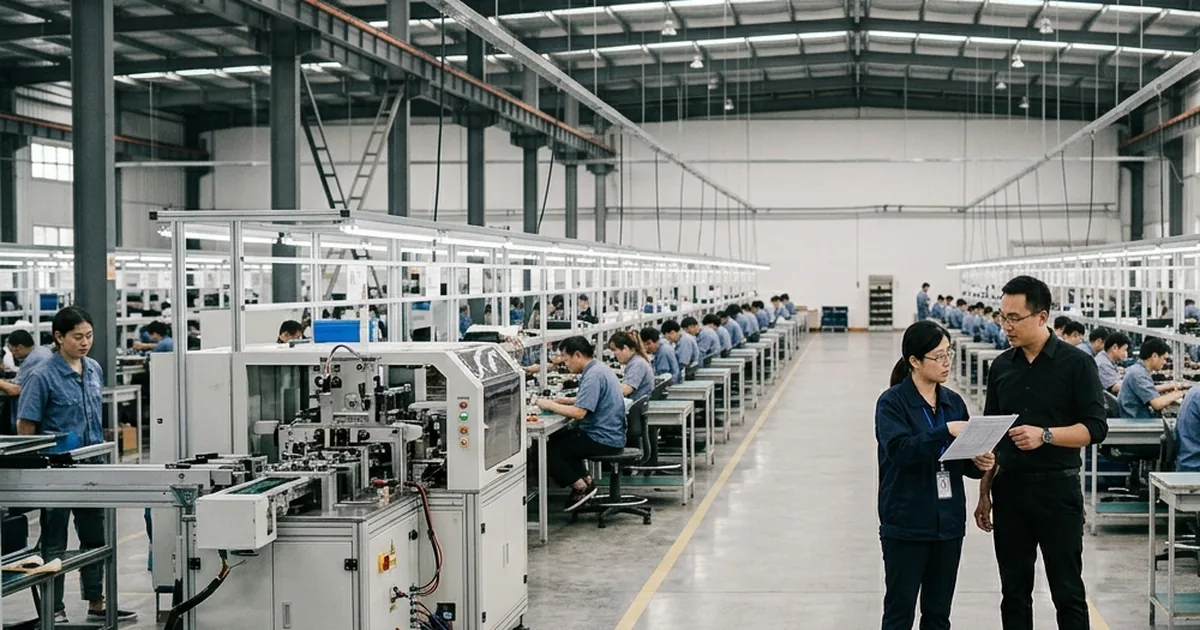
The short answer: most Mexican importers do not have a supplier problem, they have a verification problem. They spend their energy finding the right product and price, and almost none on confirming who is on the other side of the transfer. Alibaba's gold "Verified" badge describes the company, not the order you are about to pay for.
The short answer: to verify a Chinese supplier from Mexico, confirm the company's business license and manufacturing scope, check that it's a real factory rather than a middleman, and get independent eyes on the production floor before you pay. A pre-shipment inspection then confirms the goods match the approved sample before they leave China. Alibaba's badges and a supplier's own photos or videos don't replace any of these steps.
The scale makes this matter. China is Mexico's second-largest source of imports. According to INEGI, Mexico's national statistics agency, Mexican businesses bought about $129.8 billion USD worth of Chinese goods in 2024 — roughly 20% of everything the country imports — leaving a trade deficit with China of nearly $120 billion. In the other direction, Mexico is the top Latin American destination for Chinese exports. A big share of that trade runs through Alibaba and its sister platform 1688: small and medium business owners buying wholesale to resell, manufacture, or distribute. Many of them have never set foot in a Chinese factory. They trust photos, samples, and the badge, and many learn the hard way.
Why Are Mexican Importers So Exposed? A Typical $15,000 First Order
Let me walk through a typical situation. An importer in Mexico has found a supplier on Alibaba. The order is around $15,000 USD, a normal size for a first purchase. The supplier replies fast in basic English, the photos look professional, and there's a deposit request waiting. The importer is about to wire the money.
This buyer is more exposed than they realize, for four structural reasons.
The language barrier runs both ways. Most Alibaba suppliers offer support in basic English, not Spanish. The Mexican buyer negotiates in a language that isn't theirs with a supplier who doesn't fully master it either. The result is misunderstandings on specs, timelines, and terms nobody read carefully.
The order size is the vulnerable size. In our experience, most Mexican importers work with batches between $5,000 and $30,000 USD. For a large Chinese factory, that's a small order that won't get their best attention. For a middleman posing as a factory, it's the perfect target.
Distance rules out an in-person visit. A round-trip flight Mexico–Guangzhou costs between $1,200 and $2,000 USD, plus hotel, translator, and lost working days. Many of the Mexican importers we talk to have never visited their suppliers.
Legal recourse is very limited. Once the money has left Mexico by international transfer, recovering it is extremely difficult. Mexico's consumer protection law doesn't apply, and international arbitration is costly and slow. Prevention is by far the most reliable strategy.
What Red Flags Should Stop You Before Wiring a Deposit?
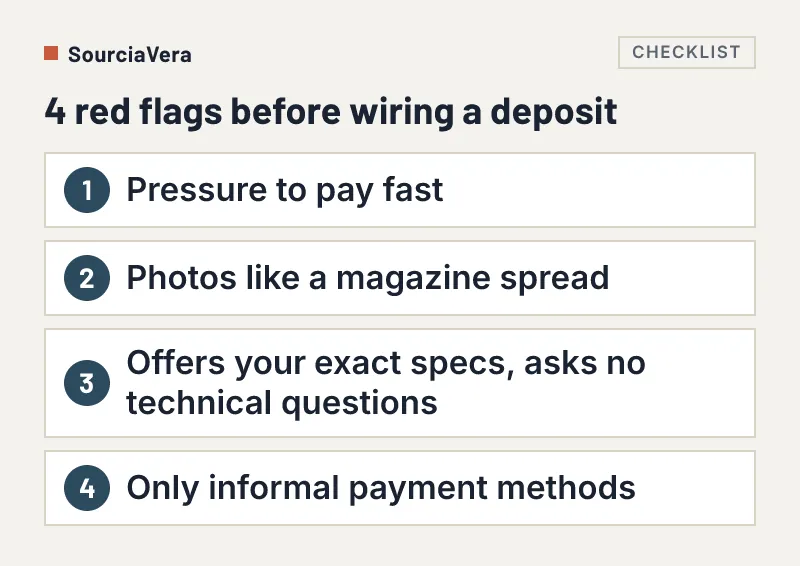
If our importer sees any of these with their supplier, I'd tell them to pause before sending the money:
1. The supplier pressures you to pay fast. "This price is only valid until today." "We have other interested buyers." "If you don't transfer now, I can't reserve production." Manufactured urgency is the oldest trick in trade. A real factory with continuous production doesn't need to pressure you.
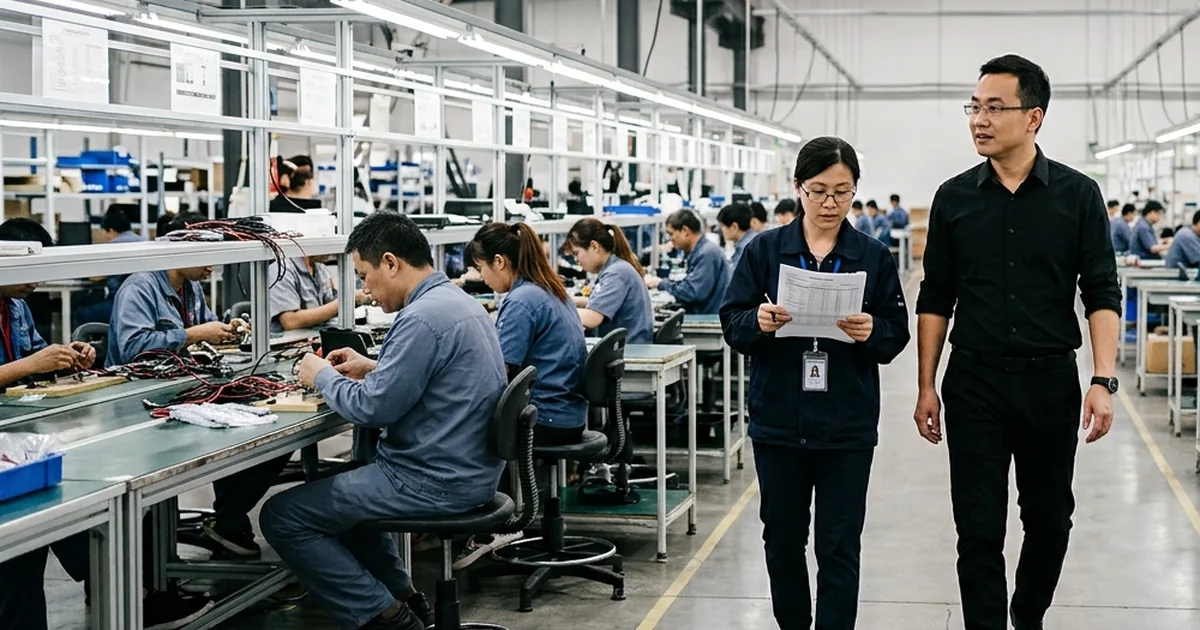
2. The "factory" photos look like a magazine spread. Perfectly decorated showrooms, brand-new machinery with no signs of use, empty aisles. Real factories in production are noisy, messy, and full of people working. If the photos look like a decor catalog, they're from a showroom, not a factory.
3. They offer exactly what you want at exactly the price you wanted. A supplier who confirms all your specifications without asking a single technical question is a middleman. Real factories ask about tolerances, materials, certifications, and production timelines. If they ask nothing, they're buying it from somewhere else.
4. The only accepted payment methods are informal. Western Union, USDT, cash on P2P platforms, or T/T with no written contract. A legitimate factory accepts an international bank transfer with a contract. Any resistance to putting terms in writing is a critical red flag.
What Does "Verifying a Supplier" Actually Include?
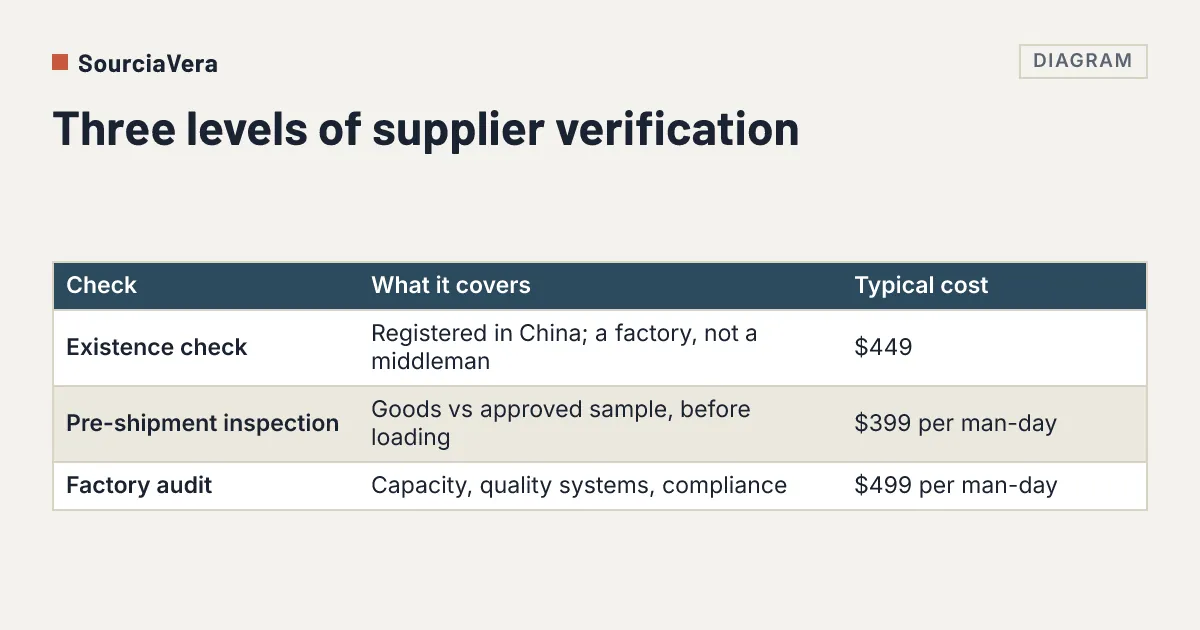
Verification isn't one service. It's a range of checks at different depths, and mixing them up is one of the most common mistakes I see:
Basic existence verification
Confirms the company exists, is legally registered in China, and operates as a factory, not a middleman or trading company. This is the minimum bar before any payment. Typical cost: $449 USD.
Pre-shipment inspection
Physically checks the goods at the factory before they're loaded, comparing the actual product against the approved sample and your specifications. If there are discrepancies, the shipment is held. Typical cost: $399 USD per man-day (one inspector working one day at the factory; glossary).
Factory audit
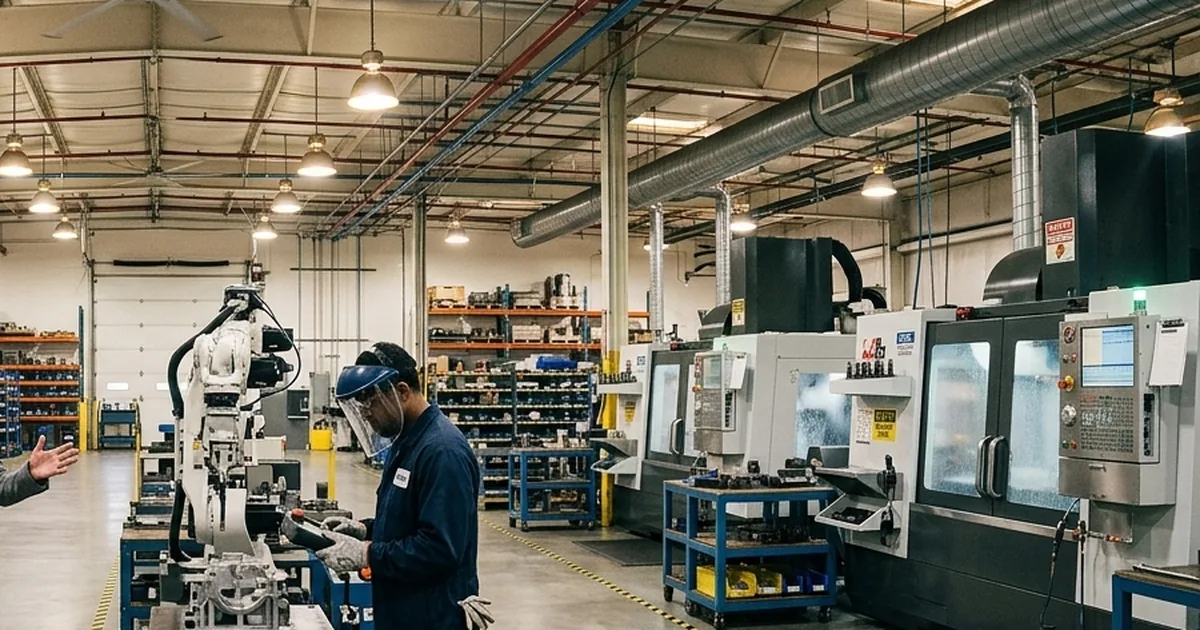
A deeper evaluation: real production capacity, quality management systems, regulatory compliance, and operational financial soundness. Done before committing to large volumes or a long-term relationship. Typical cost: $499 USD per man-day.
None of these replaces the others. For a mid-sized first order like our importer's, I recommend basic verification plus a pre-shipment inspection.
$49
Written report in 48 hours: company registration, manufacturer vs. trader, and payment-account match.
Request the $49 checkHow Can You Verify a Chinese Supplier From Mexico?
One looks cheaper. The other is cheaper in practice.
Option A: Doing it yourself (and where it stops)
Alibaba Trade Assurance protects you when product quality or the ship date differs from what you agreed in the Alibaba order, and only if you paid online through Alibaba.com. Alibaba says you must apply for a refund within 30 days of delivery (its Trade Assurance page). It can't cover specs that were never written into the order, or fraud that happened off the platform.
A Google or company search catches obvious red flags (the company doesn't show up anywhere) but can't confirm real production capacity.
Asking the supplier for a factory video has limits: the video can show a factory that isn't the one producing your goods, filmed years ago, or downloaded from the internet. Without an in-person check, a video from the supplier is worth very little.
Checking it yourself can rule out the crudest scams. It can't catch the sophisticated ones, and those are the costliest.
Option B: A verification team on the ground in China (what I recommend)
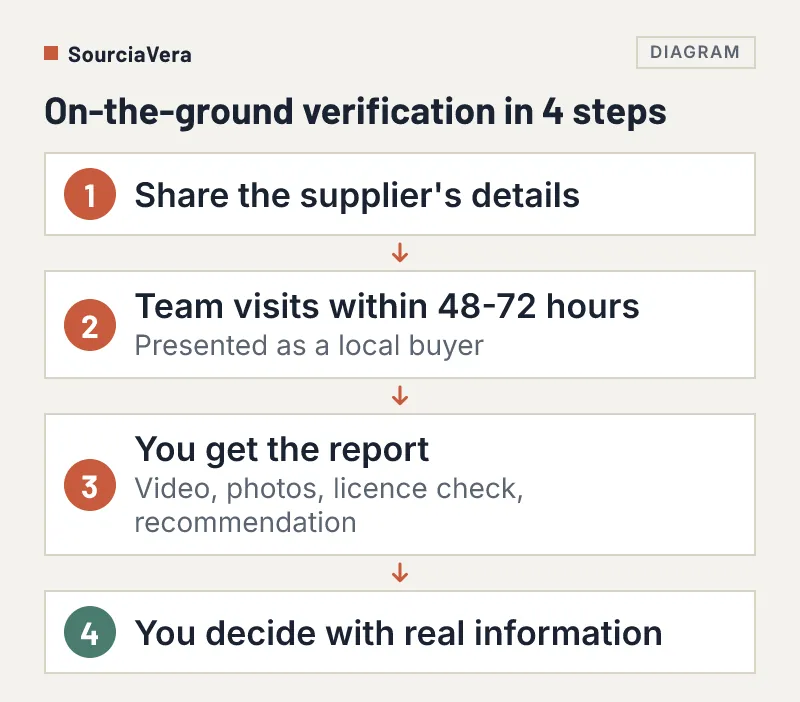
Step 1 — Share the supplier's information. Alibaba link, company name, or whatever contact details you have, plus the product and approximate volume.
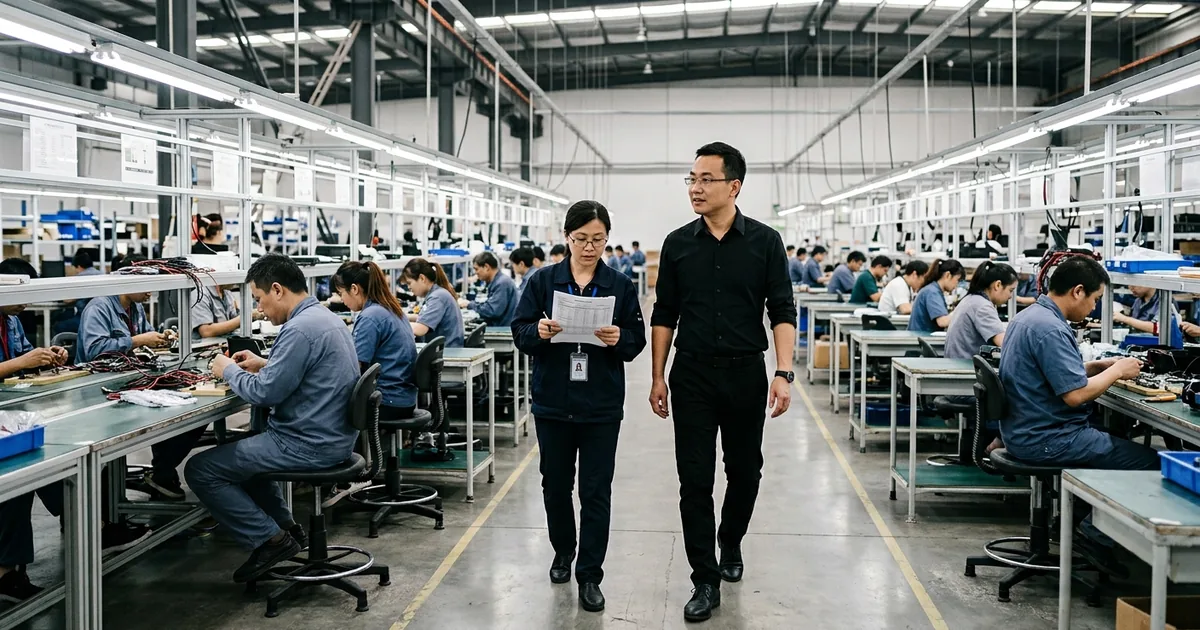
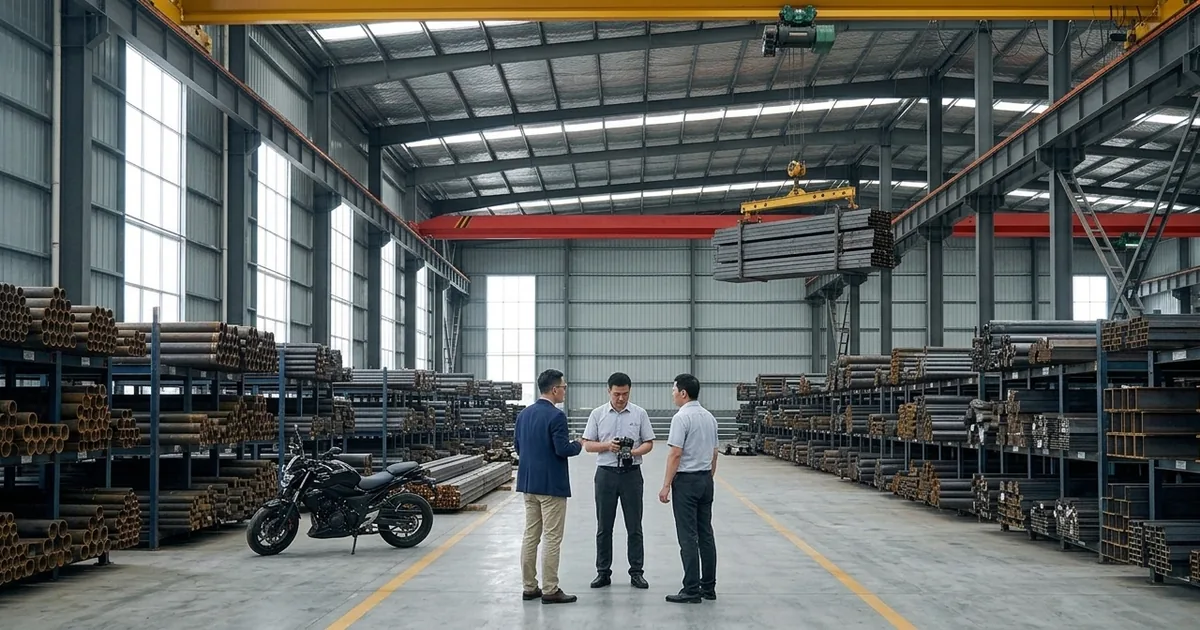
Step 2 — Our team visits within 48–72 hours. We present ourselves as a local Chinese buyer. The factory doesn't know we're checking on your behalf, so the information comes unfiltered: real prices, real capacity, real terms.
Step 3 — You get the report. An unedited video walkthrough of the factory, photos of the production line, machinery, and warehouse, official business license verification, a real market-price assessment, and a clear recommendation: proceed, renegotiate, or find another supplier.
Step 4 — You decide with real information. Not stock photos, not WhatsApp promises. A real factory video and a written analysis. The 10% purchasing commission is only charged if the order goes ahead. Verification services have a fixed price.
How Much Does Supplier Verification Cost?
| Service | Price | When to use it |
|---|---|---|
| Factory Verification | $449 USD per visit | Before any first payment to a new supplier |
| Pre-Shipment Inspection | $399 USD / man-day | Before the goods leave the factory |
| Factory Audit | $499 USD / man-day | Before large orders or long-term relationships |
| Sourcing Agent | 10% of order value | When you want to delegate the entire buying process |
Back to our importer. The problem: a $15,000 USD deposit about to go to a supplier nobody has seen. What we'd check: the business license, whether it's a factory or a middleman, and the real production floor. The outcome: a factory verification costs $449, about 3% of the investment, while a middleman or an off-spec batch puts the full $15,000 at risk. The takeaway: with these example figures, the money at risk is more than 30 times the cost of verifying.
Questions Mexican Importers Ask Us
Can you verify any type of product?
We verify suppliers across the Guangzhou area in categories such as electronics, LED lighting, auto parts, furniture, textiles and industrial machinery. If you're unsure we cover your product, ask us.
How long until I get the report?
The complete report arrives within 48 hours of the visit. If you need it faster because of an order deadline, just ask.
What happens if the factory doesn't pass verification?
We say so clearly in the report. You can use that to renegotiate terms, ask for additional guarantees, or look for another supplier. You get the truth no matter what we find.
Can you go with me if I travel to Guangzhou myself?
Yes. If you're planning a trip to China, we can assign a team member to go with you to the factory, manage the schedule, translate in real time, and support you during negotiation.
To see what an independent factory check produces, open the sample factory verification report, and read how SourciaVera is paid so you know the findings are not influenced by the factory.
Summary: Verify at the Moment You Feel Ready to Pay
Our team visits factories in person, and the founder still joins many of the visits. Importers who get burned are rarely careless. They are busy, the supplier seems responsive, and the badge looks official. What I've learned is that the moment to verify is the moment you feel ready to pay, because that's exactly when a middleman or a showroom "factory" is counting on you not to. A small check before the transfer is the cheapest insurance in this whole trade.
To sum up, most importers have a verification problem rather than a supplier problem, and the moment to verify is the moment you feel ready to pay. If you rely on the badge and the photos, the realistic outcome is a deposit with a middleman or a showroom "factory", and a first batch that is off spec. A $49 remote check covers the registration and trader-versus-factory questions from Mexico, and our country page explains the on-site route.
I provide supplier verification services, so you should treat my recommendation accordingly.
 Buyer Protection · Mexico · 2026
 Factory Audits · Mexico · 2026
 Supplier Verification
 Factory Visits