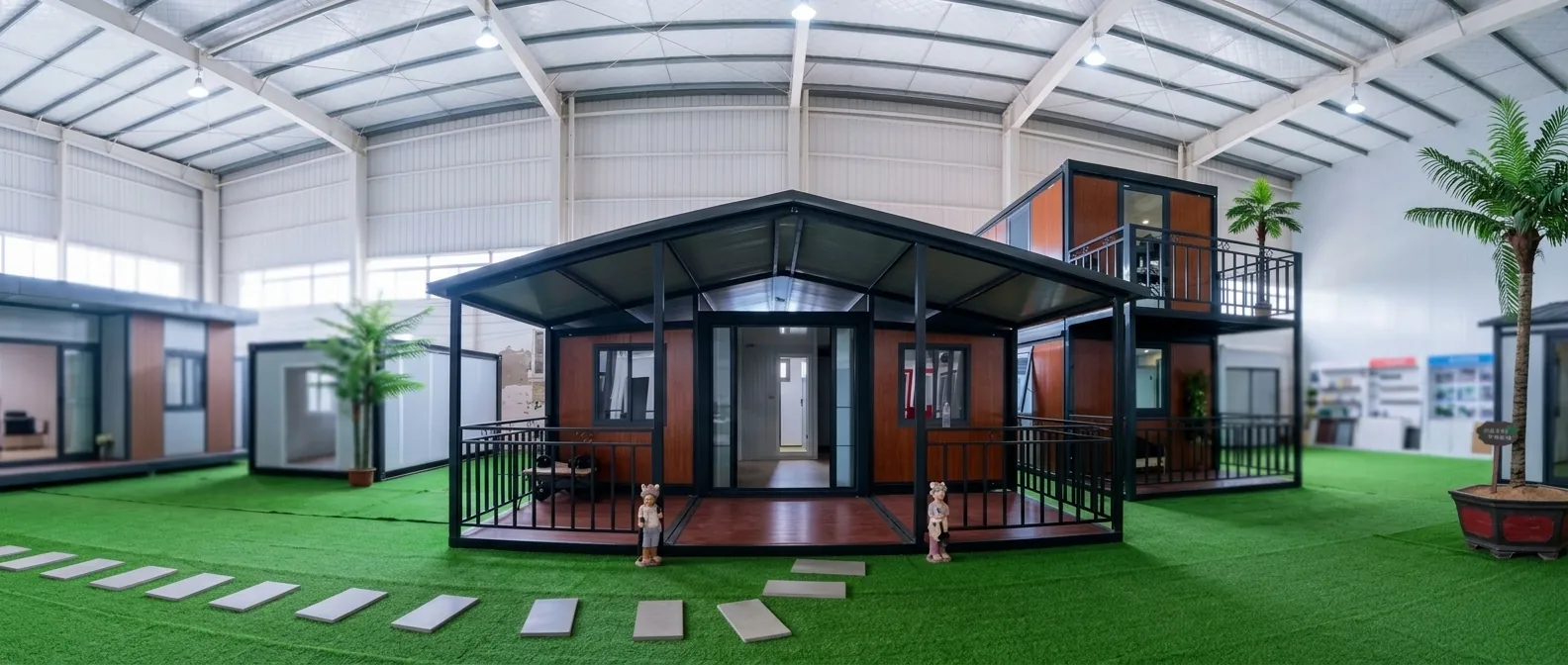
We get asked a version of the same question from investors and property owners across Mexico and Central America: does an imported expandable container house actually save money over building traditionally, or is the upfront price just lower while the total cost evens out? Having verified factories and priced both sides of this for clients, here's the honest comparison — including where traditional construction still wins.
| Expandable Container House | Traditional Block/Concrete Construction | |
|---|---|---|
| Construction timeline | Ships in 3–5 weeks after order; assembles on site in 2–4 hours | Typically 3–6 months from foundation to finish |
| Labor requirement | 2-person crew, no crane, no skilled masonry needed | Multiple trades — foundation, masonry, roofing, electrical, plumbing crews |
| Quality consistency | Factory-controlled production, same spec every unit | Varies with crew skill and local material quality |
| Relocation | Can be folded and moved to a new site | Permanent — no relocation without demolition |
| Financing & permitting | Often classified as prefab/temporary structure, simpler permitting in some jurisdictions | Standard building permit process, typically longer approval timeline |
Why Investors Choose Expandable Houses
1. Faster Construction
A unit that assembles in hours rather than a structure that takes months to build changes the return timeline on any income-generating property. For a rental or hospitality use case, every month saved on construction is a month of earlier revenue.
2. Lower Labor Cost
Traditional construction in most of Latin America depends on skilled masonry, electrical, and plumbing crews whose availability and cost vary significantly by region and season. An expandable unit compresses that labor requirement down to assembly — a two-person job that doesn't require the same trade-specific skill stack.
3. Factory Quality Control
Every unit off a verified factory's line is built to the same steel gauge, the same panel spec, the same weld standard — assuming the factory is actually held to that spec, which is the entire reason verification matters. Traditional construction quality depends heavily on the specific crew and the specific week they worked on your site.
4. Easy Relocation
A folding unit can be relocated to a different plot if land use changes, a lease ends, or a project moves — an option that doesn't exist with poured concrete. This matters more than it sounds for buyers who don't yet have permanent land tenure secured.
5. Suitable for Airbnb and Hospitality Projects
The unit count-per-container economics (two units per 1×40HQ container) make expandable houses a realistic way to scale a small hospitality property in phases — add one or two units per season as bookings justify it, rather than committing to a single large traditional build upfront. This phased approach is a meaningful part of why we see interest concentrated in coastal and tourism-adjacent regions of Mexico and Central America.
Where Traditional Construction Still Wins
None of this makes container housing universally better. A permanent primary residence intended to last multiple generations, a property in a jurisdiction that doesn't recognize prefab structures for standard residential financing, or a project requiring square footage well beyond what a single or double-unit configuration provides are all cases where traditional construction remains the more appropriate choice. The honest framing is that expandable container houses solve a specific problem — speed, labor cost, and flexibility — not every problem in residential construction.
Running the Numbers for Your Project
The table above is directional — the real numbers depend on your specific site, local labor rates, and which factory you're sourcing from. To make it concrete, here's how a 40 m² unit actually breaks down, using the same size we verified in a real Guatemala order (see our China import guide for that full case). The traditional-construction side reflects the range of contractor quotes we've seen clients collect across Mexico and Central America for a comparable basic-to-mid finish — treat it as a planning benchmark, not a fixed quote for your specific site:
| Expandable Container House (40 m²) | Traditional Block/Concrete (40 m²) | |
|---|---|---|
| Structure cost | $6,700–$19,000 FOB depending on specification level | $20,000–$36,000 at a typical $500–$900/m² for basic-to-mid finish across Mexico and Central America |
| Landed / total cost | Add 15–25% for freight, duties, and destination handling → roughly $8,000–$24,000 installed | Add foundation, permits, and site prep — typically another 10–20% → roughly $22,000–$43,000 |
| Time to occupancy | 6–10 weeks (production + ocean freight) plus about a day to assemble on site | 3–6 months from foundation to finish |
The spread on the container-house side is wide on purpose: it's the same gap our verification work exists to close. An unverified quotation can land anywhere in that range depending on steel gauge, insulation core, and how much unnecessary specification got padded into the price — which is exactly where a verified quotation and an honest specification matter more than the marketing renderings on any single Alibaba listing.