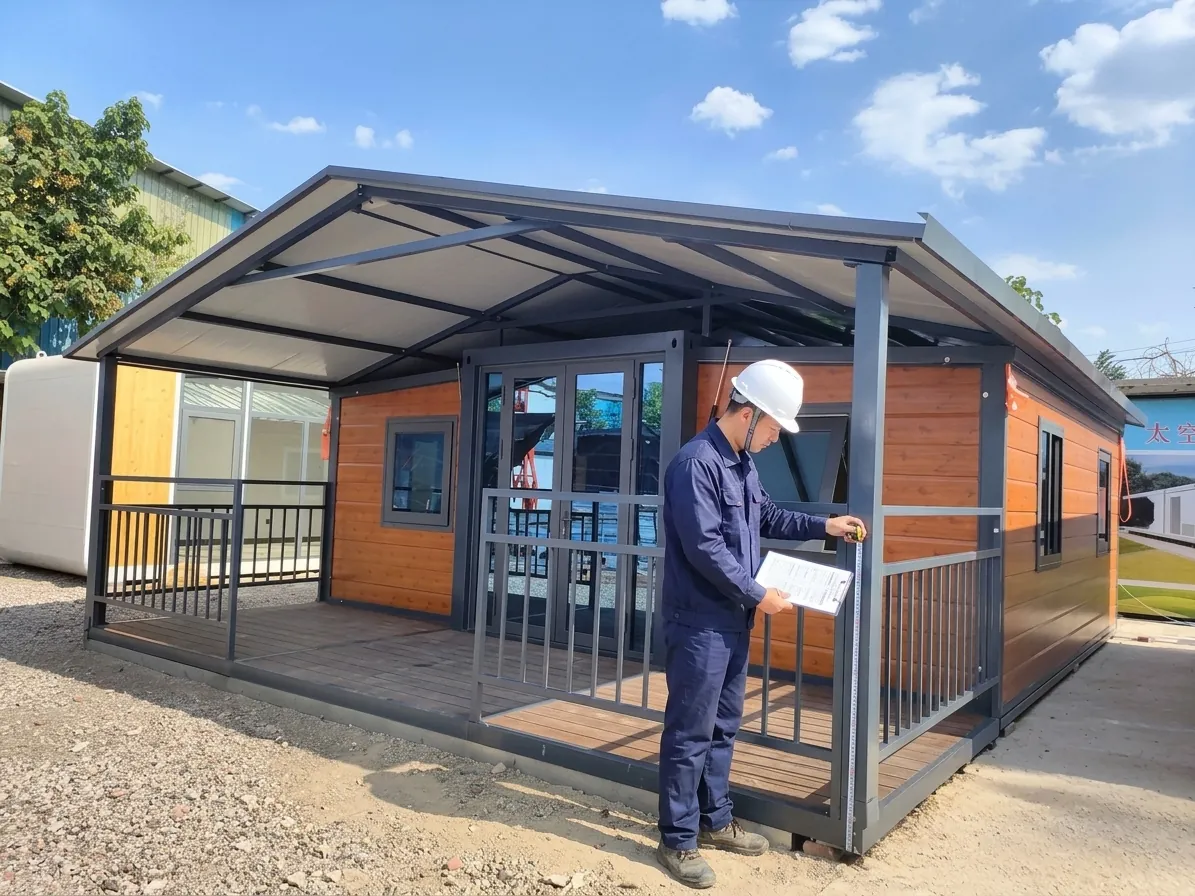
The cheapest quotation is not always the lowest cost. We've verified enough expandable container house suppliers to see the same seven risks resurface across otherwise very different orders — and every one of them is invisible on the sales chat, the renderings, and often even the signed contract. Here's where the gap actually opens up.
| # | Risk | What's Quoted vs. What Ships |
|---|---|---|
| 1 | Different steel thickness | 2.0mm quoted, 1.6–1.8mm shipped, painted to look identical |
| 2 | Insulation swapped | PU quoted, cheaper EPS shipped — roughly half the thermal performance per mm |
| 3 | Wrong voltage standard | China's 220V/50Hz wiring shipped without adapting to the destination code |
| 4 | Insufficient waterproofing | Roof-to-wall seams pass a dry visual check, fail under real rain |
| 5 | Shipping dimension miscalculation | A few cm over spec turns "2 units per container" into 1 unit + wasted freight |
| 6 | No installation guidance | Unit ships with no translated assembly guide |
| 7 | Trading company, not a factory | No control over production, so none of the other six can be enforced or fixed |
1. Different Steel Thickness Than Quoted
The quotation says 2.0mm plate; what ships is 1.6mm or 1.8mm, painted to look identical. This is the single most common substitution we catch, and it directly reduces the unit's wind load and structural stacking capacity — problems that only surface once the structure is under real stress, not during a visual inspection.
2. EPS/PU Insulation Swapped
PU (polyurethane) insulation performs roughly twice as well per millimeter as EPS (expanded polystyrene) and costs more to produce. Once both are sealed inside a painted panel, they look the same — the difference only shows up in the client's first hot season, when the interior runs noticeably warmer than the spec promised.
3. Wrong Voltage Standard
Units built to China's domestic 220V/50Hz standard with Chinese-style outlets don't automatically translate to the destination country's electrical code. A factory that has never exported to your specific market may not have adjusted wiring, breaker ratings, or outlet configuration — a detail that's expensive and sometimes unsafe to fix after installation rather than before shipment.
4. Insufficient Waterproofing
Roof-to-wall joints and window seals are the two places that pass a dry visual inspection and fail under real rain. This is one of the few defects that's genuinely cheap to test (pour water on the seam) and expensive to fix after the unit is already installed and occupied.
5. Shipping Dimension Miscalculation
The whole cost advantage of this product category rests on fitting two folded units into one 40ft container. A unit that folds a few centimeters larger than the quoted dimension can silently turn "two units per container" into "one unit plus a container's worth of wasted freight cost" — a mistake that shows up on the freight invoice, not the product spec sheet.
6. No Installation Guidance
Many export-focused factories ship the unit and assume the buyer's crew already knows how to unfold and secure it correctly. Without a clear, translated assembly guide — or worse, with no guide at all — buyers can under-tighten locking mechanisms or skip a structural step that isn't obvious from the folded state.
7. Dealing With a Trading Company, Not a Factory
This is the risk that makes all six above harder to catch and harder to resolve. A trading company can show you photos and specs from three different actual manufacturers, quote confidently on all of them, and have no real ability to enforce a spec change or fix a defect once your order is in production — because they don't control the production line. Every risk on this list is easier to prevent and easier to resolve when you're dealing directly with the factory that actually builds the unit.
The Pattern Behind All Seven
Every one of these risks shares the same structure: a difference that's invisible in a photo, a video call, or even a signed spec sheet, and only becomes visible once someone measures, tests, or uses the unit under real conditions. That's the actual argument for on-site verification — not that Chinese factories are untrustworthy as a category, but that these specific gaps require someone physically present with a caliper, a hose, and a willingness to fold the unit more than once before any money moves.