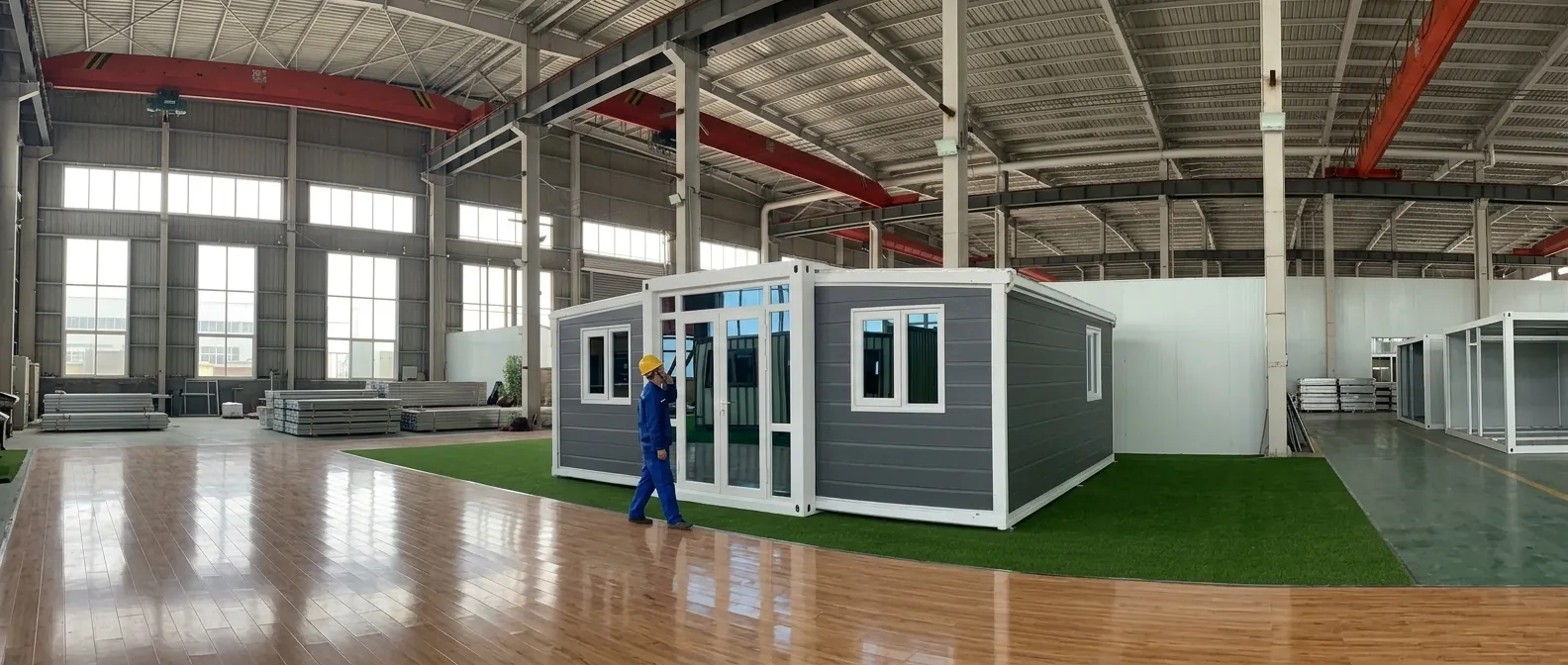
We see the same pattern on almost every expandable container house inquiry that reaches us: the buyer found a listing on Alibaba with clean renderings, a low quote, and a supplier who answers messages within minutes. Then they ask us to verify it — and the "factory" turns out to be a trading company reselling someone else's product photos, sometimes from three different actual manufacturers at once.
This isn't a niche problem in this category. Expandable container houses are one of the easier products to fake a storefront around, because the units photograph well, the specs are easy to copy-paste, and most overseas buyers have no way to check whether the seller has ever actually welded a hinge. The five failure modes we run into most often, in order of frequency: the seller isn't a factory at all; the product photos and even the "factory tour" videos are lifted from someone else's listing; the quotation is priced to win the deal and grows once a deposit is paid; the steel gauge quietly drops from what was quoted; and the waterproofing and electrical specs were never built to the destination country's climate or voltage standard in the first place.
Here is the verification sequence we actually run before we tell a client a supplier is legitimate.
| Step | What We Check |
|---|---|
| 1. Production line | Live video with today's date visible — cutting, welding, spray-coating, assembly stages |
| 2. Steel thickness | Caliper measurement on units off the line — commonly 2.0mm quoted, sometimes 1.6mm shipped |
| 3. Welding quality | Seam consistency at corner posts, hinge mounts, and chassis joints |
| 4. Folding mechanism | Fold/unfold a sample more than once — binding on the 3rd or 4th cycle reveals hinge tolerance |
| 5. Waterproof system | Water poured over the roof seam and door threshold, checked from inside |
| 6. Export history | Shipping records or installation photos in a climate similar to the destination |
| 7. Payment sequencing | Verify first, sample second, milestone-based payment third — never a deposit first |
1. Check the Factory Production Line
The first thing we ask for is not a photo — it's a live video walkthrough with today's date visible on a piece of paper, showing the actual production floor: sheet metal cutting and bending equipment, a welding bay, a spray-coating line, and a folding/assembly area where a finished unit is tested before packing. A trading company can produce polished marketing photos in an afternoon. It cannot produce a working production line on demand.
We specifically look for evidence of scale that matches the claimed capacity — if a supplier claims to ship 200 units a month, the factory floor should show multiple units in different stages of assembly, not one demo unit that gets photographed from different angles.
2. Verify Steel Structure Thickness
Every expandable container house lists a steel gauge for its wall frame, floor girders, and roof structure — commonly 2.0mm plate for the main frame on standard units. The number on the quotation means nothing until it's measured. We bring a caliper to the factory and measure the actual plate thickness on units coming off the line, not on a display sample that may have been built to a different spec than what ships.
Gauge substitution is quiet and profitable: dropping from 2.0mm to 1.6mm cuts material cost meaningfully while looking identical once painted. It also cuts the unit's wind load and stacking capacity — which only becomes visible after the unit is already installed and something has to bear real weight or wind pressure.
3. Check Welding Quality
We inspect weld seams at the corner posts, the hinge mounting points, and the chassis joints for consistency, penetration, and the absence of cold joints or excessive spatter. Weak welds at the hinge points are the single most common structural failure we find in units that have been in service for a year or more — the folding mechanism puts repeated stress exactly where a rushed weld is most likely to crack.
4. Test the Folding Mechanism
We don't just look at a folded unit and an unfolded one — we ask the factory to fold and unfold a sample in front of us, more than once, and check that the hinges move freely without forcing, that the locking mechanism seats correctly, and that the walls align flush when expanded. A unit that folds smoothly the first time but binds on the third or fourth cycle is telling you something about the hinge tolerance that a single demonstration won't reveal.
5. Confirm the Waterproof System
Roof-to-wall joints and window seals are the two places we see the most disputes after installation, because both can look sealed to a visual inspection while failing under real rain. Where possible, we ask the factory to run water over the roof seam and door threshold and check the interior for any trace of ingress. This single test catches a problem that no spec sheet, and no factory photo, will ever show you.
6. Review Previous Export Projects
We ask for shipping records, bills of lading, or photos of completed installations at destination — ideally in a climate similar to where our client is shipping. A factory with real export history to humid or coastal markets has usually already solved the corrosion and waterproofing problems a first-time exporter hasn't encountered yet. A factory that can only show domestic Chinese sales, or stock photos with no traceable shipping history, hasn't been tested the way an ocean crossing and a rainy season will test the unit.
7. Conduct a Factory Inspection Before Payment
Everything above is more reliable done in person than over video call, and it has to happen before a deposit moves — not after. Once a buyer has paid 30% down, negotiating leverage drops sharply if a problem turns up. The order of operations that actually protects a buyer is: verify the factory exists and matches its claims, confirm a sample against the real specification, then release payment against milestones tied to production, not against a sales conversation.
Why Hiring a China Sourcing Agent Reduces Risk
None of these seven checks require special equipment — a caliper, a video call, and a willingness to ask for water tests and multiple fold cycles will catch most of what goes wrong. What they do require is being physically present in Guangdong, Hebei, or Shandong, able to read the factory's actual production floor rather than its sales pitch, and having enough category experience to know which failure points to check first. That's the gap a sourcing agent closes: not replacing the buyer's judgment, but standing where the buyer can't, at the moment it matters most — before the money moves, not after.