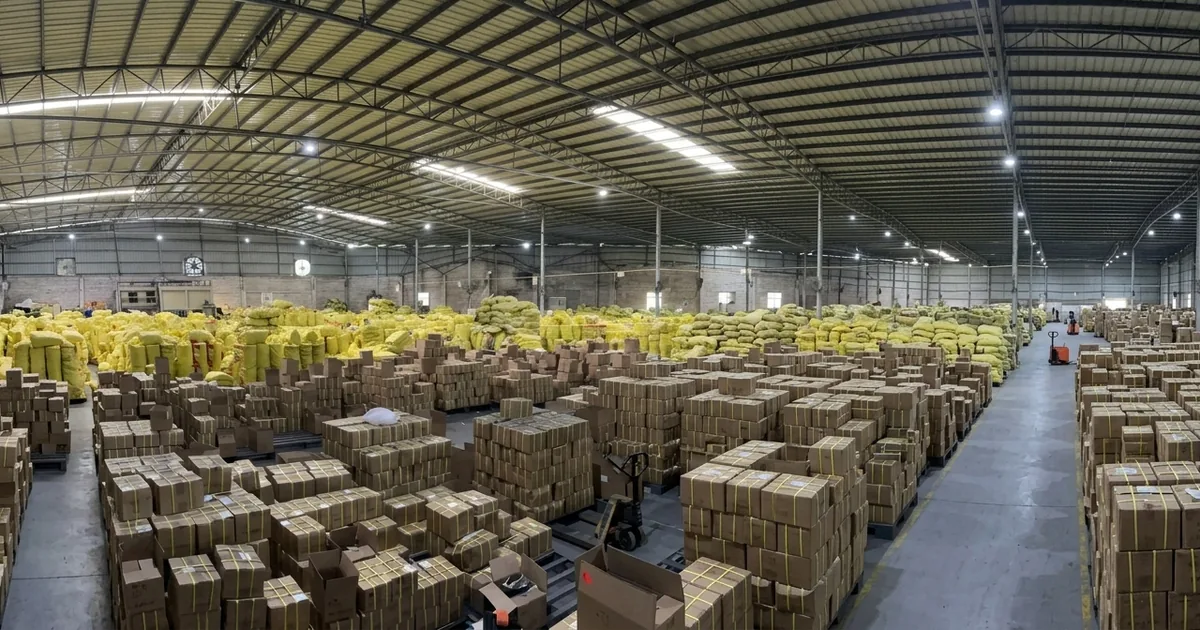
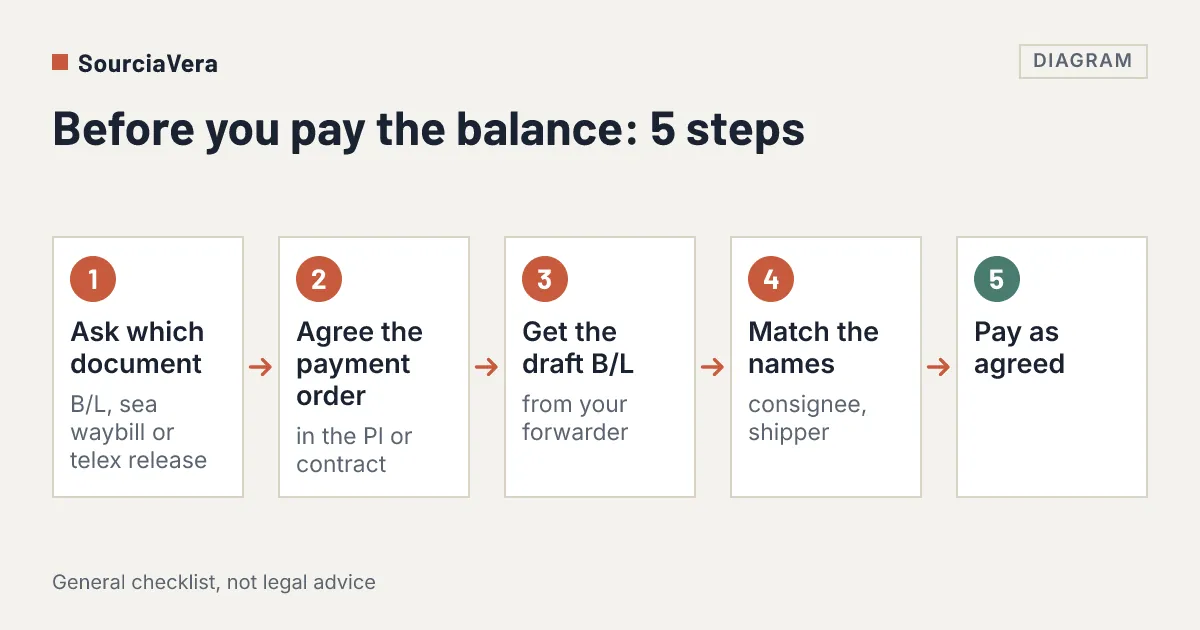
The short answer: before you pay the balance, find out which document you will receive for the shipment and who can release the cargo with it. If the supplier holds a set of original bills of lading, the supplier decides when the cargo is released. If it is a sea waybill, or a telex release of an original bill, the carrier can release the cargo to the named consignee without any original document changing hands. Both can be legitimate; they give you different protection. Ask which one it will be, in writing, and check that your company is named as consignee.
This article explains the three, what to look for on the document, and what to ask before you pay. It is based on shipping-line explainers and general good practice, not on any first-hand experience of a particular shipment.
What Does a Bill of Lading Do?
Maersk describes the bill of lading as a document issued by the carrier to the shipper with three main functions: evidence of the contract of carriage, a receipt that the carrier has the goods, and a document of title to the goods (Maersk). It names the shipper, the consignee and any notify party, describes the cargo with weights, package count and volume, and shows the ports of loading and discharge. The shipper gives the carrier shipping instructions after the booking, and the carrier uses them to create the bill.
Two details matter for a buyer. First, according to Maersk, the bill of lading is only issued after the vessel has left the port of loading (Maersk). Second, for a negotiable bill, at least one original must be presented at the port of discharge to receive the cargo (Maersk). So whoever holds the originals controls the release.
Original Bill of Lading, Sea Waybill or Telex Release: What Is the Difference?
The table is a simplified summary of the two Maersk pages. Rules differ by carrier and country, so your forwarder confirms the details for your shipment.
| Original bill of lading | Sea waybill | Telex release | |
|---|---|---|---|
| What it is | Document issued by the carrier; contract, receipt and title | A simpler document: evidence of the contract and receipt of the goods | Not a document: a way of releasing an original bill of lading electronically |
| Document of title? | Yes | No | Applies only when an original bill has been issued |
| Original needed to collect the cargo? | Yes, at least one original at the port of discharge | No: the carrier releases to the named consignee | No: the carrier receives a message authorising release to a named party |
| Who has the leverage on release? | The holder of the originals | Nobody holds a document; release follows the named consignee | The party who authorises the release |
| When Maersk says it fits | New business partners, payment by documentary letter of credit, goods that may be resold in transit | Regular transactions between trusted parties | When you want to avoid sending the physical originals |
Why Does the Choice Matter When You Pay the Balance?
A common payment arrangement is a deposit before production and the balance before the supplier hands over the shipping documents or releases the cargo. The document type decides what that second payment buys you.
- With original bills of lading, the supplier can keep the originals until the balance arrives. That protects the supplier, and it also means you need the originals, or a release the supplier authorises, to collect the goods.
- With a sea waybill, there is no title document to hold back. The carrier can release to the named consignee without original papers, so the supplier relies on being paid first or on trust. Maersk says this suits trusted partners, and it speeds up release.
- With a telex release, the supplier keeps control until it sends the release, so the timing of that message is part of the payment deal.
Neither is better for every buyer. A new supplier you have only checked online is a case where a bill of lading and a clear payment sequence protect both sides. Agree the sequence in writing before production, in the proforma invoice or the contract, and see 10 things to check before paying a deposit for the checks that come before any payment.
What Should You Check on the Bill of Lading?
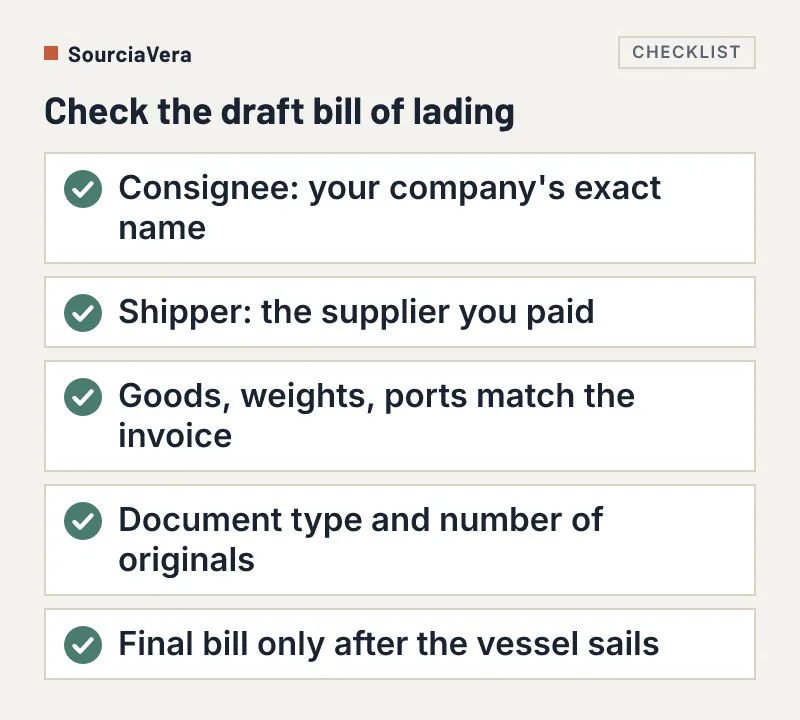
These checks follow from what the document contains. Ask for a draft before the final one is issued, and compare it line by line.
- Consignee. Maersk notes that delivery is made to the party in the consignee field, unless that party issues a letter of subrogation for someone else (Maersk). Your company's exact legal name should be there, not a third party, unless you agreed it.
- Shipper. It should be the supplier you contracted and paid. Your customs broker works with the exporter named on the commercial invoice and the bill of lading, so name the same party on both.
- Cargo description, weights, package count and ports. They should match the commercial invoice and the packing list. A difference can delay the release or the customs filing (see how to import auto parts from China to Mexico for the documents a Mexican import usually needs).
- Document type and number of originals. Confirm whether it is an original bill, a sea waybill or a telex release, and how many originals exist and who sends them.
- Timing. Because the bill is issued after the vessel departs, a "final bill of lading" offered before sailing is a question to ask your forwarder, not a reason to pay.
What Can a Bill of Lading Not Tell You?
It records what the carrier received and under which terms. It does not show that the goods match your specification or that the quantity inside the boxes is right; that is what an inspection before shipment is for (see what an inspection costs). It also does not say who bears which cost, which is the job of the price term (see which price term to ask a Chinese supplier to quote). Nor does it say whether the cargo is insured; for that, see cargo insurance on a shipment from China. This is general information and not legal advice: Maersk itself says it is not a party to the sales contract and suggests seeking legal advice if you are unsure which document to choose.
What Should You Do Next?
- Ask the supplier, in writing, which document it will issue (original bill of lading, sea waybill or telex release) and when you receive what.
- Agree the payment sequence before production, and write it in the PI or contract, including what you pay against.
- Ask your forwarder to share the draft bill of lading and check consignee, shipper, description, weights and ports against the invoice and packing list.
- Ask your customs broker which documents they need at destination, and whether the carrier will release against the document you are offered.
- Pay the balance only against the sequence you agreed, and keep the records of every message and document.
Frequently Asked Questions
What is a bill of lading and why does the supplier talk about it?
It is a document issued by the shipping line with three main functions: evidence of the contract of carriage, a receipt for the goods and a document of title. Suppliers mention it because the type of bill decides who can release the cargo.
What is the difference between a bill of lading and a sea waybill?
A sea waybill is not a document of title and no original has to be presented, so the carrier can release the cargo to the named consignee. An original bill of lading is a title document, and at least one original must be presented at the port of discharge.
What is a telex release?
It is a way of releasing an original bill of lading electronically, not a type of bill. It only applies when an original bill has been issued, and it lets the carrier release the cargo to a named party without the original being presented.
When is the bill of lading issued?
According to Maersk, only after the vessel has departed from the port of loading. Ask your forwarder about any final bill of lading offered before sailing.
Should I pay the balance before I receive the bill of lading?
It depends on the document type and on the payment order you agreed in writing. Decide the sequence before production, check the names on the draft bill, and ask your forwarder or customs broker if you are unsure.
Summary and Next Step
A bill of lading is the paper that connects the supplier's shipment, the carrier and your right to collect the goods. The type decides who can release the cargo and when, and that is exactly what a balance payment is about. Choose the document and the payment order together, and check the names on it before you pay.
In short, choose the document and the payment order together, and check the names on it before you pay the balance. If you pay first and read the paperwork afterwards, you may be paying before you know who can release the cargo and when, which can hold up your shipment and your next order. A $49 remote check looks at whether the payment account matches the company name, and you can tell us about your order if you want a second opinion on the rest.
If you want someone to check the basics of a supplier before you place an order, understanding who is behind each quote before investing money can reduce unnecessary risks. SourciaVera helps international buyers verify Chinese suppliers, understand manufacturing capabilities, and make safer sourcing decisions. I provide supplier verification services, so you should treat my recommendation accordingly. The $49 Remote Check looks at the basics — company registration, manufacturer vs. trader, address, and whether the payment account matches the company name — before you place an order. Send the quote or PI with your request: it is needed to check the payment account.