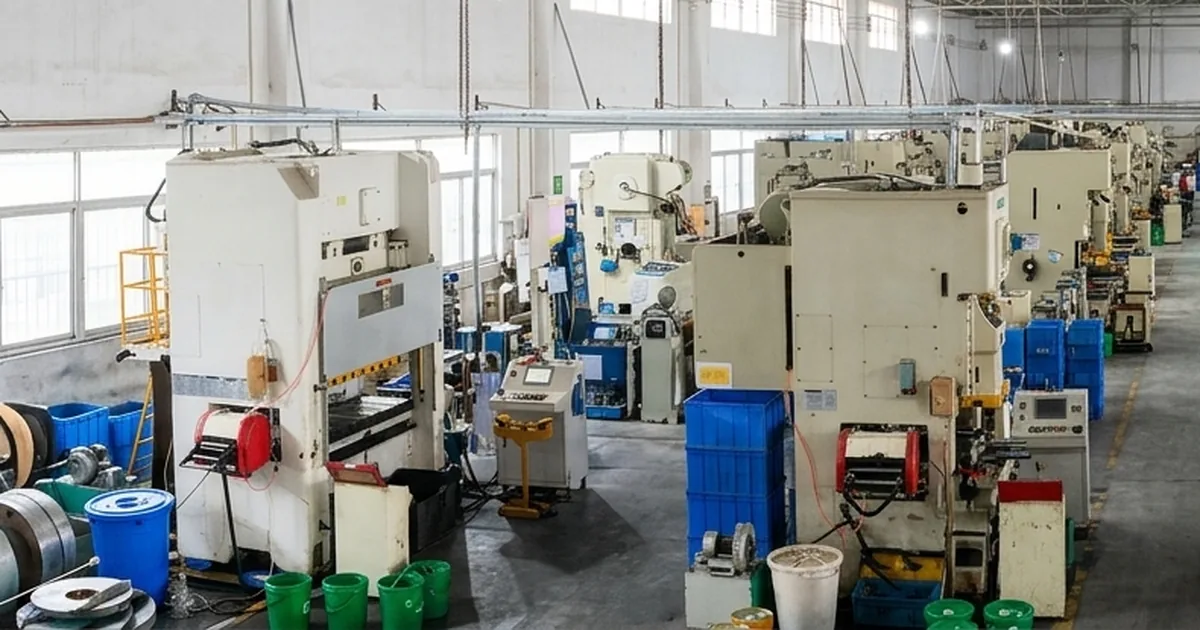
The short answer: Mexico's Economy Minister Marcelo Ebrard said this week that his ministry sent a team to Asia to check the mills named in the origin certificates that importers present, found that many did not exist, and removed more than 1,000 registrations. If you buy steel, or products made largely of steel, from China for Mexico, the lesson is practical: the mill named on your documents has to be a real plant that someone can visit, and your supplier should be able to name it. A certificate that points to an address with nothing behind it is a risk to your cargo and to your money, long before it is a question of price.
This article covers what was reported, what is still unknown and what to ask your supplier to put in writing. It is based on two Mexican press reports and general good practice, not on any first-hand experience of these checks. It is not customs or legal advice.
Why Does It Matter to a Buyer, Even Outside Steel?
- Documents are being checked on the ground. Ebrard said the authority went to Asia to verify plants, on the assumption, in his words, that importers believed nobody would ever go to check (El Tiempo de Monclova).
- It comes on top of other checks. Mexican customs offices are also reported to be looking harder at the form of mill certificates (see customs checks on steel mill certificates). A real plant and a correct certificate are now two separate hurdles.
- The pressure is likely to continue. The minister linked the checks to the 50% tariff that the United States applies to Mexican steel and aluminium, which Mexico wants reduced, and said the authority wants to extend origin certification to more products. That is an inference about direction, not an announced measure for your goods.
What Did the Minister Say?
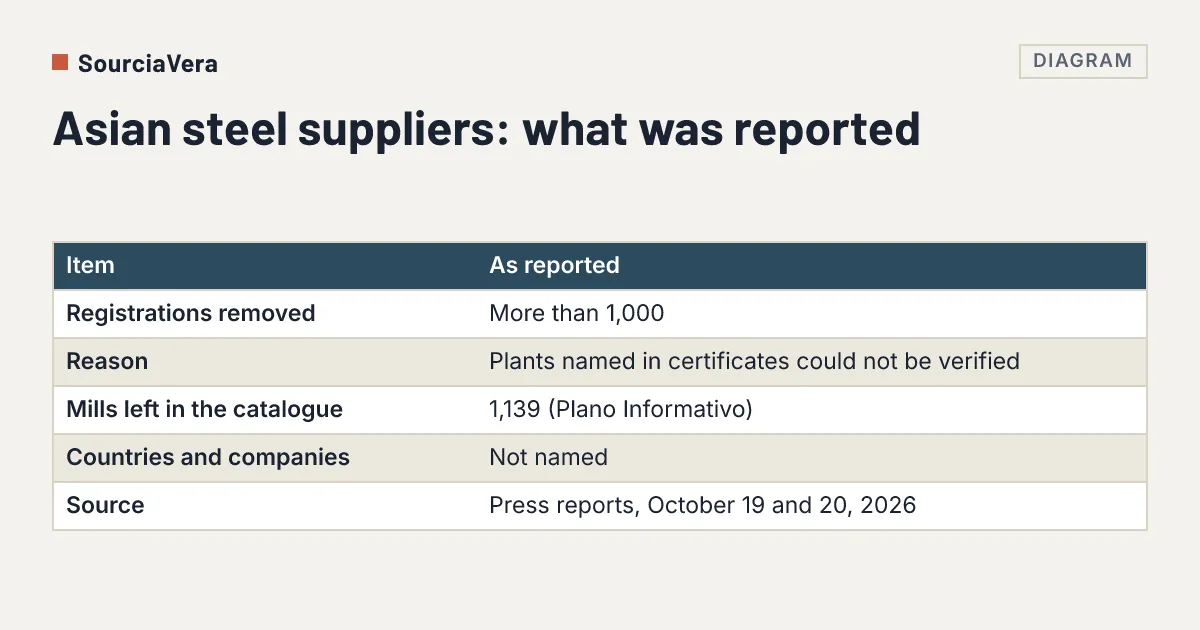
According to El Tiempo de Monclova, citing agencies, Ebrard said the Economy Ministry sent a team to verify the mills or plants named in the certificates that importers present as proof of where the steel comes from. "We went to verify them in Asia and we withdrew more than 1,000," he said. He did not say in which countries the checks took place or which companies were involved, and he explained that the withdrawn registrations belonged to suppliers whose plants could not be verified (El Tiempo de Monclova).
Plano Informativo adds figures from the same press conference. It reports that the catalogue of mills allowed to supply steel imports fell to 1,139, that all the permits for Vietnam were removed and that two were left for Malaysia, and that the steel came from China, South Korea, Malaysia, New Zealand and Vietnam. It also reports that the federal government cancelled 1,062 steel import permits in 2025 for companies it said were transshipping Asian-origin goods, and that the IMMEX programme was withdrawn from two companies whose imports had risen sharply (Plano Informativo). The two reports frame the numbers a little differently, so read them as what was said at one press conference, not as an official count.
The same reports say Ebrard denied that Mexico's own steel exports are being used to route Asian steel to the United States, asked for the US tariff to be reviewed and expects an answer before the end of 2026, although no agreement was announced.
What Is Still Unknown?
Quite a lot: which countries and companies were involved, whether the same checks will reach other products, what the procedure is for a supplier who wants to be listed again, and whether a buyer whose supplier was on the list has to do anything. We found no official text; these are statements reported by the press. Ask your customs broker whether your product category is affected before you assume it is not.
What Should a Buyer Ask the Supplier to Write Down?
This section is general advice, not a rule from the reports.
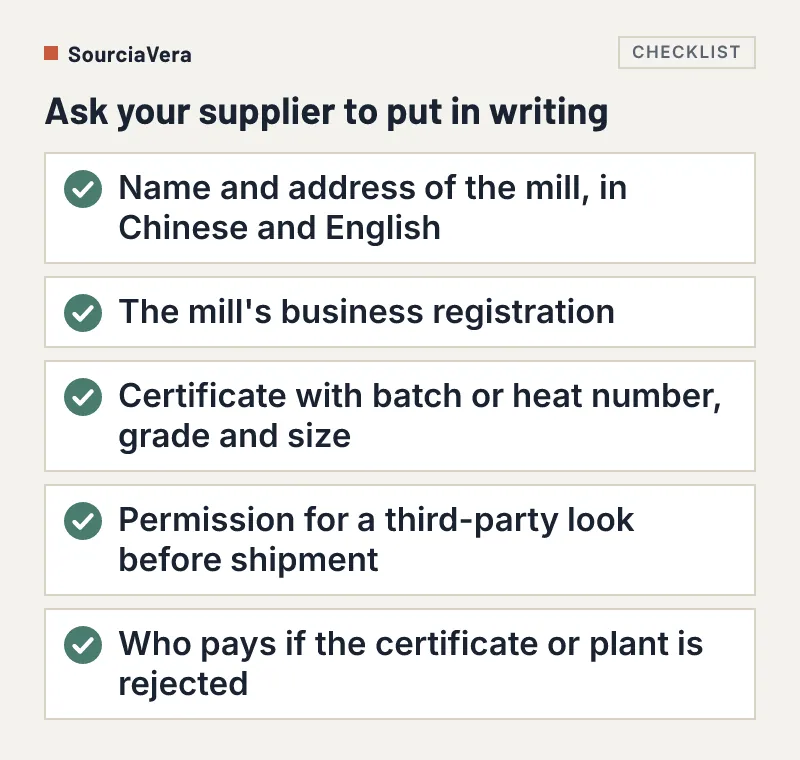
- The name and address of the mill or plant that produces the material, in Chinese and in English, with its business registration. A supplier that "buys from various mills" and cannot name one is a trading link you need to understand (see factory or trading company).
- A certificate tied to the goods. The batch or heat number, grade and dimensions on the certificate should match the marking on the material (see customs checks on steel mill certificates for the format question).
- Permission to verify. The supplier should accept that a third party looks at the plant and the marking before shipment. A supplier that refuses is giving you information.
- The consequences in writing. On the proforma invoice, say who bears storage, return or replacement costs if the certificate or the plant is rejected, and by when the corrected paper will be ready (the documents to request from a Chinese manufacturer is a good list).
Where Does a Third-Party Check Help?
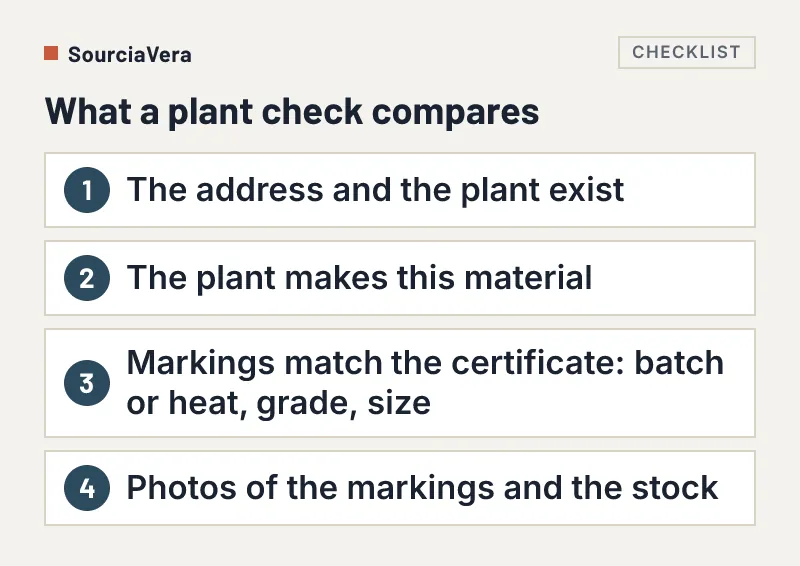
It cannot decide whether Mexican authorities accept a plant. It can answer the question the authority is asking: does this plant exist, is it the one that makes this material, and do its markings match the certificate? A person at the plant can check the address, the production lines and the stock, photograph the markings and compare them with the certificate. The $49 Remote Check looks first at the company registration, whether it is a manufacturer or a trader, the address and the payment account name. A plant visit goes further (see what a factory audit before importing to Mexico covers), and an inspection before the balance is paid (what a pre-shipment inspection costs) compares the shipment with the certificate. The 10 things to check before paying a deposit cover the rest.
What Do the Reports Not Tell You?
They do not tell you that your supplier is on a removed list, that your goods are affected or that any penalty applies to a buyer. They do not name a single plant or company. They are the statements of one official at a press conference, reported by two outlets. This is general information, not customs or legal advice.
What Should You Do Next?
- Ask your supplier to name the mill that makes your material, with address and registration.
- Compare the certificate with the goods: batch or heat number, grade, dimensions.
- Arrange a check of the plant or an inspection before the balance is paid, especially for new suppliers.
- Write the consequences into the PI: who pays if a certificate or plant is rejected.
- Ask your customs broker whether your product category is covered by these checks.
Frequently Asked Questions
What did Mexico announce about Asian steel suppliers?
According to El Tiempo de Monclova and Plano Informativo, Economy Minister Marcelo Ebrard said Mexico sent a team to Asia, could not verify many of the plants named in origin certificates and removed more than 1,000 registrations. No countries or companies were named.
Does this affect products other than steel?
The reports are about steel. The minister also said Mexico wants to extend origin certification to more products, so ask your customs broker whether your category could be covered.
How can I tell if my supplier's mill is real?
Ask for the name and address of the plant that produces the material, in Chinese and English, with its business registration, and compare the batch or heat number and markings on the goods with the certificate. A third-party visit or inspection can confirm it.
Can a third-party check guarantee that Mexican customs will accept the plant?
No. It can confirm that the plant exists, makes the material and that its markings match the certificate, which is what the authority is checking, but the decision is the authority's.
Summary and Next Step
Mexico says it went to Asia, could not find many of the plants named in steel origin certificates and removed more than 1,000 registrations. For a buyer, the practical answer is to know the plant behind the certificate: its name, its address, its registration and whether it makes your material. A supplier who cannot name it, or does not want it checked, is the one to slow down with.
In short, ask for the mill's name and let someone verify it before the cargo ships. A third-party check looks at who is behind the supplier and whether the plant and the markings match the paper, and you can tell us about your order if you want help preparing the questions for your supplier.
If you would rather have someone check the basics before you accept a quote or pay a deposit, understanding who is behind each quote before investing money can reduce unnecessary risks. SourciaVera helps international buyers verify Chinese suppliers, understand manufacturing capabilities, and make safer sourcing decisions. I provide supplier verification services, so you should treat my recommendation accordingly. The $49 Remote Check looks at the basics — company registration, manufacturer vs. trader, address, and whether the payment account matches the company name — before you place an order. SourciaVera is not a customs broker, and nothing here is customs or legal advice.